9 September 2020
I remember how in my school years I was interested in books on astronomy, which contained images from telescopes, data on stars, the solar system along with information on planets and their physical properties, as well as data on galaxies and many other interesting topics; they presented an outline of the knowledge about space at that time.
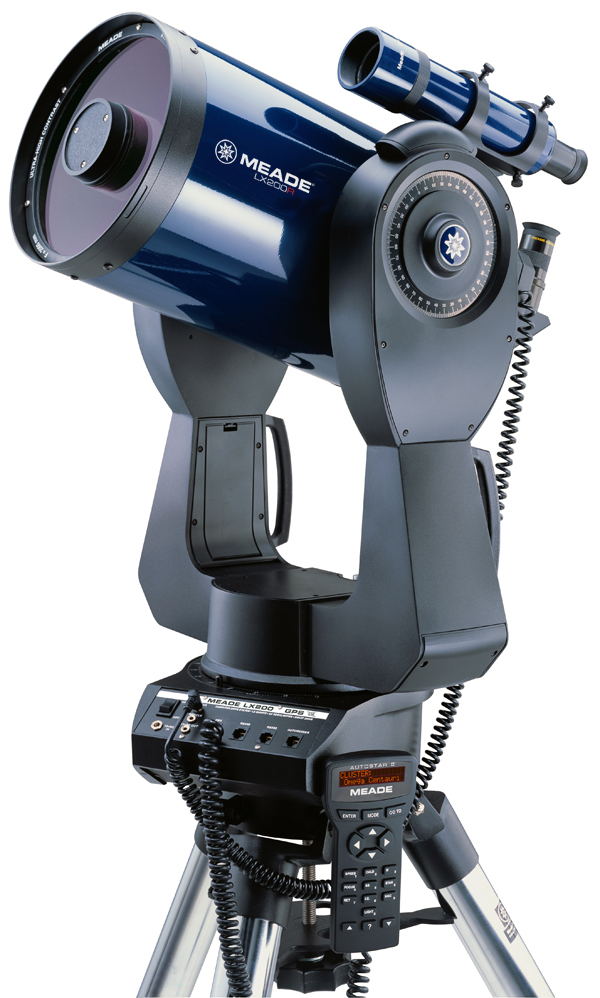
I've returned to these books many times, and some are still at home somewhere. An interesting question is: how would their authors have written them if they had access to today's astronomical data? The progress made in astronomy and related fields in recent years has been a significant step forward in global awareness. Knowledge about the cosmos cannot be compared to the knowledge of "peeling a potato" for soup. All new and existing astronomical discoveries can significantly impact the consciousness of people on Earth, and what's more, they are already having this kind of impact, as it's clear that the media are increasingly publishing interesting articles on this topic. I don't know who would have guessed in the 1980s that the transit method and Doppler spectroscopy in astronomy would be able to detect even smaller extrasolar planets than Earth in other planetary systems. There was some information about gravitational microlensing, but only in theory, and if there were any assumptions, they weren't supported by any decisive practical applications, at least in Poland. The resolving power and size of telescopes, and therefore their light-focusing efficiency, were incomparably worse than today. Interferometers were also out of the question, though these will soon pave the way for the discovery of planets that could not be detected using transit or spectroscopy methods because their orbits are not at the correct angle or are perpendicular to the direction of observation from Earth, which hinders Doppler shift measurement. Current technical capabilities, such as the accuracy and sensitivity of spectrometers, are significantly higher than three decades ago. Progress has been made in information processing in computer science, as well as in the technology of building increasingly efficient electronic devices such as PCs, mobile devices, and research equipment based on improved electronic components. The resolution of the arrays used to acquire data in astronomy now allows for images of the cosmos of unprecedented sharpness and detail, which are then processed using software based on advanced computer algorithms to obtain data on distant planets or galaxies, even at the edge of the visible universe. Ground-based telescopes with double mirrors, which enable the use of interference to observe planets, are already in operation. Space telescopes such as the James Webb Space Telescope, which will observe space in the infrared, and ground-based telescopes such as the Very Large Telescope (VLT) are under construction. Plans include space telescopes with mirror diameters exceeding 8 meters. Devices for imaging space in the X-ray and gamma-ray spectrum, as well as the Spitzer telescope, are in operation. However, seeing is one thing, touching it is another. All methods of space observation rely on the reception of electromagnetic radiation. However, it is important to remember that light, i.e., electromagnetic radiation, has a measurable speed of propagation in space. This leads to a simple conclusion: the further the eye, equipped with the latest space observation equipment, reaches, the further the data derived from the incoming light shifts into the past. For the most distant cosmic objects visible from Earth, this is already over 10 billion years ago. This leads to the conclusion that, as observers, we are receiving outdated data; meaning, objects observed in real time on Earth may have long since disappeared. Perhaps in the future, this problem can be circumvented, but it would require a significant technological breakthrough in astronomy, as light has the highest allowable speed in space in nature, and this standard has long been considered scientifically sacrosanct, as yet without any real evidence to challenge it for the existence of faster-propagating energy or particles that could deliver information from distant locations in space faster than light can. However, the fact that this dogma exists does not mean that such energies or particles do not exist. After meeting certain required technological conditions, it may be possible in the future to use, for example, gravitational waves to receive information or transmit it for communication between distant points in space, to achieve real results. Attempts are already being made to detect this type of wave in the cosmos around us. Although its existence has not yet been confirmed, calculations clearly indicate its existence. For example, it is emitted in systems of neutron stars rotating at very high speeds, which in this way "radiate" gravitational energy outward, reducing the system's energy. A gravitational wave is essentially a disturbance consisting of spatial "ripples" that cause the wave to alternately contract or stretch a material medium as it passes through it. This, however, is not directly observable or visible with conventional technical tools, but it can be observed with certain devices.With this in mind, it must be stated that this wave, as a change in the geometry of space, can theoretically travel faster than light, as it is a disturbance of space itself, which modern science allows, or at least does not deny, the possibility of exceeding the speed of light, as supported by specific calculations, as in the case of the "space bubble" drive, i.e., the Alcubierre drive. A conventional gravitational wave travels at the speed of light and does not exceed this speed, which results from the properties of three-dimensional space. The WARP drive assumes the presence of strange matter with negative mass, but as computational analysis shows, the drive itself would require the application of very high energies to achieve any real effects, comparable even to the total energy produced by an average star. A gravitational wave is a disturbance that carries no electromagnetic energy, magnetic energy, charge, or mass, and can contract and expand faster than the speed of light. Similarly, a shadow can also transmit information, but it essentially represents no energy at all, or rather, a lack thereof. Essentially, any movement involving the approach or retreat of any material object from or towards each other generates a gravitational wave. All natural processes, such as changes in the geometry of a solid body due to, for example, the acquisition of kinetic energy, the acquisition of an electric charge (polarization) or depolarization (e.g., in a capacitor), or the magnetization of a medium (the Barkhausen effect), cause the emission of a gravitational wave. The challenge lies in using a suitable gravitational telescope capable of transmitting such gravitational signatures to a recipient on Earth. However energy of
gravity waves originating from phenomena on Earth are relatively low. We're talking about energies related to weak interactions, so scale effects are significant. Waves from space can interfere with other gravitational energies along their path, which seems to make them difficult to detect by technical devices on our planet's surface.