5 May 2021
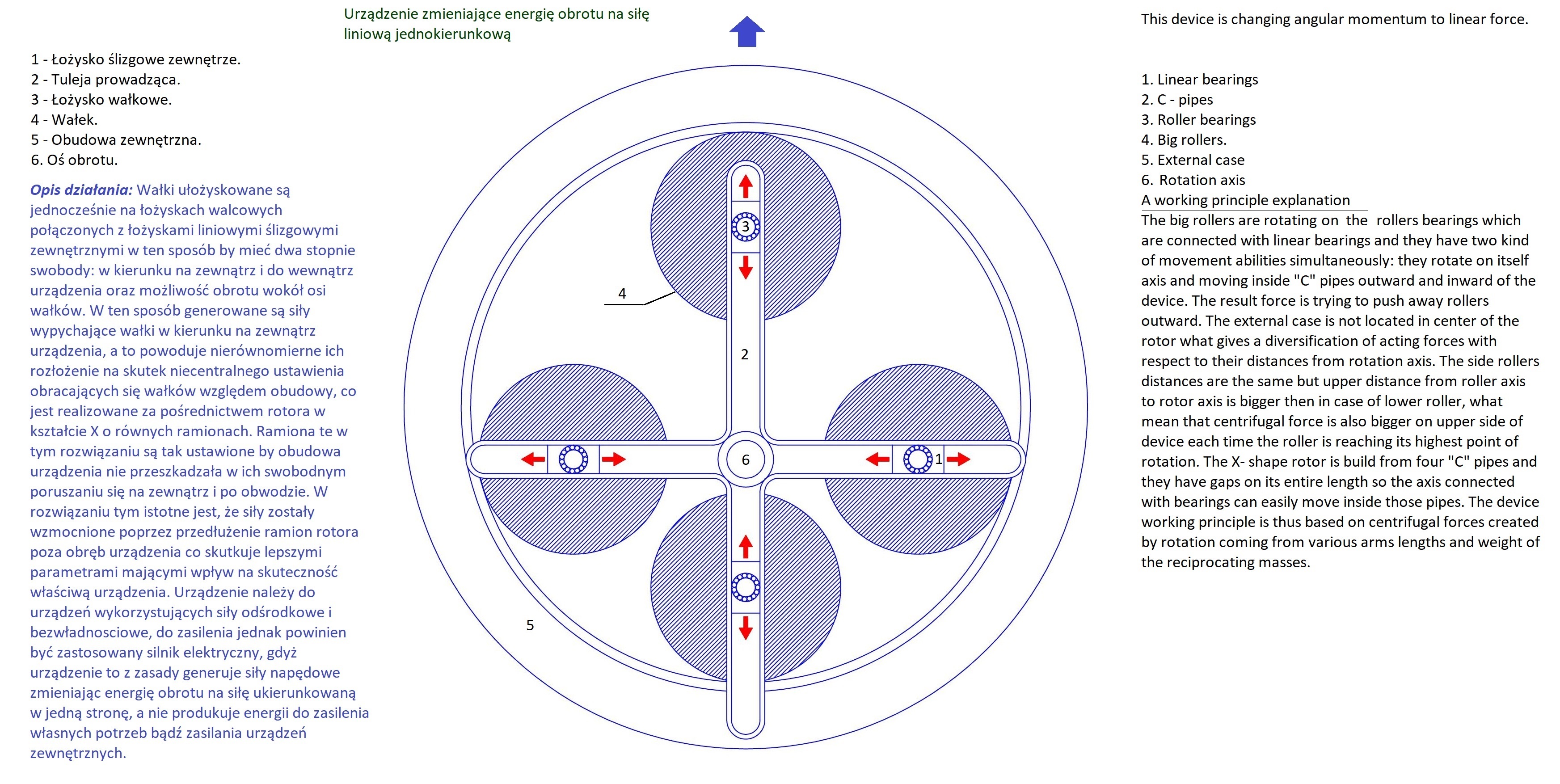
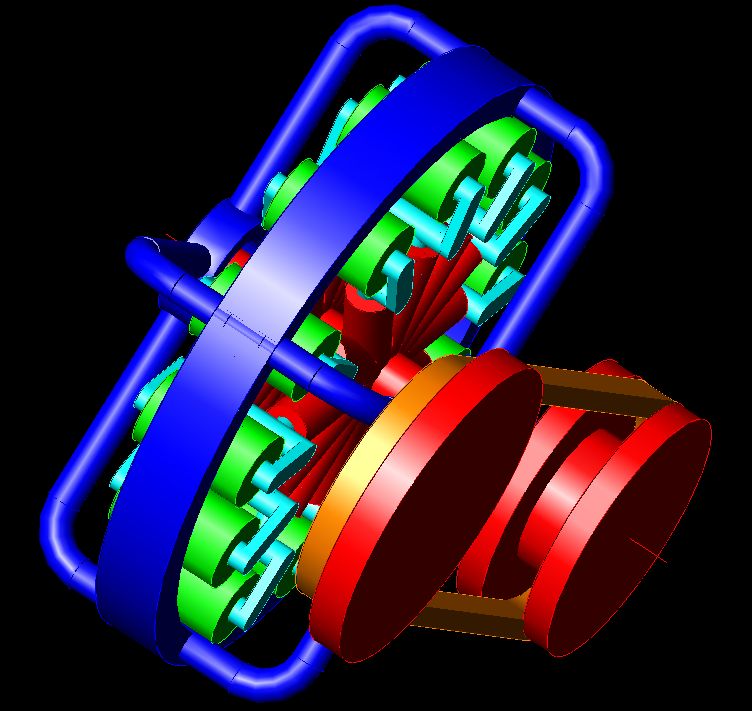
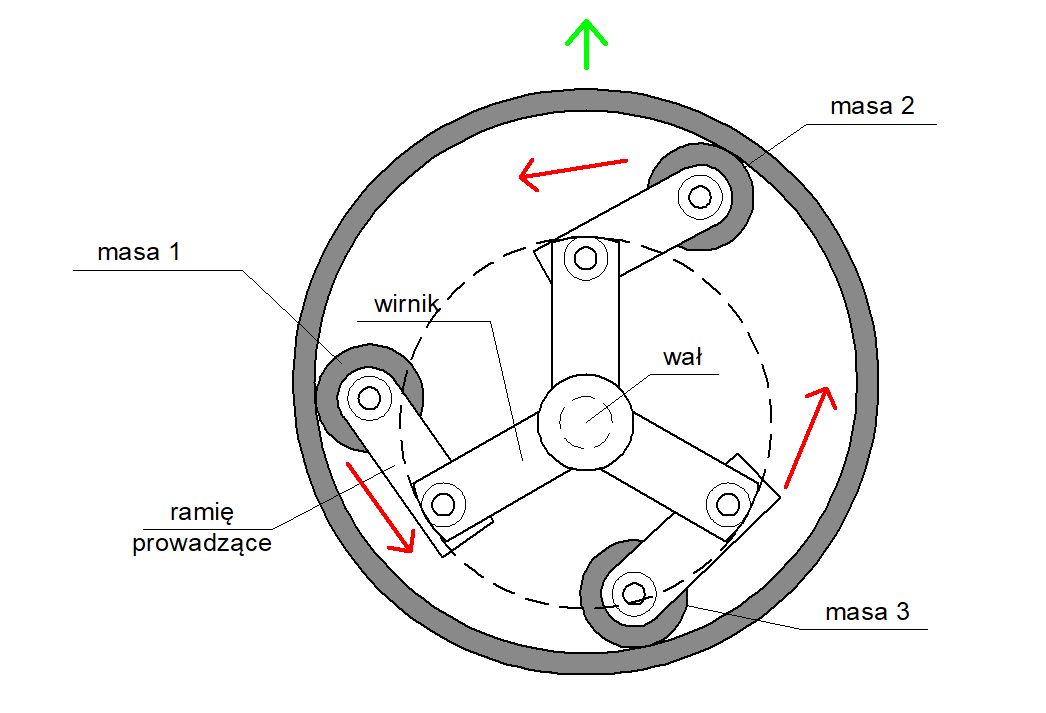
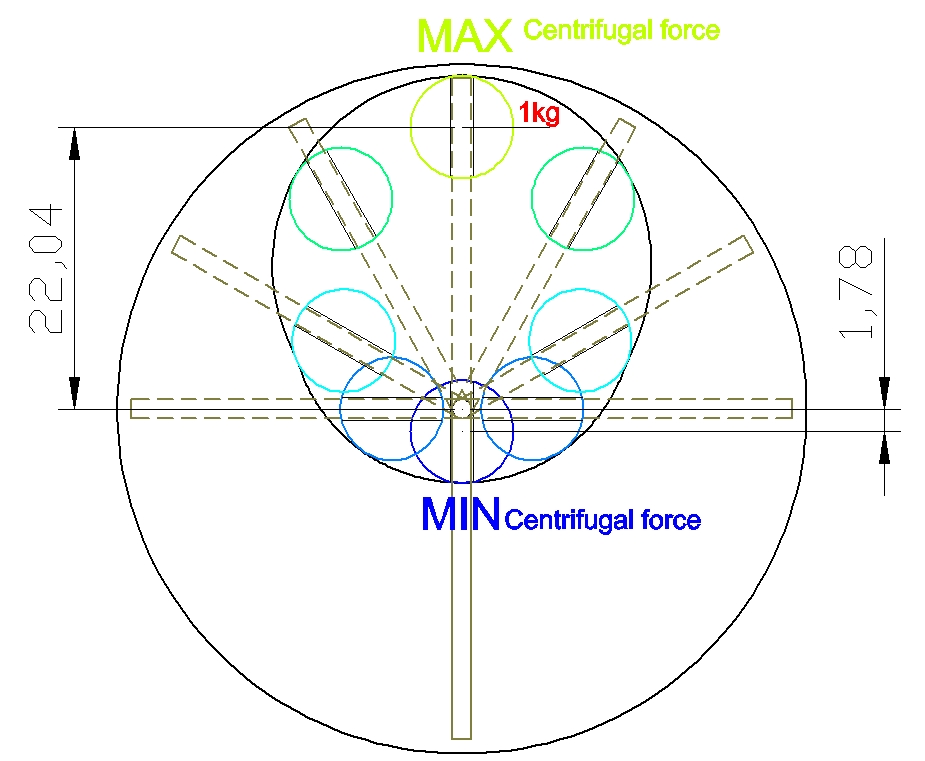
A propulsion method that allows for the generation of uncompensated mechanical forces of an inertial nature. This device uses an asymmetrically positioned rotor. The method relies on the uneven distribution of centrifugal forces. The device converts centrifugal forces into a uniform force that can be directed against gravity, and thus can be used to propel atmospheric vehicles, but also, due to its gravitational nature, spacecraft. Devices of this type do not have the limitations typical of rockets or other vehicles based on the ejection of exhaust gases through nozzles. While conventional rocket propulsion involves direct conversion of chemical energy during the oxidizer-propellant reaction, this system separates the power supply and propulsion generator systems. Consequently, an appropriate electrical source can be selected to power the inertial rotor without significantly affecting thrust parameters. This can be a chemical battery pack (an inefficient and extremely ineffective case), radioisotope generators, or other power devices. The inertial rotor system requires an electric motor to circulate mass within the closed drive system. Once mass is circulated, thrust is generated by the masses' attempts to break free from the external support structure of the inertial generators, which restricts their tendency. Where forces are doubled or even many times greater than the negligible and equivalent forces located on the left and right sides of the device and in the lower section, the centrifugal thrust, multiplied by the weight of each mass and the rotational speed, is greatest and constitutes the essence of the operation of such devices.
5 May 2021
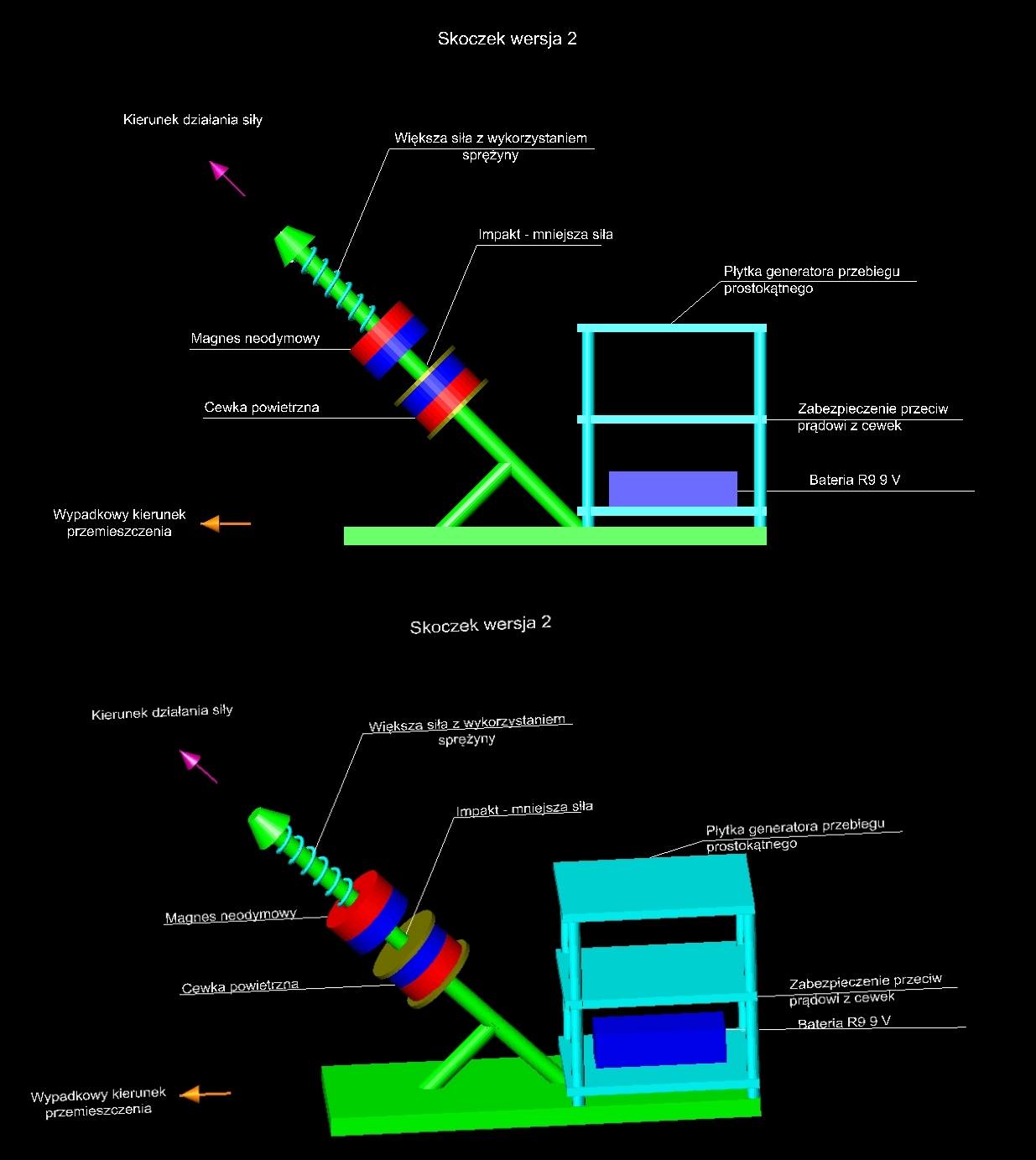
The third type is jumper method propulsion system to application of terrain transport. The inspiration of this method starts in H. W. Bull inventor works from the beginning of XX century in year 1935, when the inventor had demonstrated the reaction engine working principles. The system was compound of two weight running in opposite direction. The first weight encounter flat impact at the end of device but the second encounter a spring on the other end of the propulsion system. That means that the kinetic energy which is given in both sides is not equal and that means that the system has potential to creation of a lift in one direction without emitting none propulsion mediums like gases, liquids etc.