Solar energy is the energy available on Earth. When thinking about solar energy, two types and methods of obtaining energy come to mind: the first solution is to harness the solar energy reaching the Earth's surface in the form of electromagnetic radiation. The second is thermonuclear fusion under planetary conditions, a method of harnessing the energy that actually powers the Sun as one of countless stars in the cosmos. Currently, the Sun's electromagnetic energy is almost entirely dissipated throughout the solar system, and only a negligible portion of it reaching the surfaces of planets in the
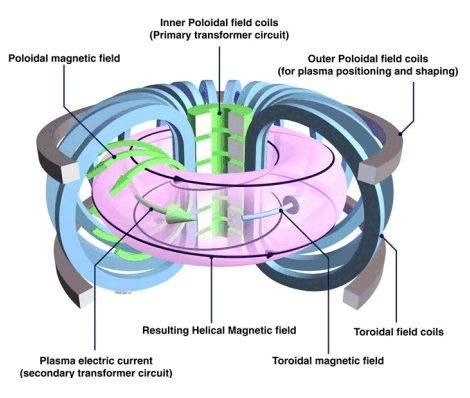
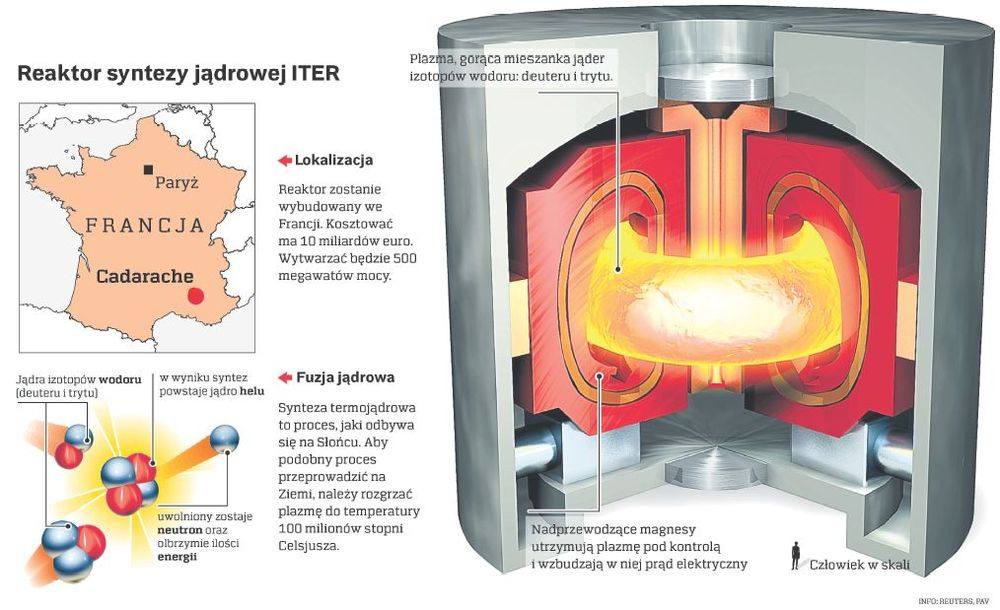
solar system can be of any use, simultaneously driving processes in the planets' atmospheres and influencing the thermal conditions within them. Earth, the only known inhabited planet in the solar system, is a place where any changes in solar activity have a crucial impact on humans and the animals that inhabit it. Throughout history, there have been instances where solar activity, meaning the amount of energy reaching Earth, was significantly lower than normal. This resulted in various fluctuations in the size of the ice caps. During certain periods, when the sun was at its minimum, these caps expanded to such an extent that the present-day areas of Europe were covered by ice sheets. In other periods, when the sun heated more intensely, heat waves occurred, the climate could become humid, and the oxygen content in the atmosphere could reach 38%. In still other periods, carbon dioxide levels rose due to large volcanic eruptions and meteorite impacts, to such an extent that the greenhouse effect intensified, leading to desertification. Today, the sun is the celestial body that can provide humanity with a virtually unlimited amount of energy for its technological civilization for thousands of years to come. As humans, we have the technical means to collect solar electromagnetic energy and convert it into electricity using photovoltaic cells, or to use the phenomenon of thermonuclear fusion, such as that which occurs inside the sun, to build thermonuclear reactors in which the energy gain is incomparably greater than in the case of cells. Existing technologies, based on knowledge of nuclear physics, enable the construction of tokamaks and other devices where ionized hydrogen fuses into helium, producing vast amounts of thermal energy. Hydrogen is the most abundant element in space and is also the primary fuel used to power stars. In main sequence stars, to which the Sun belongs, maintaining fusion is simple and involves gravitational compression of gas until the repulsion between atoms is broken and they begin to fuse together, generating thermal energy. Gravitational compression is impossible on Earth, and the only way to compress hydrogen is to trap it in magnetic fields. Hot plasma cannot touch the walls of a vacuum vessel, as it would rapidly melt, as its temperature is many times greater than that of our star's core. The Sun burns hundreds of thousands of tons of hydrogen per second, converting it into the heavier helium. Research on increasingly better photovoltaic cells?more efficient versions?is ongoing in many laboratories around the world. As long as we remain on Earth, it is reasonable to draw energy from the largest source in the solar system, the sun; it will continue to provide it for billions of years. Recent years have seen particularly rapid development of fusion reactors, from devices like JET and MAST to the largest reactor currently under construction, ITER. Deuterium and tritium are used as nuclear fuel. Obtaining deuterium is relatively simple?it occurs in seawater combined with oxygen as heavy water. Pure heavy water is obtained through prolonged electrolysis of ordinary water, then splitting the heavy water into oxygen and deuterium. Tritium is a radioactive isotope of hydrogen and is more difficult to produce. It is produced from lithium by neutron irradiation. This process uses the same neutrons produced during tokamak operation, as the tokamak is clad in lithium, thus producing its own fuel. The thermonuclear fusion process emits neutrons and high-energy electromagnetic radiation. However, there are variants of fusion that do not emit neutrons, known as neutronless fusion. The lightest form of hydrogen, protonated hydrogen (protium), is unsuitable for energy production because the energy required to fuse its nuclei into a helium nucleus is too high, and it is impossible to achieve the appropriate conditions for a thermonuclear reaction involving atomic hydrogen under Earth's conditions. The game for fusion and its practical application is ongoing, with the survival of humanity at stake. Clean energy provided by the sun is now becoming a priority, and in many countries whose environments are polluted by human activity, it has become the most important element of energy management. On the one hand, we have wind power and hydropower, but photovoltaics and fusion are the least environmentally invasive technologies, and it is expected that work on them will continue until the desired results are achieved. On the other hand, we also have a return to the use of unconventional fuels in nuclear reactors, but the extent to which this will become a reality is unclear. It seems that an industry, wound up like clockwork, dislikes more penetrating technologies, as technological revolution is not a viable or adequate form of economic growth. As long as certain solutions are available, there's a market for them, and the machinery meshes, they will be utilized. Progress is a double-edged sword; some will win and some will lose in the process. All changes have their significance and impact on economic stereotypes, but before they happen, the system will undergo a full-blown reassessment, with all its consequences.
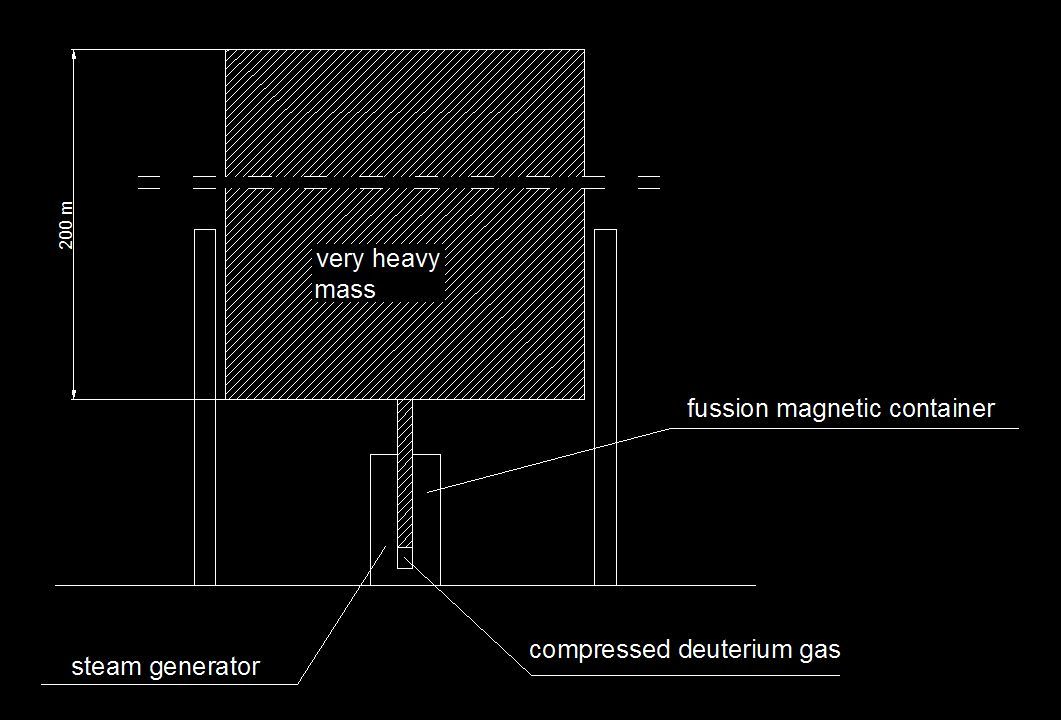
Gravity-assisted fusion.