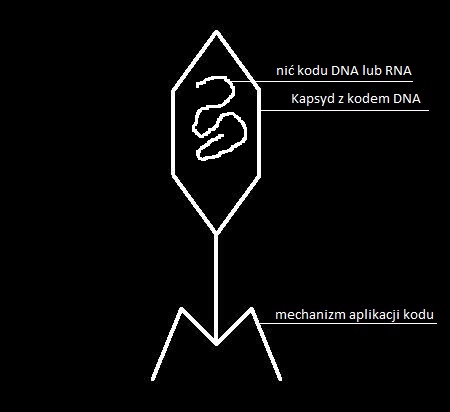
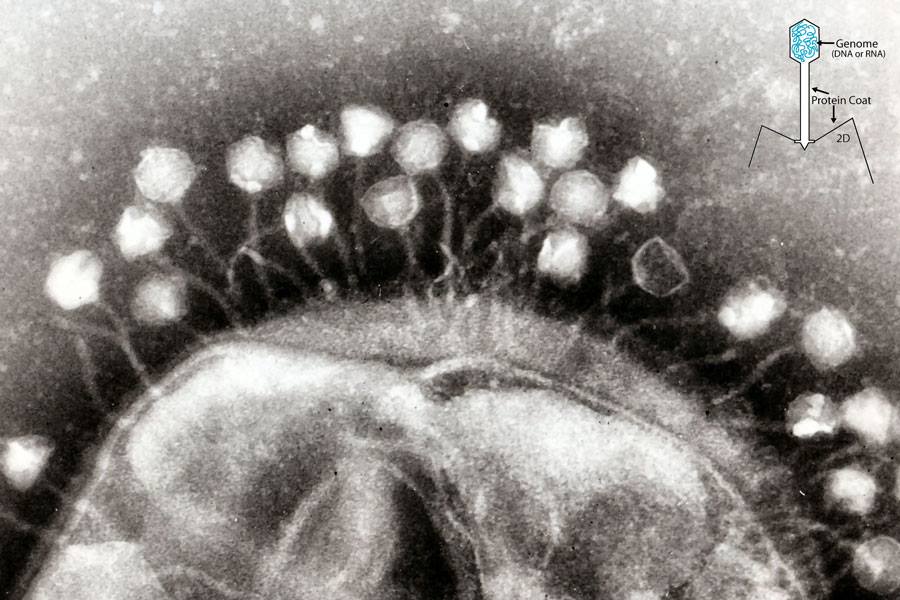
In nature, there are various types of viruses, bacteriophages, and other similar organisms with very simple structures, essentially carrying only genetic information. A virus typically consists of a strand of DNA or RNA, as in the case of retroviruses, a capsid?a protein coat?and a mechanism for inserting its code into a given cell. Bacteriophages typically attack bacterial cells, so they can be used to combat difficult-to-kill bacteria that can attack the human or animal body. Current research is aimed at combating cancer in oncology by modifying specific viruses. If their code is modified to selectively attack cancer cells rather than healthy cells, they could become a solution for human cancer patients. Currently, such techniques pose a significant technical challenge in the field of genetic engineering, as well as in characterizing individual tumors. Viral organisms are the only living organisms that have been successfully synthesized in laboratory conditions from basic building blocks such as amino acids and nucleic acids, a process that differs from standard cellular multiplication. The genetic code (genotype) of numerous types of viruses, rickettsiae, and other bacteria has been thoroughly understood. Genes from other organisms have been implanted into bacteria to produce a range of different substances (insulin, drugs, natural polymer fibers, etc.). Viruses can alter the code of any cell, and viral infection throughout the body can cure various genetic defects (e.g., phenylketonuria, cystic fibrosis). However, such techniques also carry risks, as organic interactions exceed the complexity of predicting the behavior of foreign code in a patient undergoing gene therapy. Genetic defects often have a broad impact on basic functional traits in a given organism, linked by such extensive interdependencies that their analysis requires the most powerful supercomputers. However, the complexity of software is not necessarily sufficient today, as it depends solely on the knowledge available to the computer, which is, of course, limited by the horizons of modern science. A virus itself can be programmed like a computer, using not binary code but DNA code, composed of four nucleotides (adenine, guanine, cytosine, and thymine). These combine in a precisely defined manner, dependent on the basic chemical reactions that can occur between them. The number of possible triplet combinations encoding a given information, for example, for specific enzymes and other proteins, is arbitrary, while the number of triplet combinations of four elements is limited only by their permutations. The mode of action of genes interacts with elements of the cellular and extracellular environment and is precisely chemically defined and simultaneously dependent on the available building blocks. Deoxyribonucleic acid (DNA) or RNA (tRNA, mRNA) in viruses encodes only those functions that involve the mechanism of multiplication by entering the attacked cells. The virus body lacks cytoplasm or any cellular center, and there are no cellular organelles such as mitochondria or ribosomes. Existing techniques for manipulating the virus genotype have recently undergone significant modernization. Current methods utilize natural processes, such as DNA and RNA polymerases, to insert code fragments after cleaving one of the helix branches by binding to the forks of appropriate molecules (transcriptase and other functional agglomerates associated with the organism) and rewriting the copy with the modified code. Other techniques involve obtaining relatively long chains in special solutions. Devices for polymerizing DNA also exist, operating with high precision.
10 October 2024
Virus attack on multicellular organisms
We are multicellular organisms, but perhaps we should consider how viruses (bacteriophages) attack our simpler "brethren" also composed of DNA. In ancient times, before humans appeared on Earth, bacteria were the planet's only inhabitants, floating in the waters of the oceans. They arose from the basic building blocks of today's human beings. Simple chemical reactions then provided the basis for evolving into more complex biological forms. Organisms such as viruses are carriers of DNA, in which the boundary between the living, animal world and the program composed of chemical language is not clearly defined. As long as life on Earth, based on deoxyribonucleic acid, persists, the virus will be nature's weapon, nothing less than a tool of evolution, sometimes radical, but necessary to prevent one species from dominating all others, rendering their functioning impossible. The lesson is simple: although we humans claim the right to own the Earth, the planet and the cosmos in which it floats are governed by different laws, which will often surprise us in unexpected ways, sobering us from all our ill-considered actions.