Although as a computer science student, generally without a degree, I didn't graduate with a positive result, working in another profession, programming remains an art that remains at the heart of my interests. Programming is a field of knowledge that requires constant intellectual effort from a computer scientist. It can't be learned once and for all, as programming fundamentals are constantly changing. Creating code isn't a craft, as it is characterized by strict syntax and logic, especially when code works correctly, and the code itself should be as transparent as the laws of mathematics on which it is based. Ever since I became interested in programming?and for some, these are truly ancient times, dating back to the glory days of 8-bit computers. I was able to program quite well using simple positional languages like Basic in the mid-1980s, at least for the programming situations and problems I favored. Even then, I could write simple graphics and computational programs and save data such as ASCII text using the appropriate commands. At the Construction School Complex in Zamosc, where I attended for five years, I had the opportunity to initially encounter Turbo Pascal and Turtle graphics. Later, the school had PCs powered by Intel 80486DX2 processors running the Win 3.11 operating system. After graduating, I started working at a design office, and my family and I bought our first computer with an Intel Pentium 100 MHz (0.1 GHz) processor. It was used by the company to manage its operations. However, due to my office work, I didn't have much time to hone my programming skills. It wasn't until 1999, when I was accepted to study Computer Science and Econometrics at the WSZIA in Zamosc, that I began learning relatively modern programming methods, including the HTML markup language. This language, in turn, has evolved over time into add-ons in the form of CSS, and has begun to allow combining different programming topologies in the same document, etc. Currently, I am honing my own web designing skills and looking for my place on the internet.
2. Responsiveness
9 September 2020
What does responsiveness mean in web design? A responsive website should be written so that its content automatically adapts to the current browser window size, for example, so that the entire page looks equally good on both a widescreen desktop monitor and a smartphone screen. To achieve this, code solutions, primarily HTML and CSS, should be used to maintain certain rules for the behavior of website elements. For example, one rule is to scale images and other elements by specifying their size as a percentage, which immediately prevents the possibility of images being too small or too large?in other words, disproportionate to the screen size. An important programming skill is using navigation bars so that their display of menu content, etc., changes with the browser window size, because with a horizontal navigation bar, it's often the case that the elements contained in the menu bar simply don't fit on smaller monitors and phones. Failure to program the navigation bar to behave correctly when the window is resized results in uncontrolled movement of menu items as the browser window width decreases.
3. Frontend developer.
9 September 2020
CSS, HTML, and JavaScript are tools and web programming languages used by programmers to create websites. CSS isn't a programming language in the strictest sense of the word; it's an addition to HTML that allows you to define various styles on a website and determine the appearance of pages. HTML itself is a markup language; without CSS, it looks unattractive. JavaScript allows you to define how a website works; it's a language that allows you to infuse pages with a dose of intelligence.
4. JavaScript.
9 September 2020
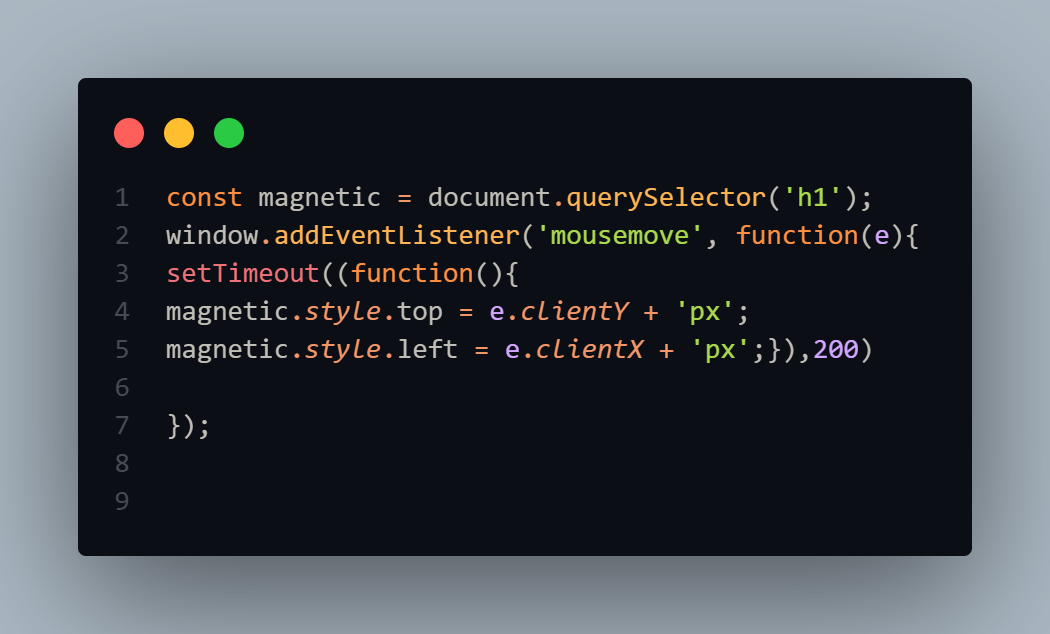
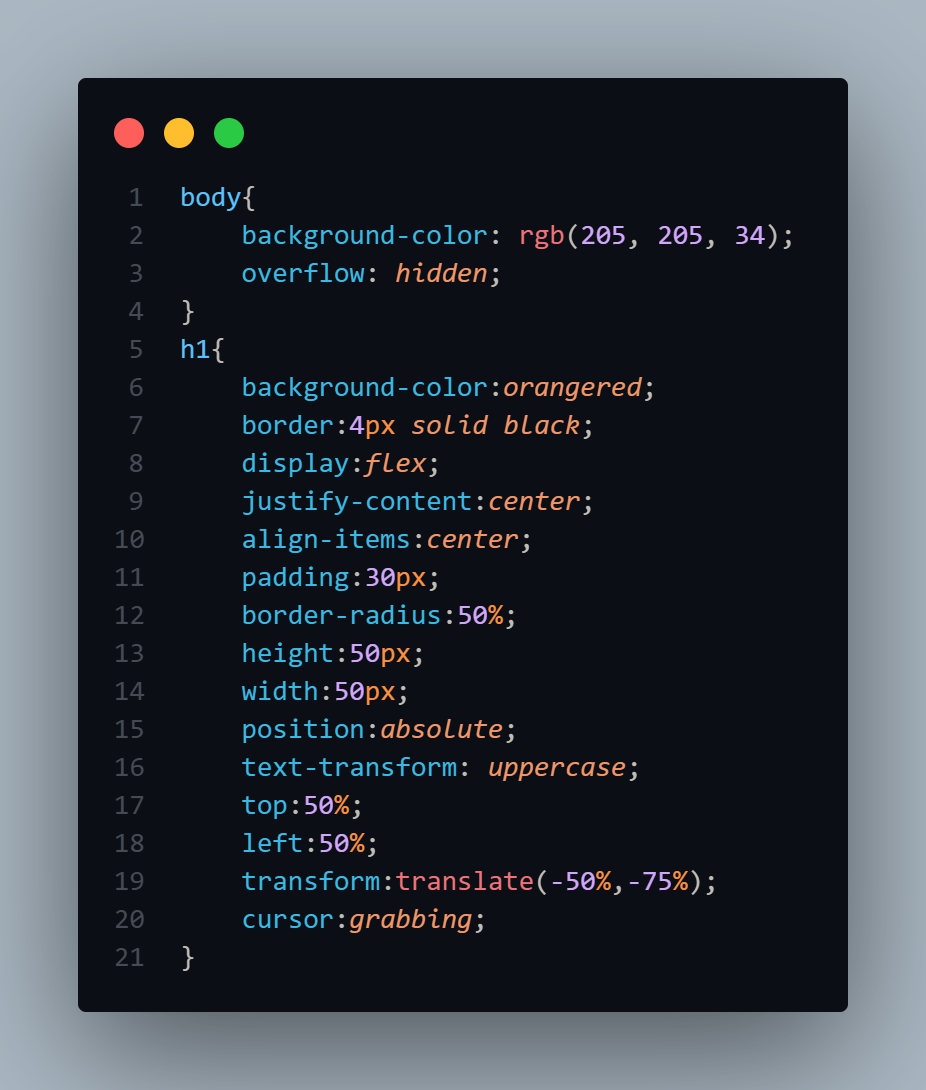
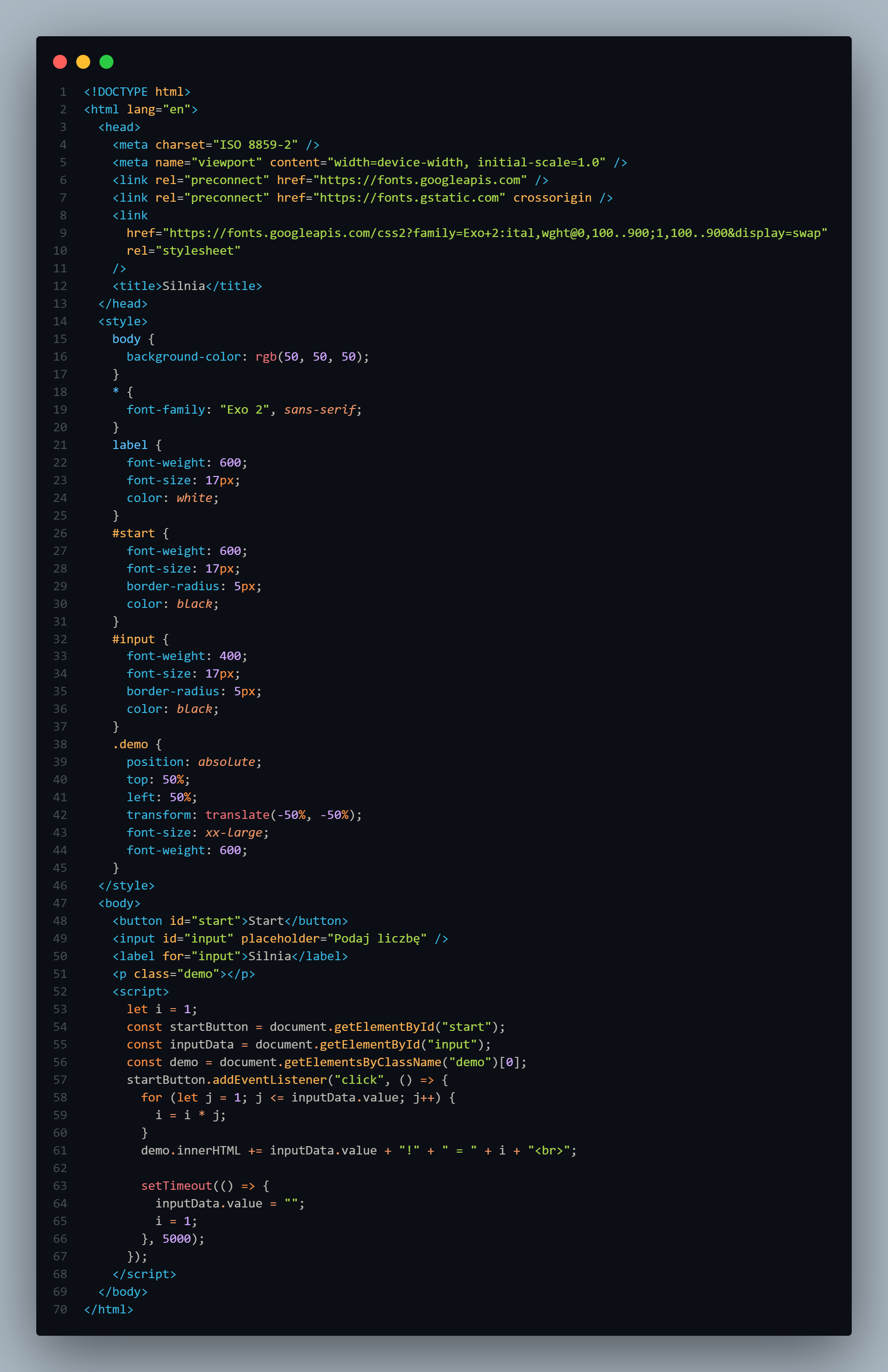
JavaScript is a scripting programming language created by Brendan Eich. The most popular use of this language is in building websites. The language is used to build interactions between the user and the interface and enables the creation of advanced animations. I've been learning this programming language for some time, although in a rather unsystematic manner, which increases the time required to fully master programming in this language. The syntax itself isn't difficult; learning new features of this language is a different matter. Microsoft's VS Code editor is excellent for learning programming, and it's free. There are numerous add-ons for this program that allow you to customize the programming environment to your needs. I've written many short programs in this language, but so far, it's all been for fun. I don't plan on writing websites for external clients yet. If I ever do, I'd rather pursue a full-stack approach, where I'd be able to build entire functionalities and websites on both the browser and server sides. A positive aspect of JavaScript is its sheer popularity in programming environments; alongside Python, it is currently the most popular browser-based web programming language. JavaScript enables interesting graphical effects, allows for the creation and management of forms, and also enables animations, significantly enhancing the final appearance and functionality of a website. It complements CSS and HTML well; without JavaScript, websites would operate in a simplistic manner; they would be static, lacking the dynamics and logic that allow for more advanced user-computer interaction. JavaScript itself is a language based on higher-level object-oriented programming. To begin programming in this language, you need to know HTML and CSS; without it, you can't proceed further, as it is a class-based language, and classes refer to the HTML document, but their style is also found in CSS styles. JavaScript-specific programming features include variable declarations, functions that perform actions, conditional statements, and mathematical functions such as randomization or rounding. The language's structure allows for the creation of multidimensional arrays and operations on them. There are a set of commands that allow you to control objects, their behavior, and perform operations on them. There are classes, as mentioned earlier, and identifiers, which we can reference through appropriate commands to perform specific operations on them. These classes and identifiers are within the structure of the HTML document. Additionally, you can use JavaScript to manipulate and change styles from within the JavaScript itself, modify styles, and add elements to the page dynamically. Dynamically means that they are not added within the HTML code structure, but are displayed and can be manipulated as if they existed within the code. Browsers are equipped with a number of useful tools, such as the console, that are helpful in coding. JavaScript handles various events, such as clicks, mouseovers, mouse movements, page loads, and hundreds of other events that are often barely used in regular programming. Working on a website requires logical thinking, knowledge of how software works, and the ability to think creatively and abstractly.
https://oldmanfrontendcoding.blogspot.com/2026/02/what-is-javascript.html
Magnetic
Factorial
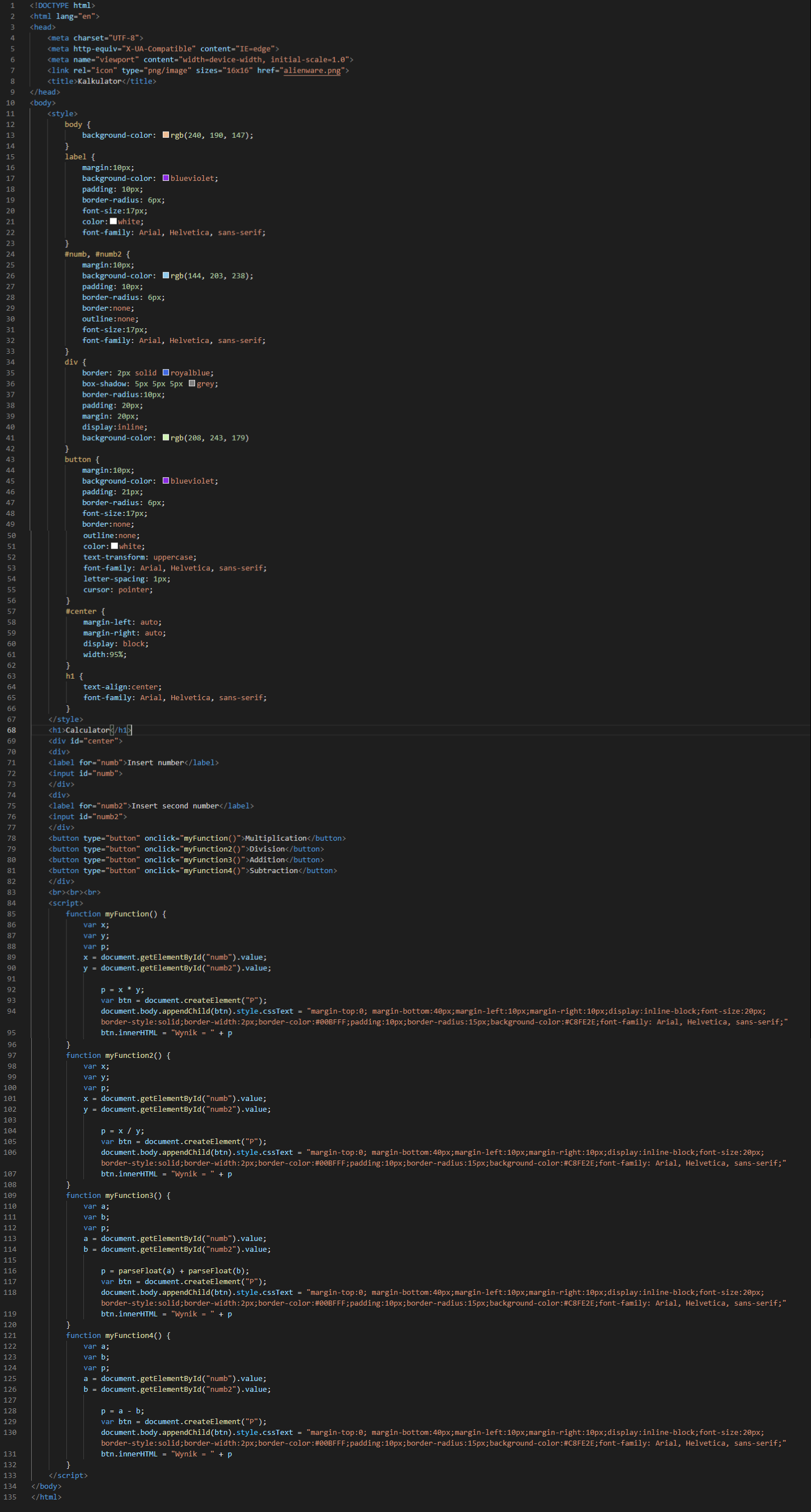
Simple calculator.
A JS Example
5. PHP.
9 September 2020
PHP is a server-side programming language. I learned the language during my school years, but then I dropped out and did little or no programming. I'm now slowly starting to remember the syntax because I wanted to improve my website to be more communicative. To run PHP programs, you need to download the XAMPP server from apachefriends and install it on your computer, you can also configure the Microsoft VS Code program, which can be downloaded from the website visualstudio.