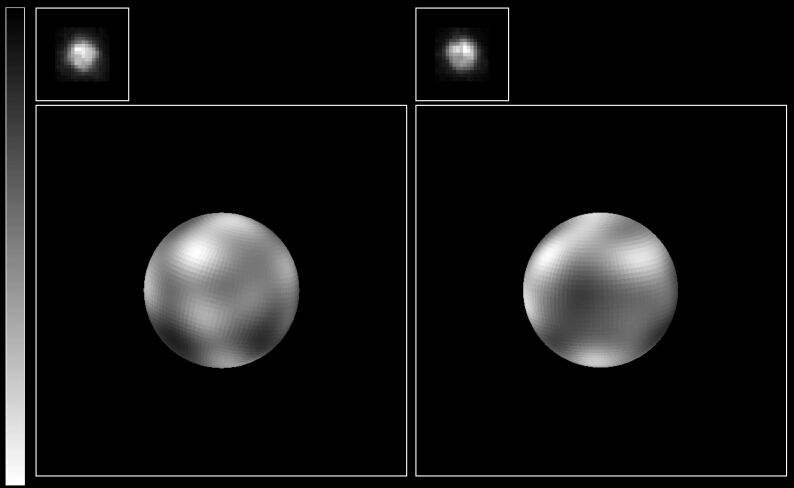
Solar system for deep space.
The solar system is a system composed of a central star and
planets, as well as a large number of moons and asteroids. The solar system is a stellar system in which humans build their civilization. The solar system is one of countless other stellar systems both in our galaxy and in nearby galaxies of the Milky Way. The universe is vast, containing billions of galaxies, which are divided into local groups and further into enormous filaments composed of local groups. It is a filament system resembling a sponge. The solar system formed billions of years ago and is a remnant of the formation of our only central star, the Sun. The Sun is a main-sequence star approximately halfway through its life, located along with its planetary system slightly on the outskirts of a spiral galaxy - the Milky Way, as our galaxy is commonly called. The galaxy in which we exist as a human race belongs to a cluster of galaxies located in a system composed of similar galaxies such as the Andromeda galaxy and the Triangulum galaxy, these galaxies belong to the local group of galaxies. There are many such local groups in the nearby cosmos. The cosmos is a space filled with billions of different types of galaxies, ranging from spiral galaxies, Seyfert galaxies (Seyfert galaxies are galaxies with extremely bright nuclei, caused by the presence of massive black holes in their central regions), elliptical and irregular galaxies like the Large and Small Magellanic Clouds, which are satellites of our galaxy and are closer to the Milky Way than the Andromeda galaxy. Additionally, the Milky Way has several small satellite dwarf galaxies - clusters of stars that orbit around it. The solar system is not an extraordinary system in the cosmos; it is an ordinary planetary system like hundreds of thousands in our galaxy alone, containing both smaller rocky planets like Mercury, Mars, and larger ones like Earth and Venus, as well as gas giants like Jupiter and Saturn. The solar system itself has not yet been fully explored, and research is ongoing. The most studied planet in the solar system is Mars, to which several space probes are sent almost every two years. The solar system holds many mysteries, one of which is the unresolved question of organic life within it, for example, on the rocky icy moons of Jupiter and Saturn, where it is known that there are vast water bodies hidden beneath the surface ice, and especially on Mars. The further from Earth, the more difficult it is to send reconnaissance ships, probes, and satellites, because the distances are so great that communication with these vehicles becomes increasingly difficult, due to the finite speed of radio waves in a vacuum (c = 300,000 km/s). All spacecraft sent from Earth have not yet left the Sun's gravitational influence. The farthest from Earth are the Voyager and Pioneer series probes sent decades ago. During this time, they have sent many interesting photos to Earth using their telecommunications antennas. They are equipped with radioisotope electric generators and do not need to rely on the weakened sunlight in distant regions, as they draw energy from atomic decay, which is the principle on which these generators operate. However, the fissile material will also be depleted in a few years, so they will stop functioning and drift in space indefinitely or, after hundreds of thousands of years, be attracted by stars in nearby planetary systems and burn up in their outer layers. The nearest star system is the binary system Alpha and Beta Centauri. One of the stars is slightly brighter than the Sun (component A) and the other slightly cooler and darker (component B). In the AB Centauri system, there is also a third star, Proxima Centauri, which is a very faint and small cold star with a mass less than 1/10 of the Sun's mass and is located slightly closer to Earth at a distance of 4.22 light-years, i.e., 39,924,576,000,000 km (just under 40 trillion kilometers) away. The components of the AB Centauri system are about 4.5 light-years from Earth, i.e., 42,573,600,000,000 km (forty-two trillion five hundred seventy-three billion six hundred million kilometers) away. The system of these three stars is gravitationally bound, and Proxima Centauri probably orbits the AB Centauri star system. Current space research indicates that many main-sequence stars near our solar system have planetary systems with Earth-like or super-Earth planets, which theoretically may have conditions favorable for sustaining organic life, i.e., having water bodies with liquid water, appropriate temperatures, i.e., located in the zone of moderate temperatures depending on the surface temperature of the central star, and being free from the aggressive influence of the star itself (flares and eruptions), i.e., the central star is an orange dwarf or yellow dwarf, like the Sun.