Robotics is a field of technology encompassing drives, electronic control with the required software, and advanced mechanics enabling the construction of all types of robots. Mastering the construction of more technologically advanced robots equipped with independent decision-making systems could dramatically accelerate the progress of civilization. A key moment in robot technology will be the development of non-rocket robot propulsion technology that is independent of fuel requirements in complete vacuum?the conditions found outside Earth's atmosphere. Combining propulsion technology with an autonomous system based on, for example, artificial intelligence or neural networks could significantly accelerate the colonization of planets in the solar system.Currently existing, and already quite well-established, robot control technology allows for the implementation of even the most sophisticated robot designs. However, remote control of robots over longer distances encounters the problem of the finite speed of electromagnetic waves in space, making controlling robots in situations requiring communication between very distant signal transmission points and their reception by robots in space impossible or very difficult. Autonomous robot control systems based on artificial intelligence circumvent this problem. The problem with conventional rocket propulsion for robotic projects lies in the low speeds achieved through such solutions. Conventional propulsion systems perform well in near-Earth situations, such as the need to launch a new satellite or build small orbital stations, but they fail when distant extraplanetary exploration is involved. However, in contemporary technology, these are the most popular methods for lifting payloads beyond the atmosphere. The specific impulse of current rockets does not exceed 450 seconds, which in practice means that reaching the closest planet to Earth requires approximately 8 months of flight time (assuming favorable planetary alignment and acceptable rocket sizes). The specific impulse of the nuclear propulsion system using liquid hydrogen, Nerva, was supposed to be 850 seconds, but it was never commercially implemented. If robots powered by forces other than rocket thrust but, for example, the interaction of fields could be developed, civilization would advance disproportionately to current technological conditions. Perhaps this is what the situation created by the largest scientific and technical centers in various regions of the Earth is leading to. All attempts to change the type and methods of propulsion available to modern spacecraft have so far failed, which, considering the period in which rocket propulsion was developed (assuming the initial date as the construction of the first liquid-fueled rocket by Robert Goddard at the beginning of the last century), may prompt consideration of the reason for the lack of other propulsion technologies operating in space today. Robotization will likely develop in parallel to space exploration technology to some extent. Today, robots perform tasks that humans are unwilling to perform due to their monotony or poor environmental conditions. In the future, they will dominate not only factories, as they do today, but will also enter areas of human life such as caring for people in need of assistance, the elderly, and the sick. They will independently prepare meals and perform other household chores. The scale and scope of robotic applications will change, and new professions and roles in society will emerge. The development of robotization and automation is well-exemplified and visible in automotive manufacturing, where robots have been widely used for a long time, and virtually every car factory has automated production lines. Not long ago, humans performed the type of work currently performed by robots, only to be replaced by machines that, once programmed, can operate 24/7 and never refuse to perform a given task. A crucial step will be achieving a balance between robot autonomy and the software created by designers. Before robots with personality traits that closely resemble humans are created on a large scale, in terms of mental characteristics, facial expressions, movement and cognitive abilities, which is already slowly happening, we need to consider whether this type of technology is what we really want.When it becomes impossible to distinguish a robot from its designer, the robot could take the designer's place without anyone noticing the change. This type of nonsense must be avoided in the future. There are two trends in robotics that will dominate the future of resource exploitation and tasks requiring extremely high precision. On the one hand, we will have robots that will control other machines (mining vehicles, road vehicles), drones with autonomous decision-making systems, and machines producing synthetic food products, such as synthetic meat. Another area of robot activity will be fully automated factories, in which no human intervention is required. These factories will produce everything necessary for life on the planet, from clothing to all everyday items. The next step in robotization may be the development of transport techniques based on the use of the gravitational field, the introduction of methods such as quantum engines, data transmission via light particles such as neutrinos, and mastering techniques for the regeneration of body tissues supported by a set of medical methods, which will change the image of the reality in which people will live.
Robotics is a fascinating field of knowledge and technology that allows for the solution of numerous technical problems. It can also expand human capabilities, including the capabilities of the human mind and body. In the coming years, technologies based on robots used off-Earth will gain in importance and will extend their functionality beyond Mars and lunar rovers. Currently developed 3D printing technology could lead to the construction of permanent bases using 3D robots, constructed from local materials, on the "silver globe" and Mars, enabling the extraction of valuable materials and raw materials for industrial purposes and initiating the development of local industry and settlement. Despite mounting technical difficulties, there is no shortage of those willing to make this type of investment colonization technology within the solar system can pay off many times over, and the invested money will not be wasted. It is expected that relevant institutions and companies will join forces to achieve their goals, and this will happen sooner than one might think. No one can block the path to exploiting the solar system's resources; the only barrier in this case is appropriate technology?it must provide certainty and safety, especially when it involves manned transportation outside the atmosphere. There are also those willing to build orbital infrastructure for tourism purposes on a much larger scale than is currently the case, provided the situation is ripe for profit. The solar system isn't composed solely of planets, their moons, and the sun; instead, it's full of smaller and larger rock and metallic fragments, which are like treasure troves of precious metals and raw materials essential to electronics and all of Earth's industry. Robots can contribute to the faster development of appropriate techniques for exploiting the resources of these solar system objects.
Humans cannot work everywhere, and not all conditions are suitable for work efficiency or personal safety. For example, cosmic and solar radiation are harmful and directly lethal to the human body hence the potential for robots. On Earth, we live and interact in conditions where the current atmosphere largely protects humans from both harmful radiation from the central star in the solar system and from the harsh radiation from deep space. Robots are virtually immune to this type of impact. However, operating in radiation environments, their components can be partially activated. In practice, we have relatively little knowledge of the various hazards that can be encountered in the solar system we are still learning about it no Mars rover that has been on this planet long enough has returned to Earth to conduct both physical and microbiological measurements. The Moon is likely generally sterile, and compared to Mars, the microbiological threat is minimal. It's difficult to determine whether Mars is sterile. While no spores have been detected in the ground, they may exist deeper underground. It's important to remember that the planet's surface has only been studied since 1975, since the landing of the first Viking probe. This is a relatively short period of time to confidently rule out the possibility of a threat. Furthermore, Mars's thin atmosphere allows meteorites, which may contain spores from other planetary systems, to reach its surface. It's also possible that the planet has already been "infected" with bacteria from Earth. Despite the careful attention paid to ensuring sterility of vehicles sent from Earth, some bacteria could have survived the flight of probes sent to Mars. The human body is an open system sensitive to invasive genetic code and bacterial toxins. This makes it safer in some situations to send well-planned robotic missions which is still being done today, ensuring that they make appropriate preparations to provide humans with the required safety, including shelter, food supplies, potable water, thermal protection, oxygen, chemical propulsors such as methane and hydrogen, and all other substances necessary for planetary exploration on the surface of colonized planets. However, the situation is such that currently, very few organizations on Earth have a better chance in the race to the "red planet." Mastering life support systems on board colonization vehicles and rocket-powered transport is a closely interconnected set of techniques, without the interplay of which no manned mission is possible. Without achieving a certain technological threshold, the whole thing becomes meaningless. Maintaining this level of performance and the possibility of interplanetary communication requires financial outlays that only a very few institutions in the world are capable of sustaining with positive results. Although work is underway to reduce the cost of launching 1 kg of payload into space using rockets, for example by recovering rocket stages or attempting to construct reusable rockets, the situation on a global scale is still quite unfavorable.
Perhaps in the near future, robotics and automation will enable a more extensive and advanced colonization of the entire solar system. Until now, we have witnessed uncoordinated and fragmented launches of small robotic missions by various space agencies (NASA, ESA), such as the Spirit and Opportunity missions, and the more recent Curiosity mission, or the recently successful Juno mission currently orbiting Jupiter. Various efforts in robotics and automation will contribute to preparing the technological base for pioneers in colonizing planets like Mars and perhaps even building cities in the upper atmosphere of Venus. Current attempts to colonize planets in the solar system are struggling for funding; there is no centrally controlled, supranational system overseeing solar system exploration that would enable the more complex and multi-threaded production of robots equipped with artificial intelligence, capable of implementing more significant changes in the target environments where they would be sent. To achieve a significant and crucial result, such missions would require hundreds of robots sent to a given planet, capable of cooperating with one another, obtaining the necessary substances by refining the regolith and available soil, and capable of constructing shelters for humans, as well as all energy supply systems. Whether this energy will be nuclear or conventional depends on the scale of the operation, but the use of nuclear energy should significantly impact the colonizers' ability to survive on site. Essentially, energy supply and the production of the necessary substances must be automated and highly reliable, as reliance on technology will be the only form and means of survival on many new planetary environments or moons, for example, for refining platinum and gold. For this type of activity to occur, knowledge and standard skills are not enough; they also require the ability to anticipate events, which can unfold very quickly in the event of a crisis. No human has yet set foot on any planet other than Earth, which clearly indicates that the world is currently too absorbed in its own conflicting interests, which does not serve its inhabitants in any way, but to achieve concrete results, cooperation between teams of people with knowledge and technological resources is needed.We will venture into space for one important reason: our planet will wear out and, after a certain period of time, will be of no greater value to the human race. We have now developed technologies that systematically exterminate from Earth quite large numbers of other species that still enjoy the ability to live in a polluted, yet still sustaining, environment. Artificial meat, GMOs, and artificially produced oxygen and water could lead to a future devoid of essential nature. Instead, Earth will become an urbanized and industrialized system, the ecosystem itself will be deprived of continuity, and individual links will be broken once and for all. Human clones intended for organ replacement will provide so-called "eternal life" for their owners. However, the central nervous system, which determines personality, cannot be easily replaced, even if cloning succeeds in replacing all other organs and skin. Theorizing that systems such as the transition to electric technology as a whole can, but should not necessarily, lead to relieving our planet's ecosystem of a harmful species, one might call humans, who act in clearly suicidal ways and pose a serious threat to the existence of other species inhabiting Earth. Therefore, we must consider what is more important: saving a afflicted population through individual action, such as giving people a fish rather than a fishing rod?for what else is providing food, medicine, and clothing without creating the necessary industry, infrastructure, including electrification of economically underdeveloped regions of the world, and adequate education? Or perhaps turning to colonization, for example, of Mars, while developing advanced technologies that will pay off handsomely in the long run. The millions of colonizers venturing to this planet will, after all, make way for other, poorer individuals who will be able to eat their fill or stay in air-conditioned rooms in sweltering conditions. We must focus on eliminating threats from space as much as possible and developing more economical methods of extraplanetary transport, because the situation will eventually force the world and its politicians to do so anyway. Otherwise, the opposite effect will occur: rapid depopulation due to serious research failures, the impact of a large fragment of a space rock, or global warfare, as we have already witnessed several times before. Demographic growth inevitably intensifies the wave of hatred and aggression, both at the individual and national level. Planning, even any other biological design, will be of no help in this regard, as environmental conditions ultimately influence human character. Therefore, the number of "defective" individuals, according to the law of probability, will be impossible to estimate anyway, and educational efforts will become an ineffective solution. In this regard, we have, for example, terrorism based on hatred, yet terrorists using terrorist methods cannot be completely educated and currently constitute a form of destabilization of the multifaceted world order, which cannot be ignored, because such a situation can spiral out of control and constitutes yet another problem, an exceptionally difficult nut to crack for attempts to implement control and international security. On the other hand, there exists in more developed societies a strong desire to reject expressions of dissenting thinking and to exploit individuals within the legal and economic system, with negative consequences for civilization. This is driven by people possessed by various ideas, not always directed towards the common good. Here we have an unjustified influence on the technology of realities established by old methods of thought. No one in today's civilization has yet broken with or definitively cut themselves off from the general pattern of political practice, the technology we currently use. Even the greatest minds of our time have not been given a chance for 100% room to maneuver, nor have most of their key visions been realized. For the warriors who exploit terrorism, Western philosophy is the work of demons. These cultures will never adopt a model of functioning based on these principles, and this is another obstacle to uniting nations to accelerate the exploration of the solar system. The divisions are far greater than a cursory glance can reveal. Much of Western culture, in terms of human mentality, has been effectively taken over by the monetary system itself, and life has become a training ground for dominated, determined, and possessive individuals, deprived, even worse, of a useful vision. However, it is already clear that a bored society is seeking a different kind of escape, especially in more developed economies. This situation and tendency may mature into new nations joining their ranks, and technological progress will improve the situation to the point where disease and poverty disappear, and technology will not transform into a monster devouring its creator, as might happen with AI or nuclear technology.
Motto: "Nothing is impossible, except that the state of your mind makes it so". - John R.R. Searl.
********
10 October 2024
Robotics in inertial propulsion
Robotics, automation and digital electronics are fields that, combined with new trends in technology such as drives using the mechanics and inertia of solids and liquids, based on an innovative approach to physics, may, in time, become a key technological thread capable of elevating humans as rational beings to a level of civilization in which space travel is commonplace and accessible to the standard citizen of this planet, regardless of social and economic status.A situation where someone could work on the Moon and live on Mars, or work on Earth and live on one of Neptune's moons, and travel between these two places daily or weekly, might cease to be an imaginary thematic setting from Lem's stories. It's enough to realize that in the range between the escape velocities of the most massive celestial bodies in the solar system and the speed of 5-10% of light, or about 15,000-30,000 km/s, which nuclear rockets would be capable of, and which may never be built due to radiation safety concerns and the enormous construction costs, there may be other, less dangerous methods of transportation, about which some probably know nothing or very little yet, capable of not only reaching 5% of light but even much, much faster, and certainly surpassing all methods of space travel currently available to humans in terms of speed, increasing these speeds by a factor of 10^2, if not even 10^3. Currently, propulsion based on the dynamic effects of matter movement, utilizing centrifugal forces or reactive forces in a system of shifting positions of at least two masses, could present itself in brighter and more distinct colors if financial resources were available to develop these ideas into forms useful in space. On the other hand, there are technological problems, such as radiation protection and problems stemming from social psychology, which would be difficult to address, even with appropriate technology to shorten space travel to a minimum. Currently, there are a set of technological rules that make human presence in space possible to a limited extent, and these are very difficult to change. These rules represent a meager success for humanity and should be approached with measured enthusiasm. Nothing happens by itself. Civilization represents a closed system in which, unfortunately, the power of capital still prevails over the equity and utilitarian considerations that support the use of certain innovative technologies. On a global scale, this is reflected in the fact that poverty and misery affecting tens of millions of people is a real problem for secondary actions that do not eliminate the underlying causes, i.e., the faulty technology itself, but only affect the symptoms of these causes. Robotics technology is the future, but using conventional methods, its effects are quite predictable. In my opinion, the most important technology is one that can be applied beyond Earth on a large scale, at great distances from the Sun, because humanity's future lies beyond the solar system. This type of technology should be considered above all. Humans are heading there, into the unknown, and to sustain their species, they will leave the solar system, because the solar system will be destroyed, if not by the sun's shedding of its outer layers, then by other cosmic cataclysms such as gamma-ray bursts, or the very activities of irresponsible social factions on their home planet. Any terrestrial or space infrastructure built within the solar system is meaningless if it is built without the primary goal of achieving rapid interstellar transport. Only technology enabling travel between star systems and perhaps galaxies has a rational justification, because nothing is permanent on Earth, and the solar system is not eternal. If we remain on Earth without developing any universal methods of energy production and transportation, we will fail as a civilization, and no philosophy or religious tradition will help us. Humans are not subject to the forces of nature or their own fate; they are called to understand and acquire universal knowledge, thanks to which they will be able to advance to a higher spiritual and intellectual level and build a civilization commensurate with this knowledge and, consequently, the skills. For humans, the universe should not remain a mystery forever. All technological problems can be overcome. None of the current scientific and technological limits permanently and permanently close the door to deep exploration of all known and unknown regions of the cosmos. The key issue is only the psychology, mentality, and consciousness available to humans, and not the seemingly closed possibilities of nature. Key technology and our as-yet-incomplete science will not be limited by our perception of reality and physics, as these are temporary matters, resulting from the current state of knowledge, and there is no point in prejudging anything.

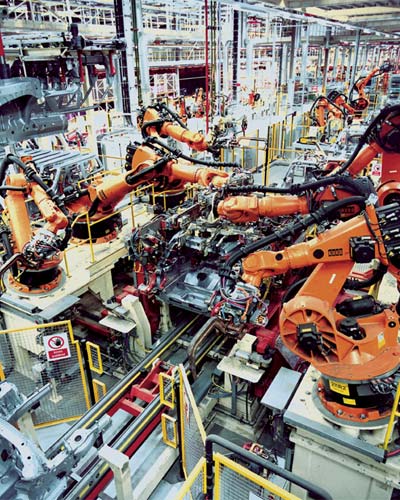 Currently existing, and already quite well-established, robot control technology allows for the implementation of even the most sophisticated robot designs. However, remote control of robots over longer distances encounters the problem of the finite speed of electromagnetic waves in space, making controlling robots in situations requiring communication between very distant signal transmission points and their reception by robots in space impossible or very difficult. Autonomous robot control systems based on artificial intelligence circumvent this problem. The problem with conventional rocket propulsion for robotic projects lies in the low speeds achieved through such solutions. Conventional propulsion systems perform well in near-Earth situations, such as the need to launch a new satellite or build small orbital stations, but they fail when distant extraplanetary exploration is involved. However, in contemporary technology, these are the most popular methods for lifting payloads beyond the atmosphere. The specific impulse of current rockets does not exceed 450 seconds, which in practice means that reaching the closest planet to Earth requires approximately 8 months of flight time (assuming favorable planetary alignment and acceptable rocket sizes). The specific impulse of the nuclear propulsion system using liquid hydrogen, Nerva, was supposed to be 850 seconds, but it was never commercially implemented. If robots powered by forces other than rocket thrust but, for example, the interaction of fields could be developed, civilization would advance disproportionately to current technological conditions. Perhaps this is what the situation created by the largest scientific and technical centers in various regions of the Earth is leading to. All attempts to change the type and methods of propulsion available to modern spacecraft have so far failed, which, considering the period in which rocket propulsion was developed (assuming the initial date as the construction of the first liquid-fueled rocket by Robert Goddard at the beginning of the last century), may prompt consideration of the reason for the lack of other propulsion technologies operating in space today. Robotization will likely develop in parallel to space exploration technology to some extent. Today, robots perform tasks that humans are unwilling to perform due to their monotony or poor environmental conditions. In the future, they will dominate not only factories, as they do today, but will also enter areas of human life such as caring for people in need of assistance, the elderly, and the sick. They will independently prepare meals and perform other household chores. The scale and scope of robotic applications will change, and new professions and roles in society will emerge. The development of robotization and automation is well-exemplified and visible in automotive manufacturing, where robots have been widely used for a long time, and virtually every car factory has automated production lines. Not long ago, humans performed the type of work currently performed by robots, only to be replaced by machines that, once programmed, can operate 24/7 and never refuse to perform a given task. A crucial step will be achieving a balance between robot autonomy and the software created by designers. Before robots with personality traits that closely resemble humans are created on a large scale, in terms of mental characteristics, facial expressions, movement and cognitive abilities, which is already slowly happening, we need to consider whether this type of technology is what we really want.
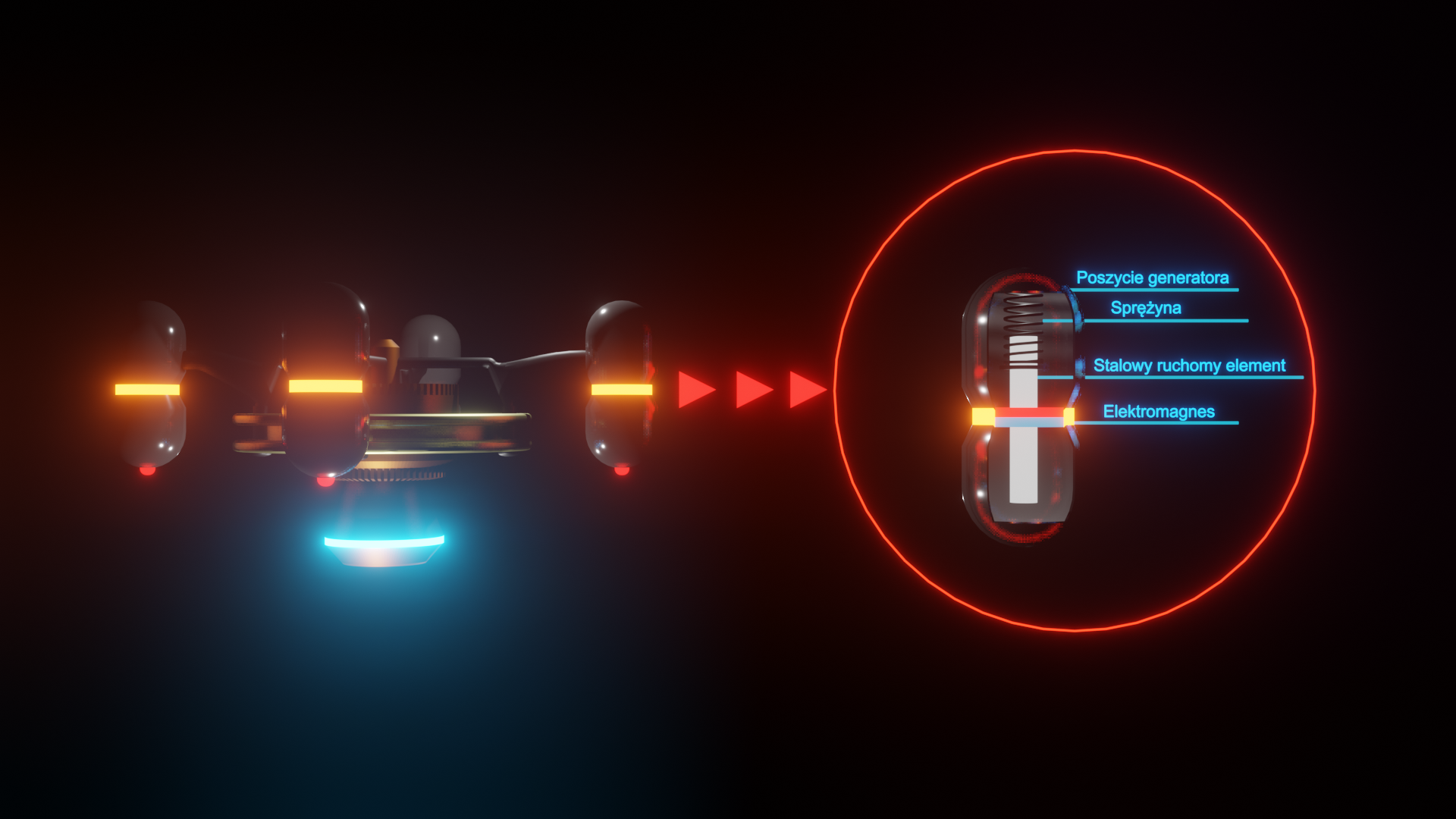 When it becomes impossible to distinguish a robot from its designer, the robot could take the designer's place without anyone noticing the change. This type of nonsense must be avoided in the future. There are two trends in robotics that will dominate the future of resource exploitation and tasks requiring extremely high precision. On the one hand, we will have robots that will control other machines (mining vehicles, road vehicles), drones with autonomous decision-making systems, and machines producing synthetic food products, such as synthetic meat. Another area of robot activity will be fully automated factories, in which no human intervention is required. These factories will produce everything necessary for life on the planet, from clothing to all everyday items. The next step in robotization may be the development of transport techniques based on the use of the gravitational field, the introduction of methods such as quantum engines, data transmission via light particles such as neutrinos, and mastering techniques for the regeneration of body tissues supported by a set of medical methods, which will change the image of the reality in which people will live.
Robotics is a fascinating field of knowledge and technology that allows for the solution of numerous technical problems. It can also expand human capabilities, including the capabilities of the human mind and body. In the coming years, technologies based on robots used off-Earth will gain in importance and will extend their functionality beyond Mars and lunar rovers. Currently developed 3D printing technology could lead to the construction of permanent bases using 3D robots, constructed from local materials, on the "silver globe" and Mars, enabling the extraction of valuable materials and raw materials for industrial purposes and initiating the development of local industry and settlement. Despite mounting technical difficulties, there is no shortage of those willing to make this type of investment colonization technology within the solar system can pay off many times over, and the invested money will not be wasted. It is expected that relevant institutions and companies will join forces to achieve their goals, and this will happen sooner than one might think. No one can block the path to exploiting the solar system's resources; the only barrier in this case is appropriate technology?it must provide certainty and safety, especially when it involves manned transportation outside the atmosphere. There are also those willing to build orbital infrastructure for tourism purposes on a much larger scale than is currently the case, provided the situation is ripe for profit. The solar system isn't composed solely of planets, their moons, and the sun; instead, it's full of smaller and larger rock and metallic fragments, which are like treasure troves of precious metals and raw materials essential to electronics and all of Earth's industry. Robots can contribute to the faster development of appropriate techniques for exploiting the resources of these solar system objects.
Humans cannot work everywhere, and not all conditions are suitable for work efficiency or personal safety. For example, cosmic and solar radiation are harmful and directly lethal to the human body hence the potential for robots. On Earth, we live and interact in conditions where the current atmosphere largely protects humans from both harmful radiation from the central star in the solar system and from the harsh radiation from deep space. Robots are virtually immune to this type of impact. However, operating in radiation environments, their components can be partially activated. In practice, we have relatively little knowledge of the various hazards that can be encountered in the solar system we are still learning about it no Mars rover that has been on this planet long enough has returned to Earth to conduct both physical and microbiological measurements. The Moon is likely generally sterile, and compared to Mars, the microbiological threat is minimal. It's difficult to determine whether Mars is sterile. While no spores have been detected in the ground, they may exist deeper underground. It's important to remember that the planet's surface has only been studied since 1975, since the landing of the first Viking probe. This is a relatively short period of time to confidently rule out the possibility of a threat. Furthermore, Mars's thin atmosphere allows meteorites, which may contain spores from other planetary systems, to reach its surface. It's also possible that the planet has already been "infected" with bacteria from Earth. Despite the careful attention paid to ensuring sterility of vehicles sent from Earth, some bacteria could have survived the flight of probes sent to Mars. The human body is an open system sensitive to invasive genetic code and bacterial toxins. This makes it safer in some situations to send well-planned robotic missions which is still being done today, ensuring that they make appropriate preparations to provide humans with the required safety, including shelter, food supplies, potable water, thermal protection, oxygen, chemical propulsors such as methane and hydrogen, and all other substances necessary for planetary exploration on the surface of colonized planets. However, the situation is such that currently, very few organizations on Earth have a better chance in the race to the "red planet." Mastering life support systems on board colonization vehicles and rocket-powered transport is a closely interconnected set of techniques, without the interplay of which no manned mission is possible. Without achieving a certain technological threshold, the whole thing becomes meaningless. Maintaining this level of performance and the possibility of interplanetary communication requires financial outlays that only a very few institutions in the world are capable of sustaining with positive results. Although work is underway to reduce the cost of launching 1 kg of payload into space using rockets, for example by recovering rocket stages or attempting to construct reusable rockets, the situation on a global scale is still quite unfavorable.
When it becomes impossible to distinguish a robot from its designer, the robot could take the designer's place without anyone noticing the change. This type of nonsense must be avoided in the future. There are two trends in robotics that will dominate the future of resource exploitation and tasks requiring extremely high precision. On the one hand, we will have robots that will control other machines (mining vehicles, road vehicles), drones with autonomous decision-making systems, and machines producing synthetic food products, such as synthetic meat. Another area of robot activity will be fully automated factories, in which no human intervention is required. These factories will produce everything necessary for life on the planet, from clothing to all everyday items. The next step in robotization may be the development of transport techniques based on the use of the gravitational field, the introduction of methods such as quantum engines, data transmission via light particles such as neutrinos, and mastering techniques for the regeneration of body tissues supported by a set of medical methods, which will change the image of the reality in which people will live.
Robotics is a fascinating field of knowledge and technology that allows for the solution of numerous technical problems. It can also expand human capabilities, including the capabilities of the human mind and body. In the coming years, technologies based on robots used off-Earth will gain in importance and will extend their functionality beyond Mars and lunar rovers. Currently developed 3D printing technology could lead to the construction of permanent bases using 3D robots, constructed from local materials, on the "silver globe" and Mars, enabling the extraction of valuable materials and raw materials for industrial purposes and initiating the development of local industry and settlement. Despite mounting technical difficulties, there is no shortage of those willing to make this type of investment colonization technology within the solar system can pay off many times over, and the invested money will not be wasted. It is expected that relevant institutions and companies will join forces to achieve their goals, and this will happen sooner than one might think. No one can block the path to exploiting the solar system's resources; the only barrier in this case is appropriate technology?it must provide certainty and safety, especially when it involves manned transportation outside the atmosphere. There are also those willing to build orbital infrastructure for tourism purposes on a much larger scale than is currently the case, provided the situation is ripe for profit. The solar system isn't composed solely of planets, their moons, and the sun; instead, it's full of smaller and larger rock and metallic fragments, which are like treasure troves of precious metals and raw materials essential to electronics and all of Earth's industry. Robots can contribute to the faster development of appropriate techniques for exploiting the resources of these solar system objects.
Humans cannot work everywhere, and not all conditions are suitable for work efficiency or personal safety. For example, cosmic and solar radiation are harmful and directly lethal to the human body hence the potential for robots. On Earth, we live and interact in conditions where the current atmosphere largely protects humans from both harmful radiation from the central star in the solar system and from the harsh radiation from deep space. Robots are virtually immune to this type of impact. However, operating in radiation environments, their components can be partially activated. In practice, we have relatively little knowledge of the various hazards that can be encountered in the solar system we are still learning about it no Mars rover that has been on this planet long enough has returned to Earth to conduct both physical and microbiological measurements. The Moon is likely generally sterile, and compared to Mars, the microbiological threat is minimal. It's difficult to determine whether Mars is sterile. While no spores have been detected in the ground, they may exist deeper underground. It's important to remember that the planet's surface has only been studied since 1975, since the landing of the first Viking probe. This is a relatively short period of time to confidently rule out the possibility of a threat. Furthermore, Mars's thin atmosphere allows meteorites, which may contain spores from other planetary systems, to reach its surface. It's also possible that the planet has already been "infected" with bacteria from Earth. Despite the careful attention paid to ensuring sterility of vehicles sent from Earth, some bacteria could have survived the flight of probes sent to Mars. The human body is an open system sensitive to invasive genetic code and bacterial toxins. This makes it safer in some situations to send well-planned robotic missions which is still being done today, ensuring that they make appropriate preparations to provide humans with the required safety, including shelter, food supplies, potable water, thermal protection, oxygen, chemical propulsors such as methane and hydrogen, and all other substances necessary for planetary exploration on the surface of colonized planets. However, the situation is such that currently, very few organizations on Earth have a better chance in the race to the "red planet." Mastering life support systems on board colonization vehicles and rocket-powered transport is a closely interconnected set of techniques, without the interplay of which no manned mission is possible. Without achieving a certain technological threshold, the whole thing becomes meaningless. Maintaining this level of performance and the possibility of interplanetary communication requires financial outlays that only a very few institutions in the world are capable of sustaining with positive results. Although work is underway to reduce the cost of launching 1 kg of payload into space using rockets, for example by recovering rocket stages or attempting to construct reusable rockets, the situation on a global scale is still quite unfavorable.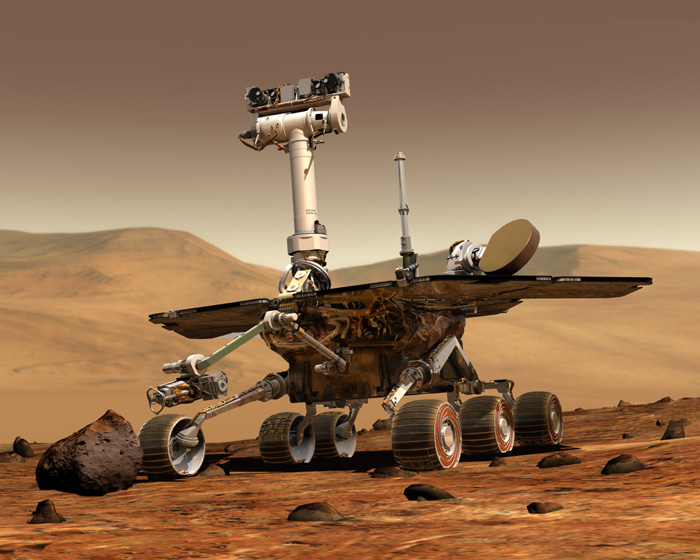 We will venture into space for one important reason: our planet will wear out and, after a certain period of time, will be of no greater value to the human race. We have now developed technologies that systematically exterminate from Earth quite large numbers of other species that still enjoy the ability to live in a polluted, yet still sustaining, environment. Artificial meat, GMOs, and artificially produced oxygen and water could lead to a future devoid of essential nature. Instead, Earth will become an urbanized and industrialized system, the ecosystem itself will be deprived of continuity, and individual links will be broken once and for all. Human clones intended for organ replacement will provide so-called "eternal life" for their owners. However, the central nervous system, which determines personality, cannot be easily replaced, even if cloning succeeds in replacing all other organs and skin. Theorizing that systems such as the transition to electric technology as a whole can, but should not necessarily, lead to relieving our planet's ecosystem of a harmful species, one might call humans, who act in clearly suicidal ways and pose a serious threat to the existence of other species inhabiting Earth. Therefore, we must consider what is more important: saving a afflicted population through individual action, such as giving people a fish rather than a fishing rod?for what else is providing food, medicine, and clothing without creating the necessary industry, infrastructure, including electrification of economically underdeveloped regions of the world, and adequate education? Or perhaps turning to colonization, for example, of Mars, while developing advanced technologies that will pay off handsomely in the long run. The millions of colonizers venturing to this planet will, after all, make way for other, poorer individuals who will be able to eat their fill or stay in air-conditioned rooms in sweltering conditions. We must focus on eliminating threats from space as much as possible and developing more economical methods of extraplanetary transport, because the situation will eventually force the world and its politicians to do so anyway. Otherwise, the opposite effect will occur: rapid depopulation due to serious research failures, the impact of a large fragment of a space rock, or global warfare, as we have already witnessed several times before. Demographic growth inevitably intensifies the wave of hatred and aggression, both at the individual and national level. Planning, even any other biological design, will be of no help in this regard, as environmental conditions ultimately influence human character. Therefore, the number of "defective" individuals, according to the law of probability, will be impossible to estimate anyway, and educational efforts will become an ineffective solution. In this regard, we have, for example, terrorism based on hatred, yet terrorists using terrorist methods cannot be completely educated and currently constitute a form of destabilization of the multifaceted world order, which cannot be ignored, because such a situation can spiral out of control and constitutes yet another problem, an exceptionally difficult nut to crack for attempts to implement control and international security. On the other hand, there exists in more developed societies a strong desire to reject expressions of dissenting thinking and to exploit individuals within the legal and economic system, with negative consequences for civilization. This is driven by people possessed by various ideas, not always directed towards the common good. Here we have an unjustified influence on the technology of realities established by old methods of thought. No one in today's civilization has yet broken with or definitively cut themselves off from the general pattern of political practice, the technology we currently use. Even the greatest minds of our time have not been given a chance for 100% room to maneuver, nor have most of their key visions been realized. For the warriors who exploit terrorism, Western philosophy is the work of demons. These cultures will never adopt a model of functioning based on these principles, and this is another obstacle to uniting nations to accelerate the exploration of the solar system. The divisions are far greater than a cursory glance can reveal. Much of Western culture, in terms of human mentality, has been effectively taken over by the monetary system itself, and life has become a training ground for dominated, determined, and possessive individuals, deprived, even worse, of a useful vision. However, it is already clear that a bored society is seeking a different kind of escape, especially in more developed economies. This situation and tendency may mature into new nations joining their ranks, and technological progress will improve the situation to the point where disease and poverty disappear, and technology will not transform into a monster devouring its creator, as might happen with AI or nuclear technology.
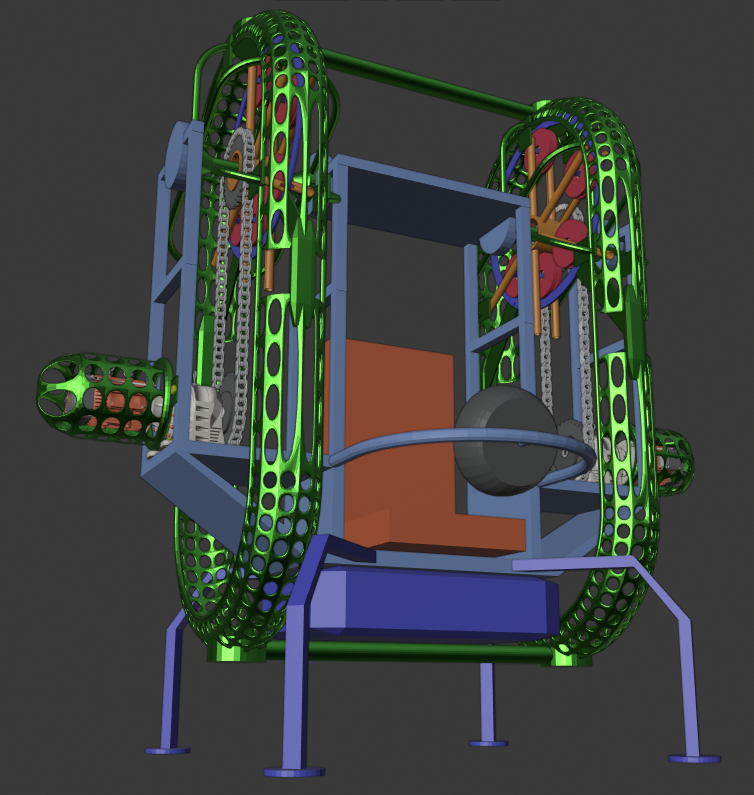 A situation where someone could work on the Moon and live on Mars, or work on Earth and live on one of Neptune's moons, and travel between these two places daily or weekly, might cease to be an imaginary thematic setting from Lem's stories. It's enough to realize that in the range between the escape velocities of the most massive celestial bodies in the solar system and the speed of 5-10% of light, or about 15,000-30,000 km/s, which nuclear rockets would be capable of, and which may never be built due to radiation safety concerns and the enormous construction costs, there may be other, less dangerous methods of transportation, about which some probably know nothing or very little yet, capable of not only reaching 5% of light but even much, much faster, and certainly surpassing all methods of space travel currently available to humans in terms of speed, increasing these speeds by a factor of 10^2, if not even 10^3. Currently, propulsion based on the dynamic effects of matter movement, utilizing centrifugal forces or reactive forces in a system of shifting positions of at least two masses, could present itself in brighter and more distinct colors if financial resources were available to develop these ideas into forms useful in space. On the other hand, there are technological problems, such as radiation protection and problems stemming from social psychology, which would be difficult to address, even with appropriate technology to shorten space travel to a minimum. Currently, there are a set of technological rules that make human presence in space possible to a limited extent, and these are very difficult to change. These rules represent a meager success for humanity and should be approached with measured enthusiasm. Nothing happens by itself. Civilization represents a closed system in which, unfortunately, the power of capital still prevails over the equity and utilitarian considerations that support the use of certain innovative technologies. On a global scale, this is reflected in the fact that poverty and misery affecting tens of millions of people is a real problem for secondary actions that do not eliminate the underlying causes, i.e., the faulty technology itself, but only affect the symptoms of these causes. Robotics technology is the future, but using conventional methods, its effects are quite predictable. In my opinion, the most important technology is one that can be applied beyond Earth on a large scale, at great distances from the Sun, because humanity's future lies beyond the solar system. This type of technology should be considered above all. Humans are heading there, into the unknown, and to sustain their species, they will leave the solar system, because the solar system will be destroyed, if not by the sun's shedding of its outer layers, then by other cosmic cataclysms such as gamma-ray bursts, or the very activities of irresponsible social factions on their home planet. Any terrestrial or space infrastructure built within the solar system is meaningless if it is built without the primary goal of achieving rapid interstellar transport. Only technology enabling travel between star systems and perhaps galaxies has a rational justification, because nothing is permanent on Earth, and the solar system is not eternal. If we remain on Earth without developing any universal methods of energy production and transportation, we will fail as a civilization, and no philosophy or religious tradition will help us. Humans are not subject to the forces of nature or their own fate; they are called to understand and acquire universal knowledge, thanks to which they will be able to advance to a higher spiritual and intellectual level and build a civilization commensurate with this knowledge and, consequently, the skills. For humans, the universe should not remain a mystery forever. All technological problems can be overcome. None of the current scientific and technological limits permanently and permanently close the door to deep exploration of all known and unknown regions of the cosmos. The key issue is only the psychology, mentality, and consciousness available to humans, and not the seemingly closed possibilities of nature. Key technology and our as-yet-incomplete science will not be limited by our perception of reality and physics, as these are temporary matters, resulting from the current state of knowledge, and there is no point in prejudging anything.