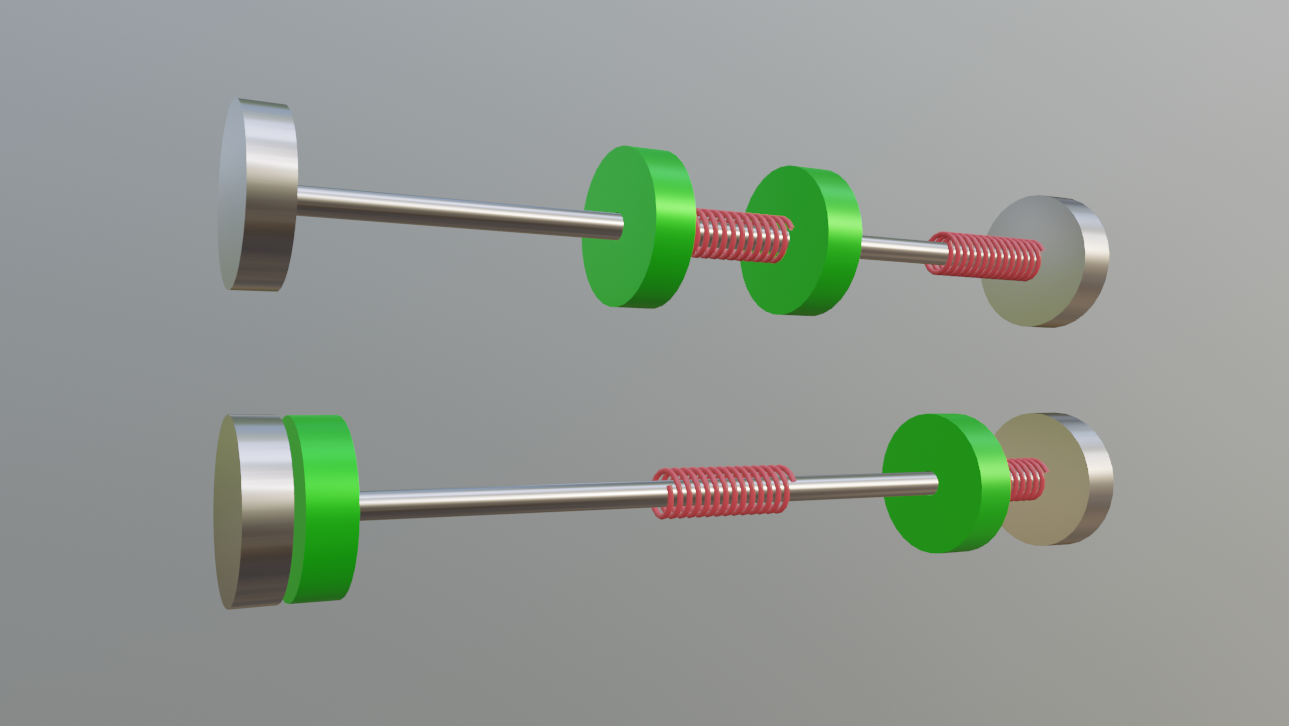
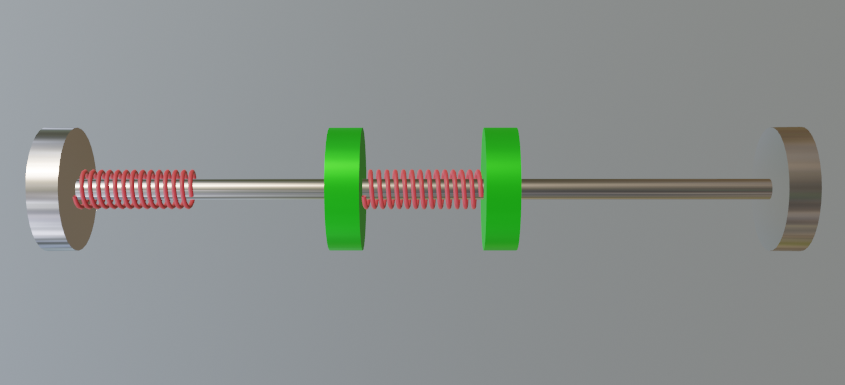
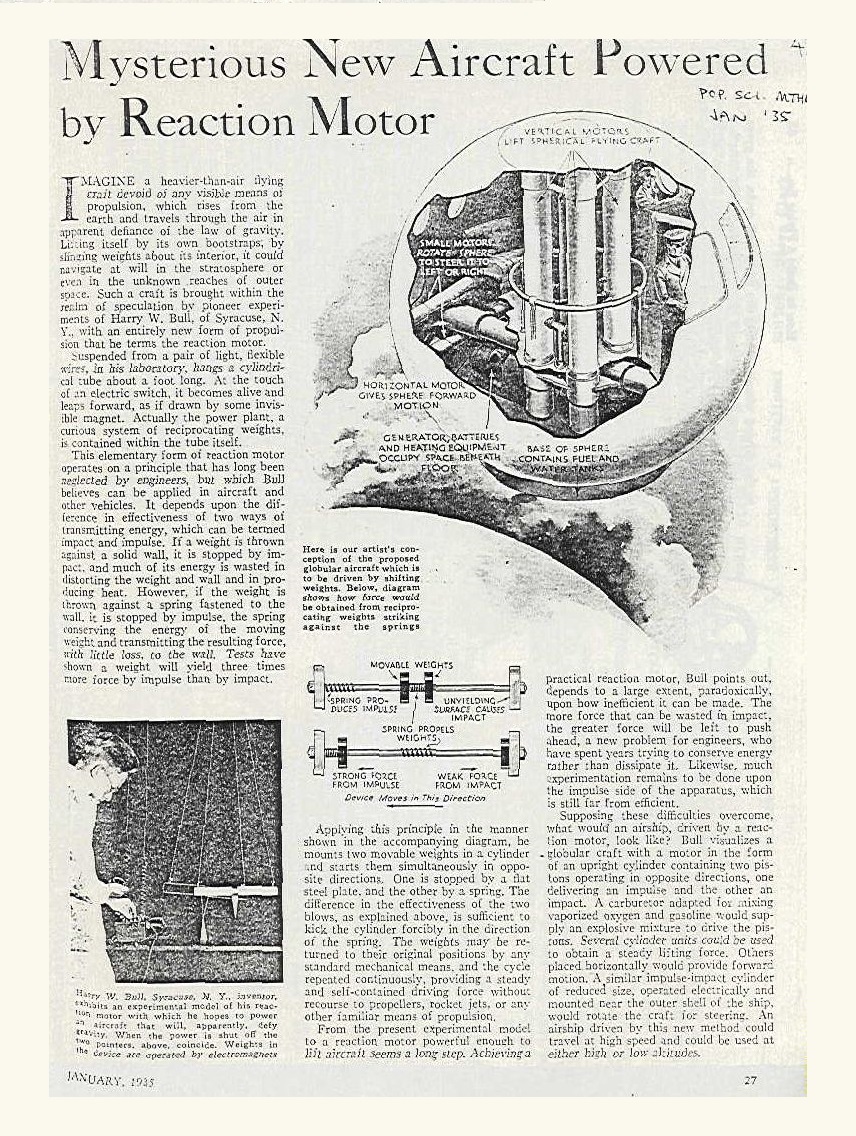
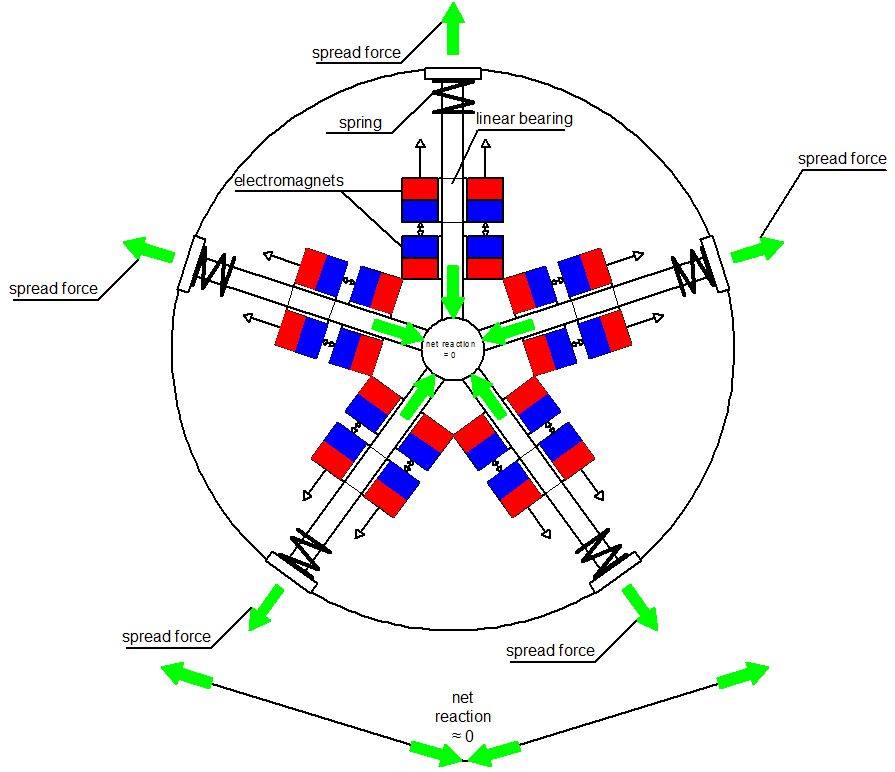
In the 1930s, Harry W. Bull presented a type of inertial impulse propulsion system using moving weights and electromagnets, and experimentally confirmed his hypothesis in 1935. As an inventor, he was already faced with skepticism from the scientific majority, who believed that such a device would not function properly. However, H. W. Bull was convinced that this method could be used to propel spacecraft in the future, a view often met with laughter and reluctance. I don't know what happened to the inventor later, but his method has not been used in any engine to date. What determined this development? This reluctance, along with the growing interest in conventional means of propulsion, likely hindered research and development of this type of propulsion.
Newspaper January 1935
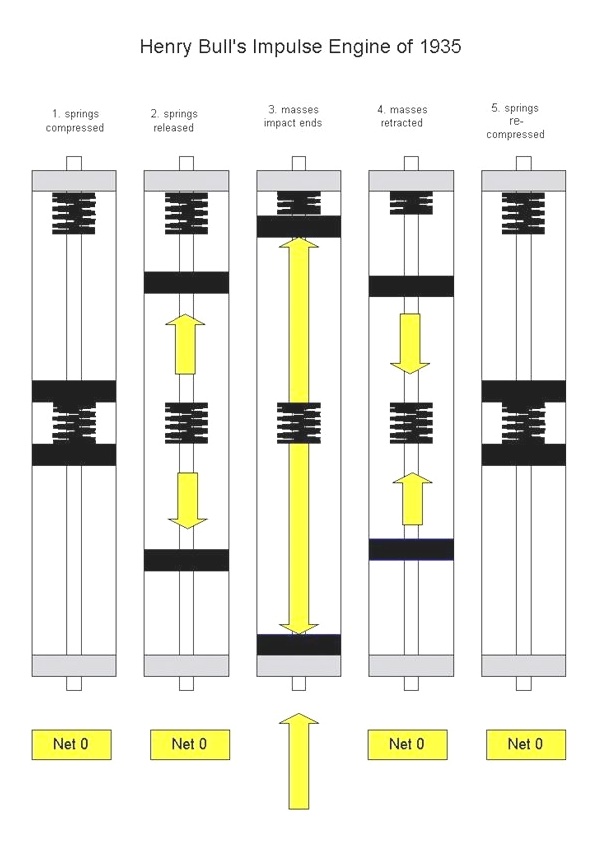
Harry W. Bull's impulse drive
10 October 2024
The propulsion
However, at the time when the device was presented, few people realized its potential applications. In those days, when almost no one was talking about space exploration, and there was little interest in rockets, the topic was almost completely forgotten. Although many years have passed since then, one can only imagine the progress that could have been made if efforts had been focused on improving this type of impulse engine rather than on rocket propulsion.
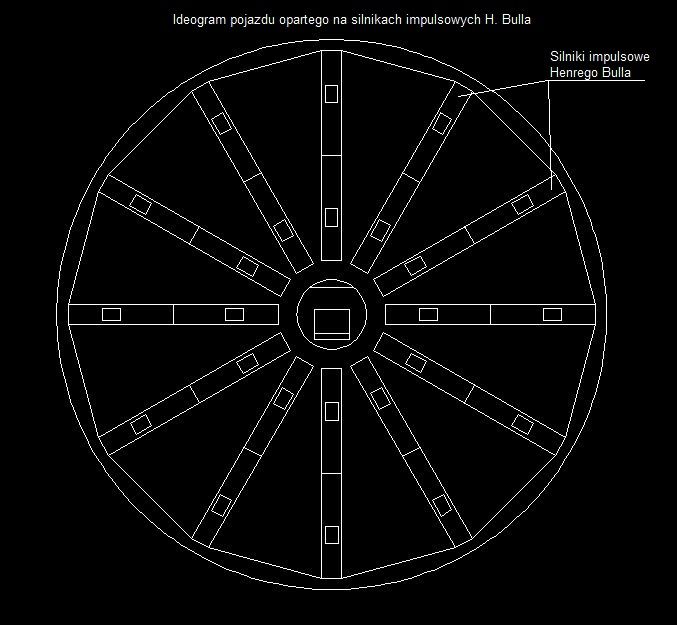
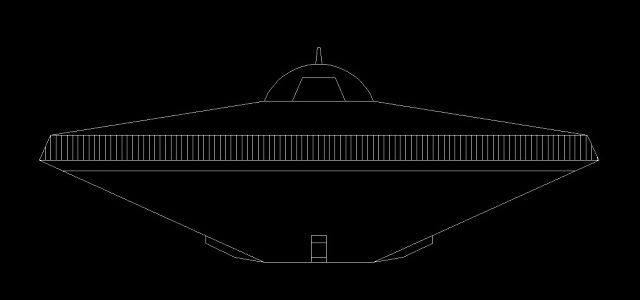
View of a hypothetical vehicle
10 October 2024
The propulsion
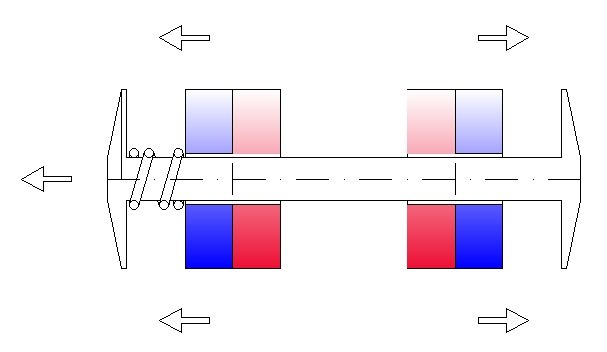
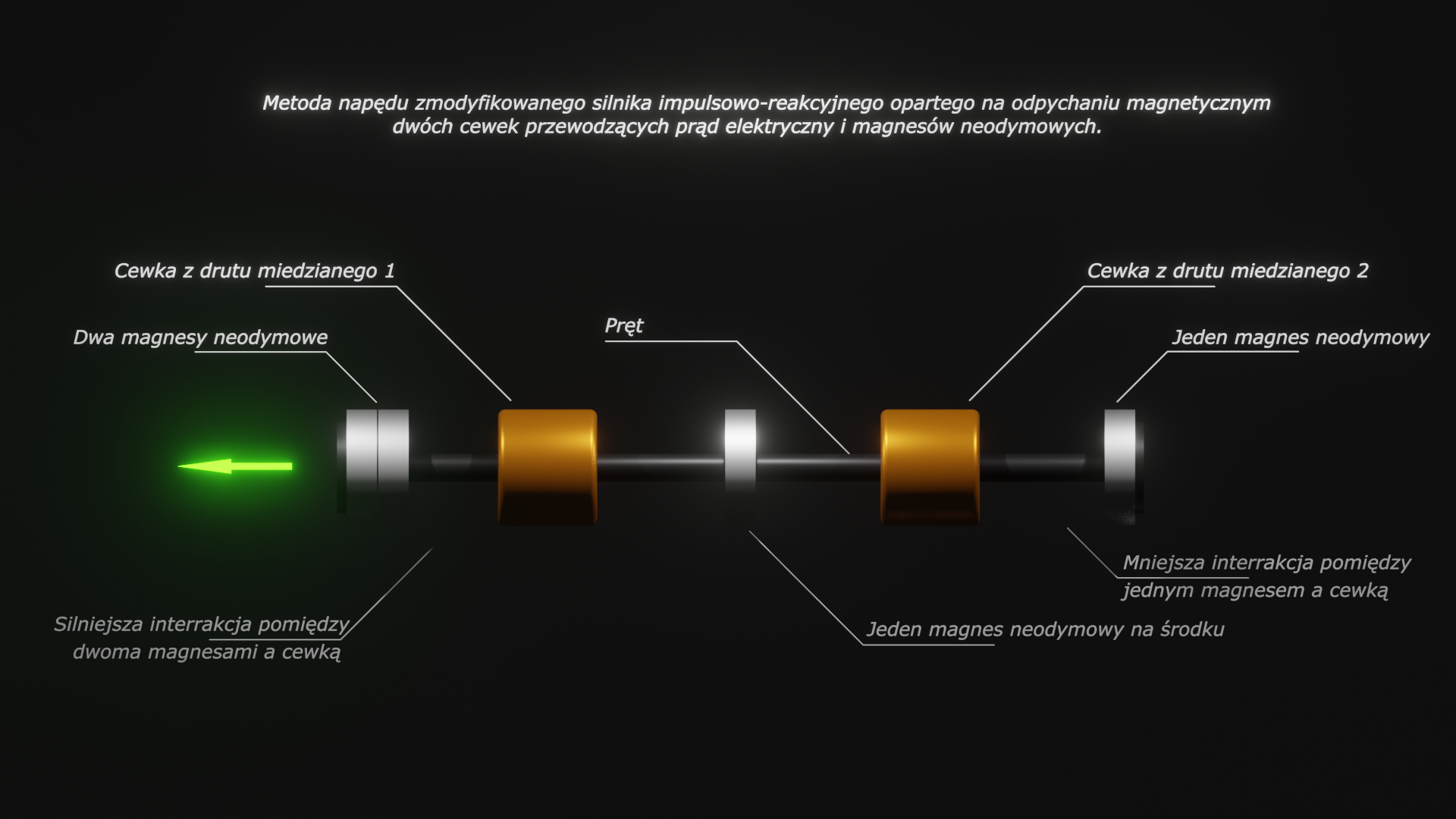
The very idea underlying this type of propulsion is based on the assumption of uneven force transmission between the side with elastic kinetic energy transfer and the side where impact occurs with heat release from the mass impact or with a medium absorbing the impact. According to early tests, there was a threefold advantage of force from the elastic side over the impact side. The impact side must be the side with an inertial absorber. Inertial absorbers, e.g., converting impact energy into rotational energy, are possible to construct, and special materials (elastomers) can also be used to dampen kinetic energy. Also, the arrangement around the appropriate angle of impulse engines may improve technical parameters. These engines can be started not all at once but sequentially in one direction, gradually increasing the resulting impulse forces due to the increase in speed and number of impulses. However, certainly before any specific solutions could be implemented, the whole thing would have to be thoroughly analyzed in terms of actual technical possibilities. Although every technical novelty requires a lot of work before concrete results can be achieved, I have not heard of anyone working on this topic before, and it seems to me that such things could have a future if worked on.