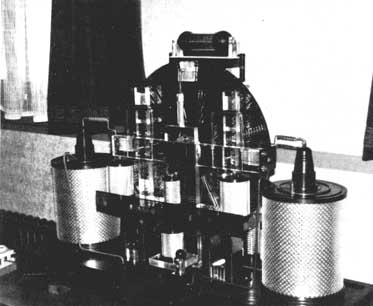
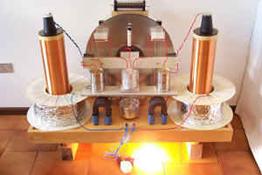
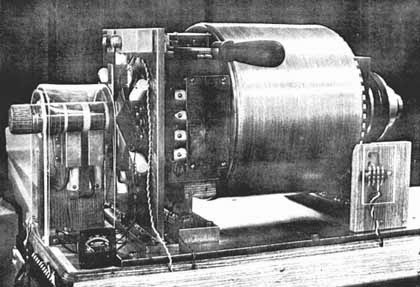
There are many interesting power generating and propulsion devices in the world today, the basics of which are either a mystery to modern science or represent such advanced technological solutions that their potential applications could transform current technology beyond recognition, as well as our scientific worldview, remaining practically on a scientific horizon we are only just beginning to understand. The first of these is the Methernitha Testatika, located in Switzerland, and belongs to a philosophical group that has long advocated for overcoming dependence on modern technology by building such devices that can ensure self-sufficiency and greater freedom. It was built in prison by a member of this group. During testing, the device was able to power a fairly large oil-filled radiator and high-wattage light bulbs. Where does the electricity come from in this case? The device is not connected to an external voltage source in any way we can identify. The device is equipped with a mercury tube, where the initial energy is generated, which is then amplified through various electrical engineering methods. How it generates voltage is unclear. The owners of this device refuse to reveal its operating principles, claiming that humanity is not yet ready to embrace such technology. The device contains capacitors, inductors, and other components, and when operating, it can provide over 2 kW of energy continuously. The device has been demonstrated numerous times to people who occasionally visit the area in Switzerland where the device is located, but none of them were able to answer questions about its operating principles, as they only observed the machine's external manifestations and were not initiated into the fundamentals.
There are many such devices, for example, another one designed by German scientist Hans Coler. His device, known as the Coler Coil, is composed of coils and magnetic cores and generates several volts of electricity. Its operating principle is unclear it is certainly a device operating on both magnetic and electrical principles.
Methernitha Testatika
Methernitha Testatika photo 2
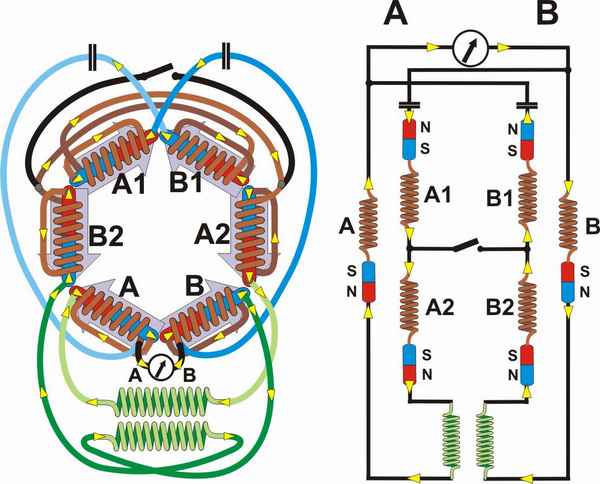
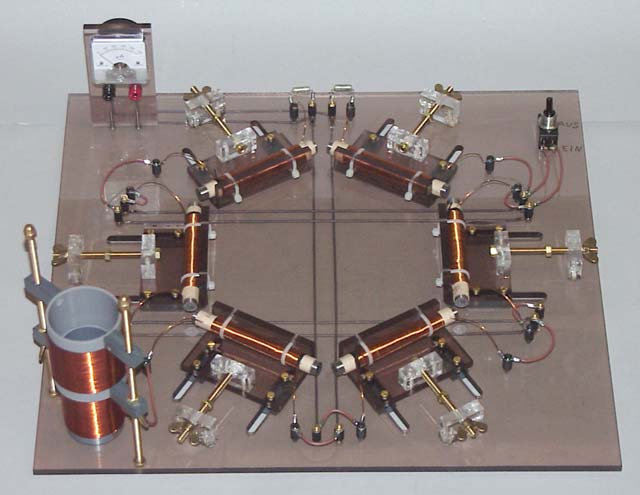
I recently encountered and have presented numerous times on my various online profiles about Hans Coler's device, the Coler coil (Magnetostromaparat, the German name for the device), which is designed to generate voltage from the resting energy of the magnetic field of permanent magnets. Commonly used in electricity generation solutions today is electromagnetic induction, a variable magnetic field that induces an alternating current flow in the generator's windings, which then leaves the power plant to power households and factories. However, let's start from a different perspective. Similar to Coler's device, which operates without a variable magnetic field, it relies on a static magnetic field. This magnetic field generates current in the copper windings wound around the magnets, not through variable induction but through magnetic potential energy. The permanent magnets have permanent magnetization because they were magnetized by field coils at the magnet factory. Additionally, the device contains two capacitors and two large coils without magnets (air coils). At my current stage of research into this interesting device, judging by the data available online, I'm not certain of the exact mechanism of voltage generation in this type of circuit. However, I will attempt to replicate this device once I have more data. Unlike electromagnets, permanent magnets do not require current flow to generate a magnetic field, which, if the data are confirmed, gives this device a colossal advantage over all other methods previously used to generate electricity conventionally. On the other hand, let's look at what the Earth is: it's one giant permanent magnet. But let's consider what would happen if, instead of permanent magnets in a Coler device (Coler coil), this field (the Earth's magnetic field) were used to generate electricity. The Earth's magnetic field is hundreds of times weaker than the field generated by strong permanent magnets, but it is thousands of times wider than the magnetic field generated by even the strongest neodymium magnets, where, in principle, at a distance of a dozen or so meters from such a magnet, its energy becomes comparable to the intensity of the Earth's magnetic field. In a vacuum, there is no material point from which one could push to move freely. However, there is a magnetic field present, originating from various objects in space. The closest to us is the geomagnetic field. The entire solar system is bathed in magnetic energy from the sun and the magnetic field of the entire Milky Way. The problem, however, is that there is currently no technology that would enable the use of this field to propel spacecraft. There must be some technology capable of capturing this field, and this doesn't involve electromotive forces or other forces. Rather, it involves creating magnetic waves on which a spacecraft could float. These waves would have to be generated by an onboard generator. Throughout my time on the internet, I have encountered many concepts for spacecraft propulsion and the production of unconventional electricity, and after all these years, I can now say that producing this type of wave would require a distortion of space. I'll compare it to a surfer riding a wave in the direction of its propagation, towards the shore. However, such technology would require a completely different approach to methods of transportation in space. A magnetic field is essentially a disturbance of local space, and if it were possible to generate such large-amplitude magnetic waves using a variable magnetic field?though I'm not sure at this time what polarity?then, by employing appropriate technical means, it might be possible to achieve some concrete results. A stone thrown into a puddle creates waves that propagate through the two-dimensional space of the water surface. Waves that could be used for propulsion would have to be magnetic or gravitational in nature and would have to be three-dimensional.
Coler's coil - idea scheme
Coler's coil
Bruce DePalma's N-machine. A heavy flywheel is visible centrally. The entire system operates by harnessing the inertial energy of a heavy rotating element to overcome the magnetic resistance of a smaller-scale Faraday disc or generator. The device is likely connected to an electric motor. It is unknown whether this motor also functions as a generator, or whether these are separate units. It is likely that the Faraday disc itself can function as both a generator and an electric motor. Some question this type of solution, believing that more energy cannot be generated in a closed energy system than is supplied to it. De Palma's device is supposedly capable of generating several times more energy than it consumes in a given unit of time, solely due to the current-multiplying influence of inertial energy. This issue conflicts with the thesis of energy conservation, widely considered the foundation for building machines based on well-known principles of physics. However, criticism of the topic most likely stems from a priori habituation to combustion-based devices, where the resulting energy is always a fraction of the energy supplied, based on the principle of energy efficiency, which usually does not exceed several dozen percent. The dispute and division within physics, which appears insensitive and resistant to all previously presented technological solutions that sometimes negate the fundamental laws postulated by it, may intensify. However, the problem may lie not in the mere proving of scientific inaccuracies by such devices, but in the enormous economic and industrial losses that society suffers due to the failure to implement such solutions and their dismissal to the technological margins.
Bruce DePalma's N-machine
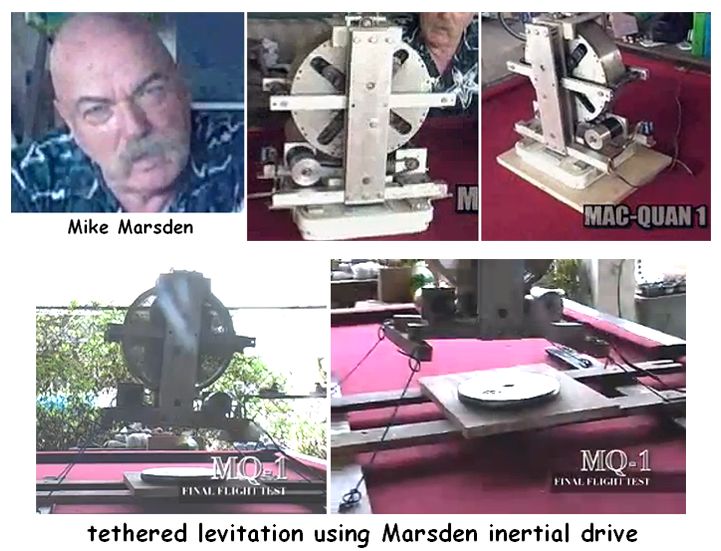
Inertial propulsion devices capable of opposing an internal inertial force against Earth's gravity, allowing them to propel themselves functionally independent and unrelated to the recoil of exhaust gases, may seem like technological whimsy and are most often classified as folklore, presented by technological dissenters ? inertial propulsion enthusiasts. It is repeatedly publicly demonstrated that such solutions are ineffective, as they are inconsistent with the laws of dynamics that underlie modern physics. Modern physics remains heavily influenced by concepts based on Newton's early work, corrected by the much-deserved theory of relativity. Therefore, it is so blinded by its scientific course that it fails to recognize its own fundamental flaws. When specific physical experiments clearly demonstrate its shortcomings, it is most often interpreted as measurement errors or the influence of third-party factors on the experimental result. It is precisely in the case of inertial propulsion experiments that the weaknesses of modern physics become acutely apparent.
Mike Marsden's device Mac Quan 1
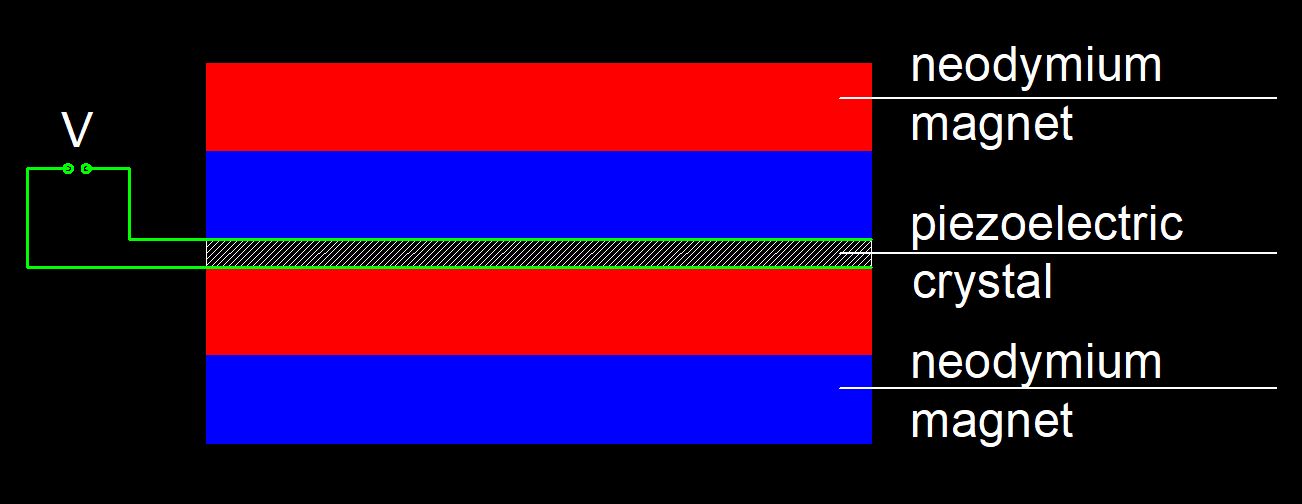
Generating electrical energy directly from a magnetic field itself?or rather, from the energy that attracts or repels each other depending on their polarity?is a tough nut to crack for science. However, it turns out that this isn't necessarily very difficult to achieve. Physically, permanent magnets of opposite polarity, and therefore attracting each other, can generate pressure. The magnetic field then acts as a piston, which can energize a liquid or transfer its energy to a piezoelectric crystal, which, thanks to its ability to generate voltage as a result of applied pressure, can power another external device. In this case, the electrical energy is classified as free-energy, meaning it is free and self-renewable. This means that it is not based on the demand for fuel, so there is no problem with running out of it, and also thanks to its simplicity and design characteristics, there is no mechanical wear of the components, because they all remain at rest, without performing any mechanical movements, and the electrical energy is obtained here based on processes inside the crystals and is spontaneous, because it is a field of permanent magnets.
Harnesing piezzoelectricity
2. Free energy
9 September 2020
For years, we have been accustomed in universities to learning about the specific limitations inherent in the laws of nature described by our science. Most forms of energy available on Earth are derived from, and related to, primordial processes. We exploit natural resources, such as mineralized plant and animal tissues in the form of coal and crude oil. We don't fully appreciate how crucial individual energy resources are to urban life, yet even a minor fault in the electricity grid is enough for refrigerators to defrost, hospitals to lose their main power source, and domestic water to boil. Civilization, however, continues to develop despite such threats, although a red warning light continues to shine somewhere in space, warning that we are only alive thanks to a series of fortunate events that occurred in the past. At the frantic pace of civilizational development, which continues to unfold today, certain historical facts, little discussed today, have been stripped of their actual meaning and civilizational significance. Science, which emerged during technological development, has reached a point of hopelessness stemming from its own fundamental limitations. Civilization was based on the extraction of energy from simple yet marginal sources occurring only under specific environmental or physical conditions, and the concept and idea of ??free energy were omitted and relegated to oblivion. But what is free energy? Free energy is the surplus energy generated during the operation of certain devices that produce electrical or thermal energy. Free energy can be produced by magnetic and electromagnetic devices, as well as those utilizing gravitational, electrical, or electrostatic fields. Many times throughout history, certain individuals, let's call them visionaries or even brilliant inventors, have presented such devices. However, the main problem in this case was, and still is, the rejection of their basic concepts by the current balance of power of producers and suppliers of generally applicable technological solutions. A battle is currently raging, though some refuse to acknowledge it or fail to recognize it, which classifies what is legitimate and what is not. The struggle between good and evil is not a fictional tale, as it has become so camouflaged in its form, solely to accommodate the daily financial "massacre" inflicted on society. Why? Well, so that only a small percentage of society at the very top can surf the world... and the system can function in line with expectations. This fundamental civilizational flaw has permanently eliminated free energy-based trends, so effectively that the average person has become a perfect slave without even realizing it, and has merged seamlessly with the current civilization. Is this nitpicking? Well, not necessarily, because the problem directly affects every participant in this "fair" and will determine the methods of survival in the civilizational environment that apply to each of us. Let's look at how much harm the electricity distribution system causes worldwide. If there were an option to abandon the "kolkhoz" system offered by modern times, and everyone could become an independent beneficiary of their own energy, possessing a separate power source for their farms, the degree of manipulation and pressure on citizens would become less severe, politics would cease to be defined by international pressure, and the largest energy providers would lose a tool of political influence. As a result, the economies of resource-poor countries would be able to pursue domestic policies based on greater freedom, which would certainly lead to an improvement in the living conditions of most of their citizens. It so happens that free energy is freedom, challenging the world's most dominant rulers. Therefore, they will most likely never allow, even under the threat of an ecological catastrophe of global significance, to relinquish the civilizational immunity they currently possess. Is this a form of civilizational suicide with delayed results, paradoxically permitted by law? However, no one is likely to do anything about it for now, because there are no other alternatives, because the alternative has been cursed, and that alternative was free energy.
3. SEG
9 September 2020
An animation illustrating the operation of a Searl effect generator. The SEG (Searl effect generator) is a device developed by British inventor Professor Searl. It operates on a magnetic principle, generating free energy (the device is said to operate based on the telekinetic effect or a similar phenomenon). The rollers have common polarity, while the central magnet has opposite polarity. This causes the rollers to be attracted to the internal permanent magnet and repel each other. As a result, when a load is added, they begin to spin on a magnetic cushion, where friction is reduced to a minimum (frictional resistance disappears). The device should consist of at least 12 rollers, as the law for such devices developed by the same inventor applies. Working prototypes often feature four annular layers in both the central magnet and the rollers. The first, outermost layer, is copper, the middle is a ring of neodymium magnets, the inner layer is a type of plastic (dielectric), and the central layer is a neodymium magnet(?), but this central layer doesn't even seem to be magnetized. I'm not sure if this device works (I haven't seen a working example outside of YouTube videos) or how it works. Perhaps the idea and the device itself are being devalued by the fuel lobby because the inventor hasn't been able to break into the wider market so far, or for other objective reasons. In any case, the device isn't yet available in electrical stores. But oh well, we should probably take into account that as long as energy companies remain in business, they will prevent this device from becoming widespread and will block such ideas, fearing the loss of profits from mining and burning minerals in traditional installations. In the device, an electric current is induced by moving, rotating magnetic rollers. This occurs in windings surrounding the device, which are equipped with magnetic cores on which coils of winding wire are wound. Each time the roller passes over the open side of the core, it creates a closed magnetic circuit with it, in which the magnetic induction vector flows freely and then collapses. As we know, any change in the magnetic field also induces current flow in the core winding. The coils are connected in an electrical circuit, and the energy from them is combined and can be used to power external appliances such as a refrigerator, television, etc., or even an entire apartment or house. That's why Searl was arrested and his house and laboratory burned down. He powered everything in the house with a homemade device, which the authorities disapproved of, and he was sentenced to prison and fined. He was released, however, and later founded his own company, which is currently experiencing significant difficulties in rationalizing this type of generator due to resistance from those who block significant technological progress, while simultaneously creating the impression that they are doing so for the sake of progress and economic gain. However, this is all a lie, because it is precisely because of them that people are economically and biologically entangled in low-tech and inefficient technology, and are deceived and outplayed by key market players like children, kept in the dark and cheated of their hard-earned money, thus remaining slaves of the system for life. The conclusion is that greed could become the death knell of our civilization if there are more people corrupted by profit than good people.
Detailed information on the page: SEG Magnetics.
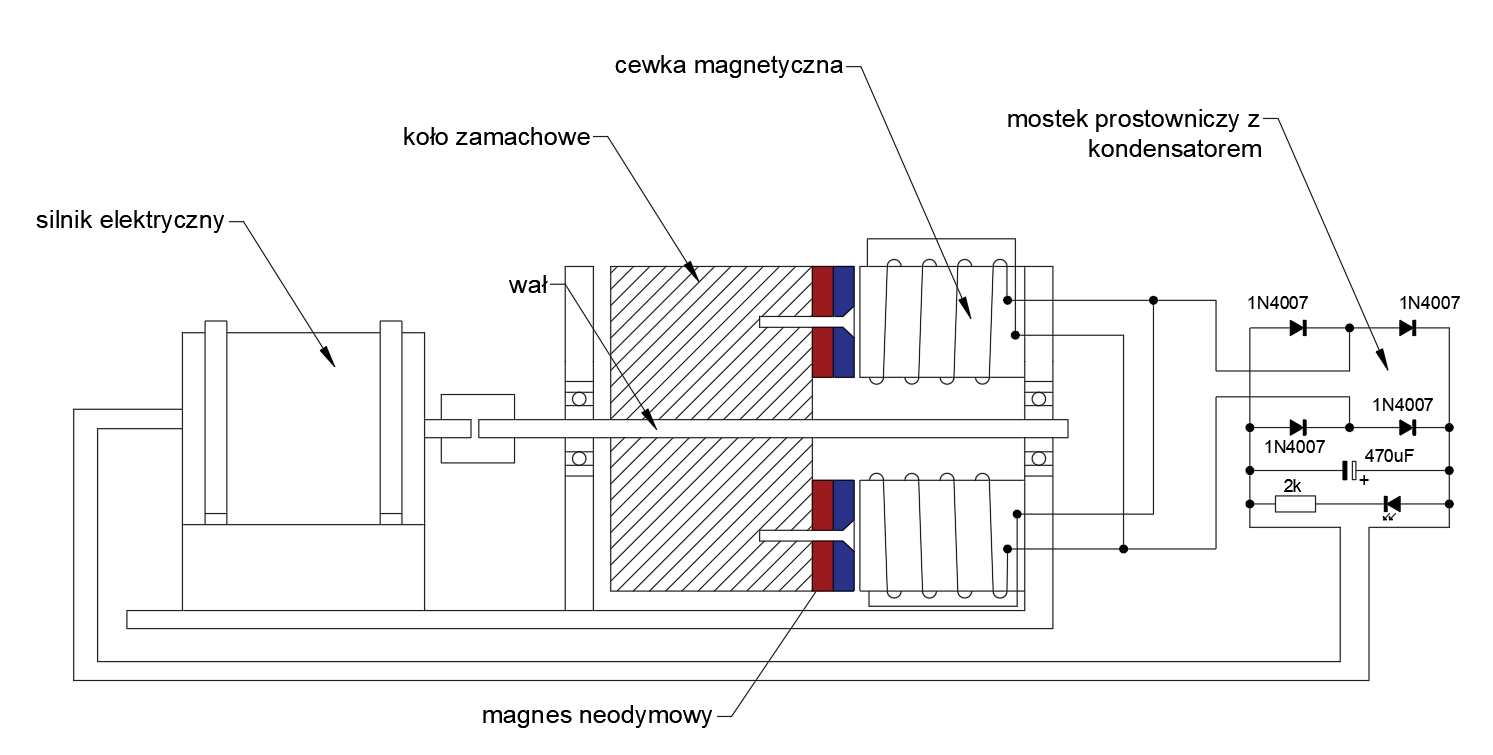
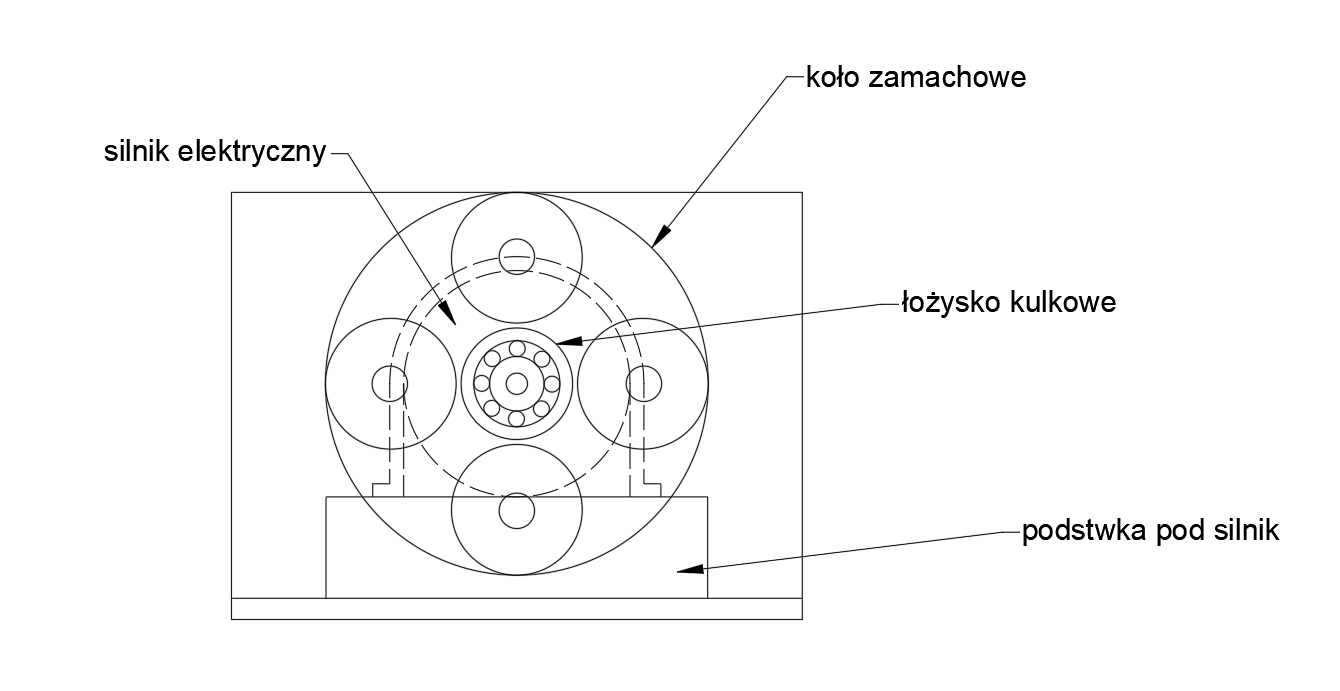
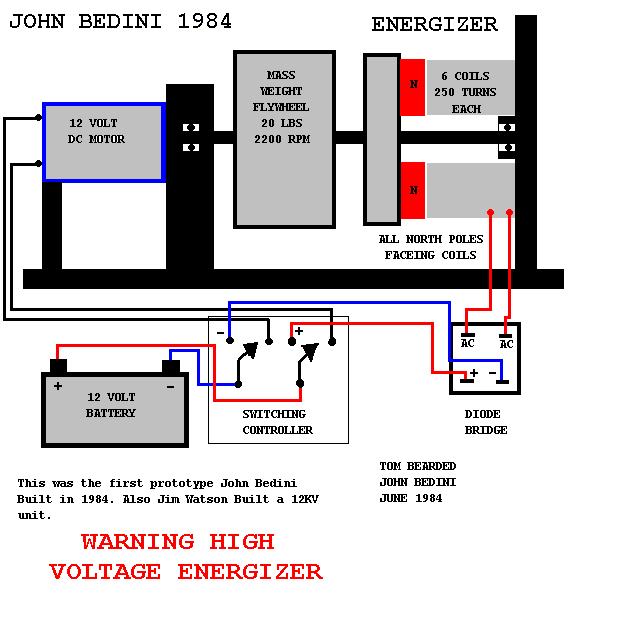
I'm planning to build a small, micro-scale generator with a flywheel, to be made on a lathe. My lathe's chuck can clamp small-diameter shafts, so it will be truly small-scale, designed for a 3-volt DC motor. The device would be started by a battery. Once it reaches speed, the batteries would be disconnected, and we'll see if the device resumes operation after switching to current generated by the coils. Similar devices have reportedly been designed with positive results by Jhon Bedini, as well as Bruce DePalma, where the difference in DePalma's case was the use of a Faraday disc instead of coils. The device would operate by breaking the resistance of the coils using a flywheel. The electrical energy, after passing through a bridge rectifier with a capacitor, would be transferred to the motor, which would replace the mechanical energy needed to continue operation. However, in order to work properly, the device would have to produce excess energy, which means it would have to have features of over-efficiency, compensate for losses in electrical resistance, etc. I haven't performed any calculations to see if this type of device could work; it's more about developing the ability to construct something.