Coanda effect.
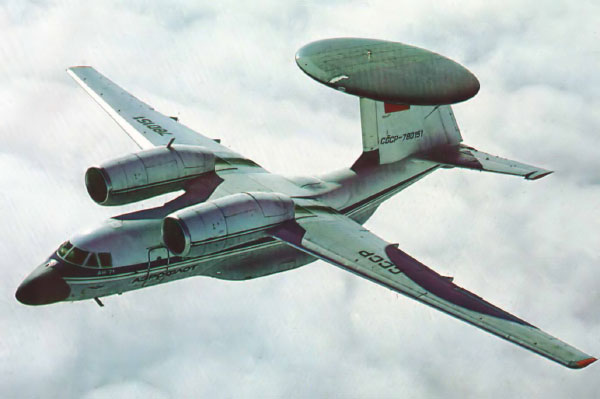
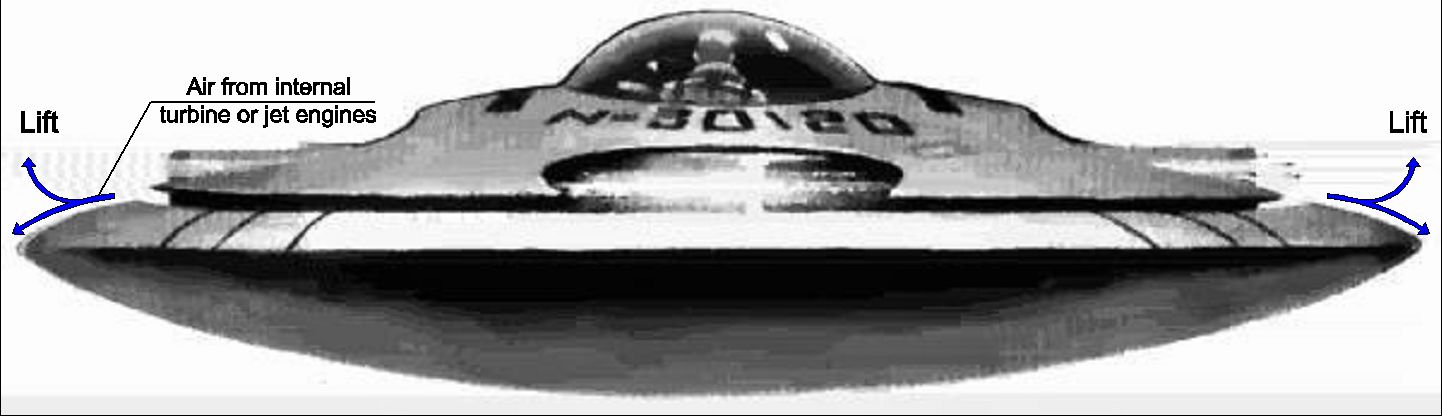
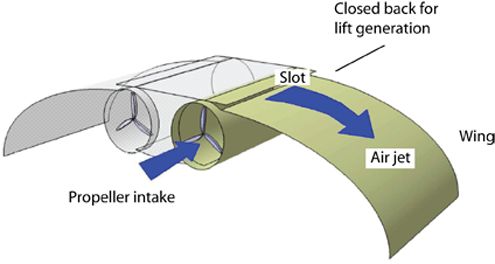
The effect of a fluid or gas adhering to a surface is well known and observable in many everyday situations. When it comes to practical applications, there are not many equivalents in today's everyday technology. In some solutions, such as in aviation technology, there were attempts in the past to adapt this type of solution on a larger scale, but without much success so far. In some types of machines, this technology was used to achieve short takeoff for aircraft, but this solution is no longer widely used today. It's a pity, because with the use of such techniques, it would be possible to build vertical takeoff and landing vehicles with a very compact design and without easily destructible protruding wings. On the internet, one can find quite interesting information and designs of flying models based on this phenomenon. However, the basic requirement for such vehicles to take off is the need to obtain compressed air, exhaust gases, and fumes in various ways. In the case of atmospheric flights, such problems are common and currently have practical solutions widely used in current aviation transport. An interesting solution in such vehicles could be the use of two counter-rotating axial turbines - they would compress the air, which would then be pumped into channels directing it around the perimeter of such an aircraft. This would eliminate the problem of free rotational moments, leading to uncontrolled rotation of the airborne vehicle, as they would be paired. One could also use a single turbine sucking from above and counteract side reactions with exhaust gases. Such a solution, where the turbines would be inside the fuselage in the very center, would additionally protect them from destruction.
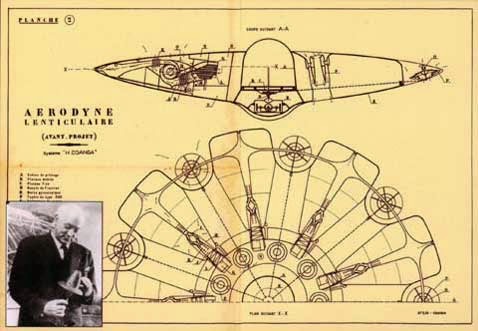
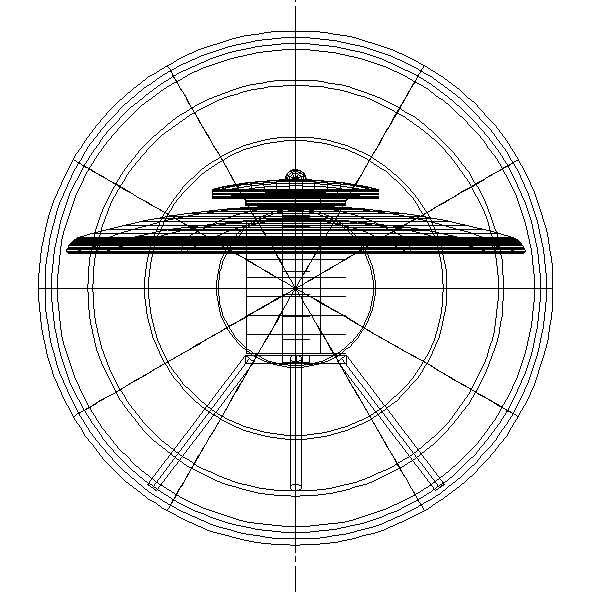
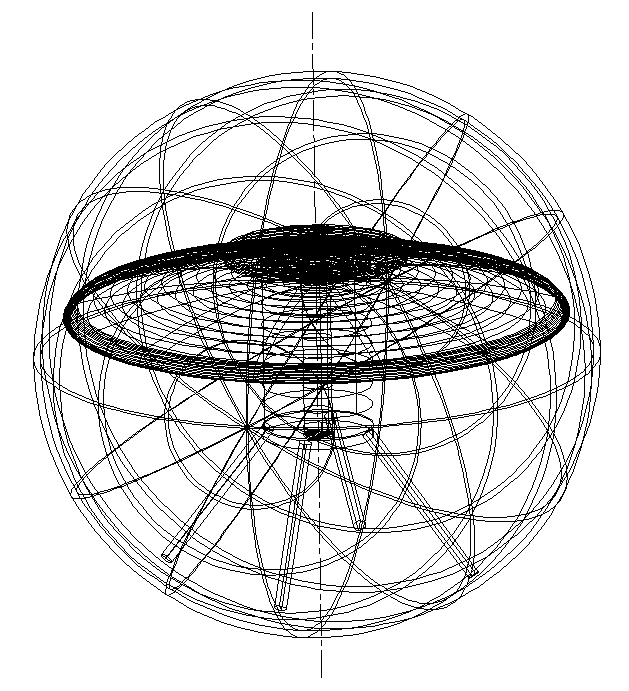
One of the H. Coanda project
6 June 2018
Coanda effects in liquids
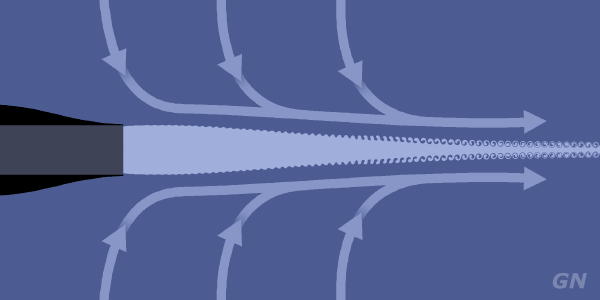
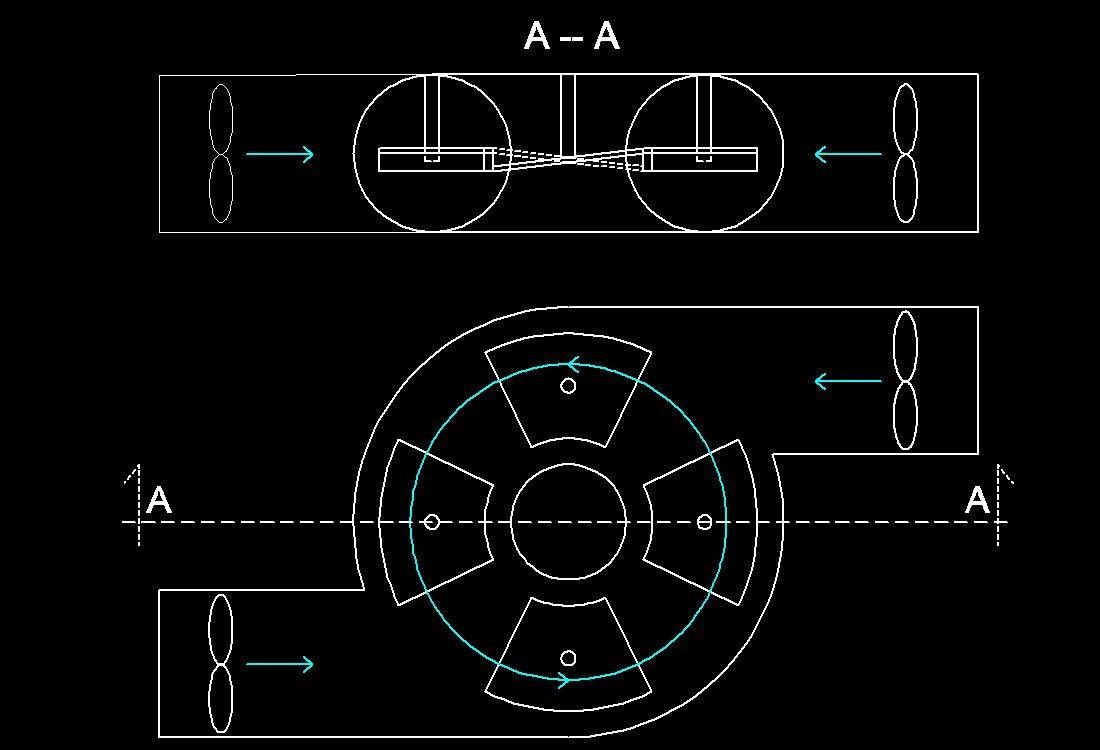
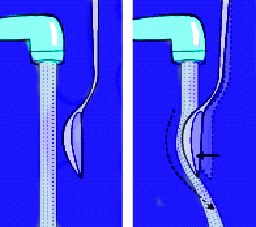
All fluids available on Earth possess a certain amount of energy, and their flow is associated with specific effects in the conduits through which they flow, primarily of an inertial, cavitational, and dynamic-kinetic nature. First and foremost, water?the most common chemical compound, hydrogen oxide?has the appropriate properties to be used as a working fluid for powering various devices. Water's density is 1 g/cm3, it is a relatively viscous substance, forms a concave meniscus, and dissolves a wide variety of substances in nature. It is a very good solvent for many salts, hydroxides, and acids. However, few people currently would consider using water for propulsion in aviation and spaceflight. However, under certain conditions, it can be a suitable energy carrier and can be released to power a specific device. Since ancient times, certain phenomena related to the flow of liquids or changes in their state of matter have been recognized. These phenomena intrigued the people of that time, but no one knew their practical and possible applications in technology, as technology did not exist at the time or was still in its infancy. The destructive power of this element can still be observed with each new flood, as the energy of water, its weight, topples bridges and buildings, and devours the crops of people who worked all year to maintain them. Because water is a relatively heavy liquid, it can be used to generate inertial forces using appropriate technologies, for example, by exploiting the gravitational moment of water or changes in inertia when changing the direction of the fluid's flow. The Coanda effect is an effect often observed when liquids or gases flow over the surface of a solid. This flow creates specific dynamic forces acting on solid bodies due to the negative pressure exerted by the rapidly flowing liquid or gaseous medium above the surface. This ultimately results in a material object experiencing a force that can lift it, alter its flight path in the air, or even alter the flight trajectory of an object in space, despite the object being in the vacuum of space?a medium in which aerodynamic forces, the forces that enable the flight of conventional atmospheric vehicles developed to date, are ineffective. All atmospheric vehicles also rely on negative pressure and positive pressure, which are achieved through rotors, turbines, and turbine-compressors, while also utilizing airfoil surfaces with a specific angle of attack, as in conventional passenger or military aircraft. These surfaces are additionally equipped with ailerons and flaps, which enable these vehicles to take off or land, and enable maneuvers during atmospheric flight. However, outside the atmosphere, they are completely useless, and they can never reach the factory-designated and technologically defined altitude due to the rarefaction of air. The higher we go above the Earth's surface, the thinner the air becomes, and at a certain altitude, it simply disappears altogether. This is when we speak of open space, where, in addition to zero gravity, there is no air for humans to breathe, nor is there the thermal comfort to which creatures like mammals and other species are adapted on Earth's surface. Therefore, given that humans are completely unprepared for the conditions of the open vacuum of space, if we want to travel in space, we must recreate Earth's conditions on spaceships as much as possible. In terms of propulsion systems, rocket propulsion has been developed, which is effective but insufficient in the vacuum of space, as its capabilities are severely limited. The development of alternative propulsion systems that will allow us to reach space faster and further than we do via rocket-based transportation systems is now becoming a crucial and necessary issue. Such propulsion systems generate propulsive forces in a functionally closed system. This means that such a system should not rely on external energy or mass loss, as is the case with solid or liquid-fueled rockets. All open systems, such as photon propulsion, ion propulsion, and magnetic propulsion using plasma, should also be eliminated, as these are derivatives of rocket systems, as they also involve external emission, resulting in energy or mass loss into space. Solutions based on the Coanda effect can provide this type of functionality (a closed system of energy and mass circulation), provided appropriate techniques are employed. The first example of this type involves the use of two turbines that generate an air vortex circulating in a closed area inside a spacecraft. This system allows the amount of air needed to power the device to be approximately the same, provided it is hermetically sealed, and the entire system can also operate at high pressure to increase the forces involved. The system generates driving forces from the gas flow, which transfers its dynamic energy to the top of the enclosure via four blades. In this solution, the air is under increased pressure at the bottom and lower pressure at the top, which should theoretically cause the device to be drawn towards the lower pressure. However, the system has not been tested in laboratory conditions, so it may simply not work. The system must be able to circulate air, and it probably won't work as shown. A different system is likely necessary, one that will extract air vertically to allow for internal gas exchange. If two rotors operate simultaneously, the constant pressure will prevent them from continuing to pump air. This isn't the issue here, as there are many solutions for ensuring air movement within these ducts, such as ionizing the air and propelling it with an electric field or electromagnets (in which case it could be a completely closed system). The most important question is whether the aerodynamic energy will actually translate into a resulting force capable of propelling a spacecraft in space. The situation is similar to that in a wind tunnel; instead of moving a wing, the same lift force can be achieved by creating air movement. In any case, this would require further serious analysis. However, as can be seen, this solution is not based in the original way on the Coanda force; it also uses aerodynamic forces to create uncompensated effects in a given direction.
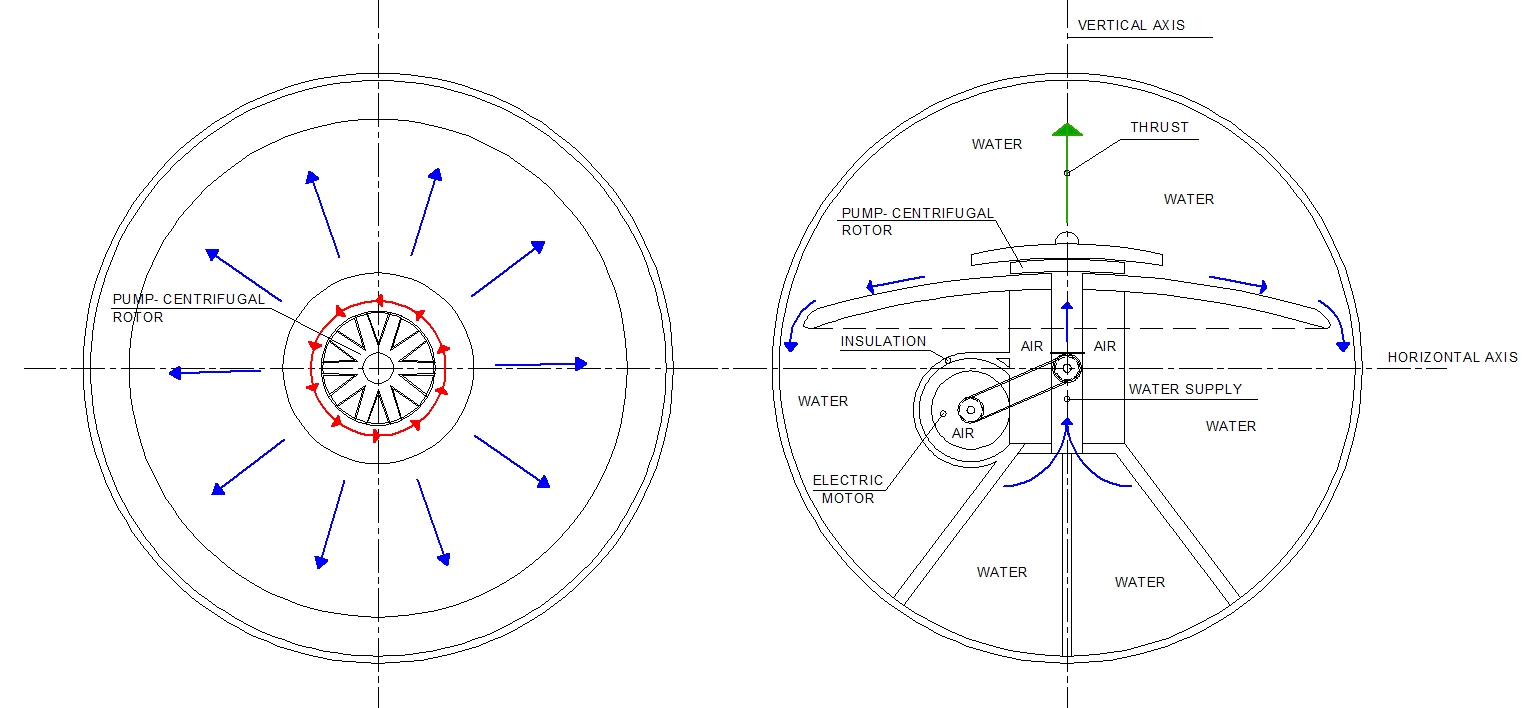
Another solution, this time based on Coanda forces, is the one below. In this solution, the propulsive forces are generated by the flow of liquid over the disc, and the entire system operates permanently submerged in it. The rotor, which uses centrifugal force to draw in and direct water onto the disc, is driven by an electric motor operating in a dry environment. The central tube has a gear wheel connected to a belt or chain sprocket that supplies power from the electric motor. This tube is connected to the rotor from which the water is ejected. The system is mounted on a spherical housing filled with water. A typical system that could be used in space (e.g., on a space station) to raise its orbit, for example, would be a rotor system designed based on the principle of air dispersion and compression. A diffused beam would be emitted in the opposite direction to the propulsive force to prevent excessively dynamic energy transfers within the space station's atmosphere. Such a system could generate additional force to increase the station's orbital velocity, leading to an orbital raise. Additionally, in space, a system equipped with a double counter-rotating rotor would not have to expend energy to support its weight because it would operate in weightless conditions...