9 September 2020
In the 1960s, during John F. Kennedy's presidency, it seemed that humans would conquer Mars immediately during his term. The Apollo program ended in the late 1970s. Werner Von Braun, the creator of the Saturn 5 lunar rocket, died in the late 1970s, and since then, his visions have never been realized, even partially. The only major success since then, and a very costly one at that, has been the launch of the International Space Station and the Space Shuttle program. The robotic probe program, which continues to this day, has played a significant role in the exploration of Mars. However, a breakthrough in "raw" technology has yet to occur.
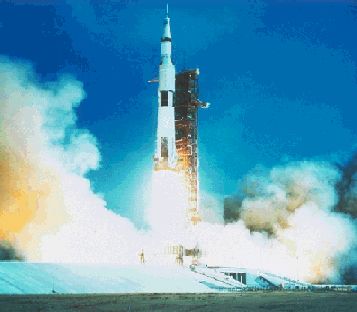
The world is currently experiencing a creeping trend of technological progress in key areas. The global economy has effectively become a brake on the expansion of technological capabilities, as global capital has fallen into the hands of conservatives who are solely concerned with maintaining profits and the economic equilibrium that ensures them, at the expense of slowing down development and technological progress, especially in fundamental and essential areas. Market realities have their own rules, which are served by an entire army of administrative institutions, while producers of the actual product are often overtaxed.
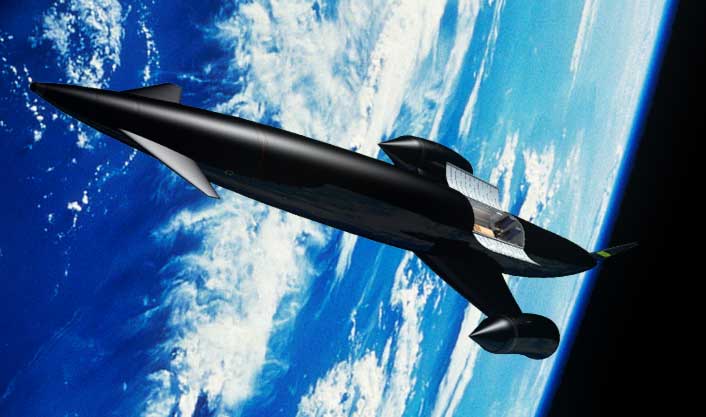
Many futuristic books and other studies abound with descriptions of colonizing planets in the solar system, and the return to the Moon is frequently discussed. However, the problem of the enormous costs of spaceflight, which increase the further away the destination is, has not yet been resolved. The Saturn rocket was a multistage rocket; only this type of rocket could reach the Moon at the time. Its first stage was designed to overcome the Earth's greatest gravity; it was the largest and contained the most fuel. The second stage was used to give the rocket escape velocity from Earth's gravity, allowing it to reach the Moon's gravitational pull zone, where it could fly without further fuel consumption. The final stage of the rocket was used to enter the orbiter into proper lunar orbit. Currently, this type of solution is being replaced by single-stage vehicles like the Skylon rocket, currently being built by Reaction Engines. If work on this rocket is successful, it will be capable of transporting cargo and crew to and from orbit, or with the right configuration, it will likely be capable of lunar flights. This vehicle takes off from and lands at a regular airport, operating like an airplane, but with the added benefit of escape from the atmosphere through the use of special engines that combine the advantages of a jet engine and a rocket engine (Sabre engines). This vehicle is undoubtedly a better solution than standard rockets, as it allows for virtually instant return to the next mission immediately after refueling and can function as a so-called "space taxi." Spaceflights using this rocket will also be significantly cheaper than flights using a conventional rocket, where no part of the rocket is salvageable after a single flight, except perhaps in rare cases, such as the SRB tanks on the Space Shuttle. This vehicle is also likely superior for single-stage vertical launch and landing rockets, which are currently being developed (e.g., by SpaceX).
Liquid-fuel rocket propulsion, derived from the V-2 rocket technology (the Nazi retaliatory weapon), was developed by the Third Reich, specifically by Von Braun and a team of engineers and technicians at the rocket center on Usedom Island. Rockets based on this technology were used for military purposes, such as the bombardment of London during World War II. After the RAF bombed the center and due to the approaching Soviet forces, work was moved to the Dora center, carved into a mountain by prisoners brought to Germany for forced labor. However, the first liquid-fuel rocket engine was demonstrated by Robert Goddard in 1926, and the principles of space flight using rockets have not changed significantly since then. It is difficult to predict whether modifications and innovations to improve the characteristics and reduce the limitations of current rocket technology will lead to the success of near-space exploration. It's important to realize that the amount of energy contained in rocket fuel such as hydrazine or liquid hydrogen is very small compared to the energy required for, for example, rapid travel across the solar system. Longer missions should be shortened due to the radiation exposure to which humans are exposed. A stay on Mars, for example, would also not be very safe for long-term manned missions to this planet; the planet's atmosphere is very thin, and the planet has only a residual magnetic field, unable to protect against particles from the solar wind or from deep space (such as gamma-ray bursts and other radiation). Beyond Mars and possibly its moons, there are virtually no prospects for human colonization in the solar system. Venus, with its thick atmospheric mantle and the resulting high pressure near the ground and oven-like temperatures, is completely unsuitable for missions to its surface. There remain a few moons of gas planets like Saturn, Jupiter, Uranus, and Neptune, but again, the excessive flight time to these destinations with current technology would pose a problem for manned missions. The nearest Jupiter lies well beyond the orbit of Mars and the asteroid belt, and Uranus and Neptune are out of the question due to limited human capabilities and the lack of protection through appropriate technology, which we currently lack. Currently, plans could be made for orbital stations around the planets and uranium ore mines on the moons, or platinum and gold on Mercury, which likely contains large amounts of valuable precious metals, rhodium, and minerals in its crust, but it will likely take several generations before humans reach them. A complete human retreat and permanent abandonment of space exploration could also occur. This would be a phenomenon with negative implications and implications, auguring poorly for civilization, and should be avoided for several reasons. The first reason is the simple need to explore and discover, which is inherent to human nature. The second is diversification and the increased likelihood of a vast civilization surviving over a closed-off civilization, one that knows little about its surroundings and is unaware of its true capabilities. The third is the increased demand for technology related to the needs and demands of spaceflight and multi-faceted space exploration. Space is an inhospitable place for humans and all organisms based on the rules of the planet's surface. To survive there, we, as humans, have been forced to develop certain survival methods using technologies that now enable safe functioning in the lethal environment of open vacuum. Space vehicles and stations have long provided opportunities for human scientific research, as well as the exchange of necessary consumables for spaceflight and the operation of all other human installations in orbit. One of the most important elements of such vehicles and stations is ensuring a constant supply of electricity, oxygen, and water, as well as radiation shielding and thermal insulation for the crew.
When it comes to electricity, the traditional and most common form of obtaining electricity in space is solar panels, which take advantage of the high solar radiation in space, much greater than that on the Earth's surface.
These batteries, also known as photovoltaic cells, utilize the photoelectric effect to generate energy. Another source is Seebeck-effect-based electric thermogenerators, which generate electricity for extended periods (up to several years). This method generates direct current by utilizing the slow half-life decay of a fissile material (most often plutonium, but isotopes of other elements are also used), which transfers heat to one end of a thermocouple composed of two contacting metals. This power supply was successfully used in missions far from the Sun, on American unmanned probes such as Pioneer and Cassini, and on the manned Apollo 12-17. Oxygen is typically provided by water electrolysis using generators powered by solar cells. A technical challenge is the issue of adequate radiation protection at stations intended for long-term human occupation, as they are exposed both to radiation from the Sun and to intense cosmic radiation from deep space.
Human survival in space also requires clean water and sufficient food. Ready-made freeze-dried food and vitamin supplements are used for this purpose. Thermal comfort should be ensured by air conditioning and thermal insulation in the space station and spacecraft enclosures. Carbon dioxide absorbers and filters address the issue of disposing of carbon dioxide from the crew's lungs. The outer shell must also withstand impacts from debris particles left by human activity in orbit and small pieces of space debris found in space. It's also worth mentioning that the psychological adaptation of crews to the conditions of space has not yet been addressed ? this is a complex issue, and its proper treatment could prove to be one of the most important challenges during long-duration manned flights and long stays on space stations.
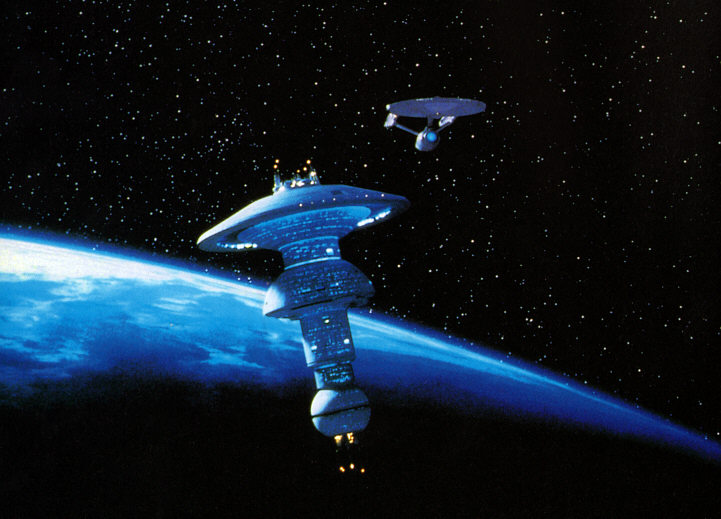
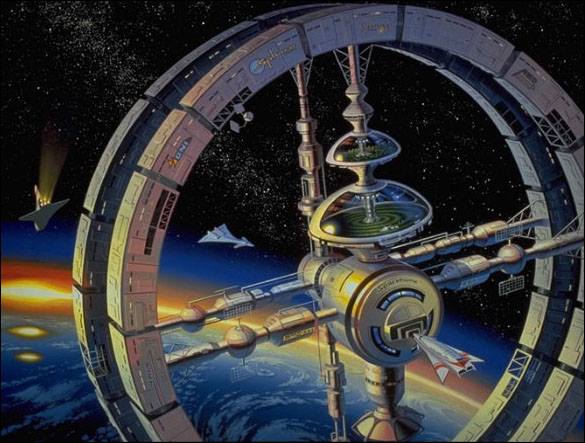
It is crucial to prevent crew illnesses caused by weightlessness and to isolate them from natural cycles. It is possible to generate artificial gravity on space stations and vehicles. This depends on the scale of the missions undertaken, but it is also crucial for the well-being and health of the crew upon return to Earth. However, to date, human stations and space vehicles have been unable to provide this fundamental element for humans, and although it is known how to generate artificial gravity (using centrifugal force), this should still be considered science fiction. This will be possible in the near future.
Returning to radiation shields, all shields are passive, filtering and attenuating corpuscular, gamma, and X-ray radiation. Corpuscular radiation consists of alpha particles, neutrons from nuclear transformations in stars, and other particles with non-zero rest mass. It should be noted, however, that not all manufactured shields are 100% effective. During periods of particularly intense solar radiation activity, a crew outside Earth's magnetosphere (e.g., on a mission to the Moon or Mars) can absorb a life-threatening dose of radiation within 15 minutes. Shields made of dense, heavy materials such as lead are very heavy, making them difficult to lift into orbit. Therefore, they have not been used in space stations and spacecraft for longer missions, as they have been in the past.
Nuclear batteries, which utilize beta decay involving tritium or other radiation-emitting isotopes, are also used to power space stations. This technology is still relatively advanced; work is currently underway to increase the power of this type of battery. Electronic systems used in space are sensitive to radiation, and they are responsible for the proper functioning of all devices on ships and stations such as the ISS. Currently, the design of space stations does not allow for the implementation of many essential functions found in nature. In summary, these include: a lack of gravity on board, which results in bone decalcification and decreased muscle strength in humans outside the planet's gravity; a lack of magnetic field shielding and the resulting constant exposure to intense cosmic radiation; and a lack of day-night and seasonal variations, which leads to nervous system disorders in the crew. As the closest celestial body to Earth, the Moon possesses many promising features that make it a natural satellite for the first human efforts to colonize space. The Moon possesses numerous natural resources capable of ensuring the development and expansion of civilization. For example, it contains large deposits of helium-3?an isotope of helium that may prove to be the fuel of the future. This isotope contains more energy than any fuel previously used in nuclear reactors and can be reacted with deuterium to produce enormous amounts of heat. Moon rocks could be used to produce oxygen for inhabitants to breathe, and water ice accumulated at the poles could be used to produce hydrogen and oxygen for rocket propulsion. Rocket launches from the Moon would be easier because the gravitational acceleration on its surface is six times smaller than on Earth's surface.
The Moon likely contains deposits of many heavier elements and other substances that could be useful on Earth. The Moon lacks an atmosphere, so the possibility of generating electricity via solar panels seems particularly desirable. A flight to the Moon from Earth, with current technological advancements, takes several days, but with appropriate propulsion techniques, it would take several hours or even minutes (using nuclear or other propulsion systems with similar performance).
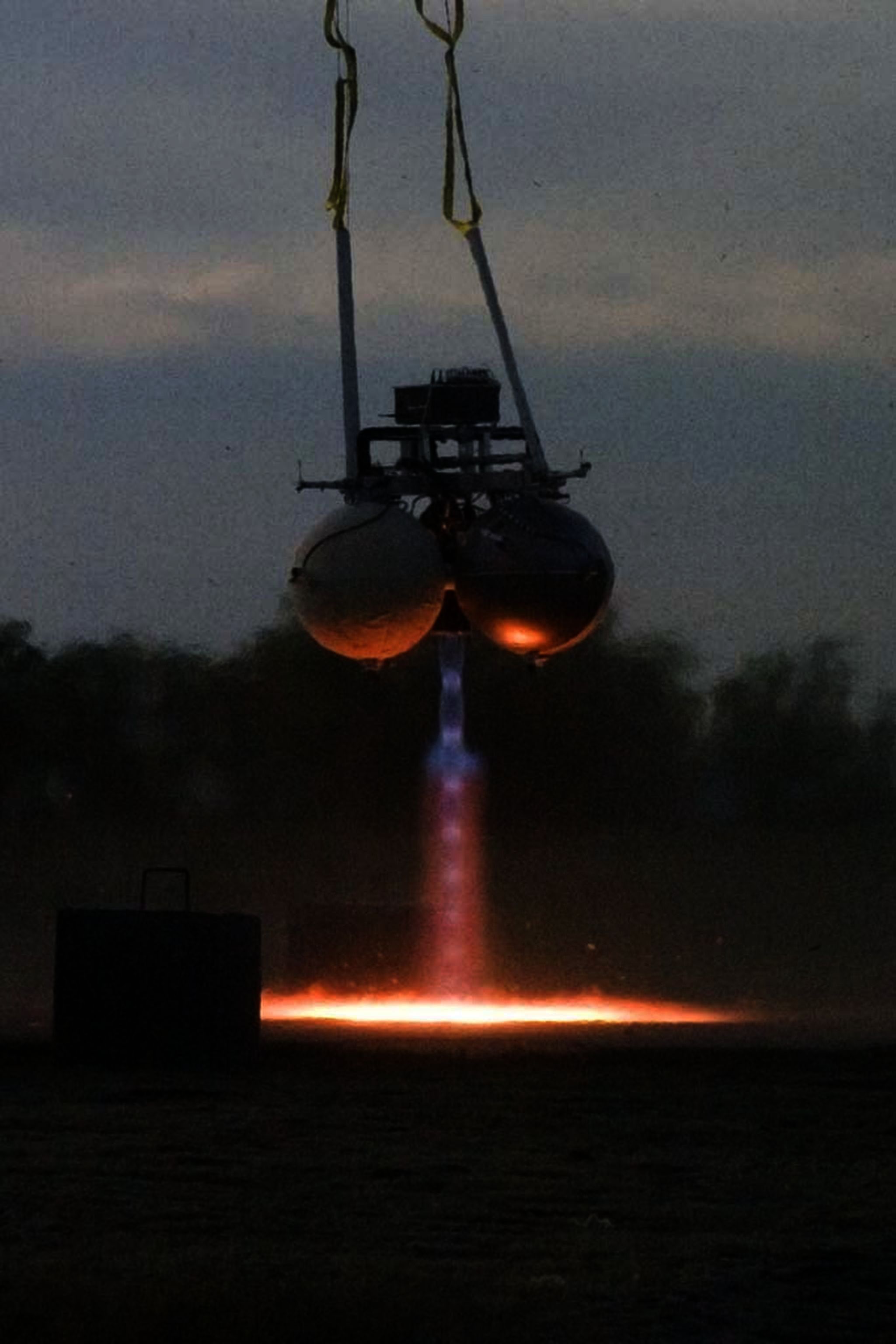
If cities and mines are established on the Moon?which is likely only a matter of time?humans will have an alternative to life solely on Earth, which will lead to the development of new technologies for settlement on our closest neighbor. This phenomenon will significantly strengthen human civilization economically, with trade in raw materials and other resources beginning to flourish. The Moon will also likely serve as a refueling station for flights to Mars. The Moon has only a negligible magnetic field, which will not protect settlers from the solar wind or direct bombardment by rock fragments. Shelters built for colonists will need to be robust. All necessities for life will be obtained locally, as transport from Earth is currently difficult (which will change when a better and cheaper spacecraft transportation and propulsion system is implemented). Perhaps in the future, spacecraft used for lunar and beyond flights will no longer be powered by rocket engines, but will instead be propelled by magnetic forces, such as the Lorentz force, inertial thrusters, or utilize artificially generated gravitational interactions.
The peaceful use of resources from the Moon will depend on many social, political, and economic factors. International cooperation and the acceleration of work on the first self-sufficient bases on the planet are crucial. Undoubtedly, the excessively high cost of launching spacecraft using launch vehicles is a serious, if not the most serious, problem. Therefore, it seems crucial to thoroughly consider the possibility of developing a cheaper, reusable propulsion system with parameters that far exceed the capabilities of today's rockets and rocket planes.
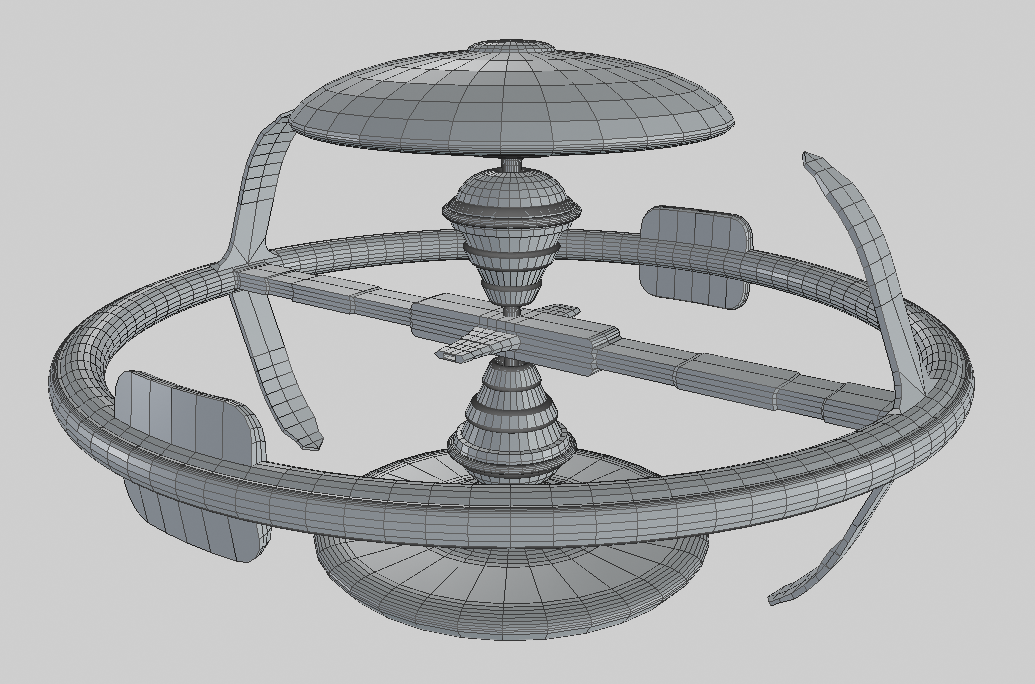
The presence of the required raw materials on the lunar surface is encouraging; their existence has been confirmed by probes orbiting our satellite. The development of lunar infrastructure will likely take decades, if not centuries, to complete. However, considering the benefits, which could truly become a driving force for the global economy and provide significant living space for pioneers seeking a taste of adventure and many other visionaries in a new generation of open-minded minds, this seems like the right direction for years to come, as well as the fulfillment of the dreams of millions. The Moon, with its potential, is already relatively well-known to humans. It is also practically the only object readily available for human exploitation; the technology enabling flights to the moon has been known for forty years thanks to American missions. Many countries, such as China and the United States, are currently planning a human return to the Moon, along with the establishment of a true lunar base and initial development plans, similar to those of Japanese projects. Both these countries are currently conducting robotic missions, and India and many other countries are eager to join them. Interest in the silver globe will likely develop into tangible results in the coming decades, which we will all witness. When will the possibility of travel to the silver globe become available to wealthier or middle-income individuals? Time will tell. Initially, we will certainly have to wait until robotic missions prepare the ground for the first permanent lunar base. From the first rockets built in ancient China, through the first liquid-fueled rockets like the V2 and Redstone, the space shuttles, and other rockets that eventually mastered space transportation technology, to the present day, the principles studied by pioneers of space flight theory like K. Tsiolkovsky and subsequent promoters of this technology have for years been the only available method of space travel, including the launch of satellites, flights to space stations, and further journeys like expeditions to the Moon. Currently existing new forms of rocket technology, such as ramjet engines, ion engines, and even propulsion using a nuclear reactor (such as the former Soviet-made Topaz 2), with a uranium core refined to over 90%, were once more popular among designers, although they were never commercially introduced. Despite all the knowledge of designers and ongoing efforts to improve the capabilities of commonly used rockets, progress in this case is practically the slowest of all existing technologies worldwide and stands in contrast to, for example, the rapidly developing electronics and software technologies, as well as advances in solid-state physics and plasma physics. Ever since the invention of fissile materials, and S. Ulam, who worked at Los Alamos, among others, and who also presented a new solution for detonating nuclear propulsion for spacecraft, attempts have been made to harness the energy of nuclear fission to propel spacecraft, but as we know, no one has succeeded until now. Nuclear energy, due to its enormous power, is not suitable for use in planetary conditions, and controlling it is very difficult, because on the one hand we have the chain reaction process of fission of heavy atomic nuclei, which is difficult to control, and on the other we have the problem of combining light atomic nuclei used in nuclear fusion technology. As we know, to sustain fusion, energy is needed, which must first be supplied, which is associated with serious technical difficulties, and only after some time we will reach the point of developing possible thermonuclear engines that could propel spacecraft. All these obstacles, resulting from the current state of knowledge, which was forced by the last war to shift towards atomic energy, ignoring abundant, clean energy sources such as physical field energy, vacuum energy, and gravity, have established this very picture in transportation technology in various forms. Due to the work on these technologies throughout the 20th century, work on many promising technologies based on field energy and vacuum energy was abandoned. No significant attempts were made to master the phenomenon of gravity on a widespread scale, which is still reflected in the lack of understanding of weak interactions?gravitational interactions. Too much emphasis was placed on understanding the mechanisms of strong interactions within the structure of the atom, resulting in humanity remaining "trapped" on its own planet. This type of asymmetric technological progress continues to this day. On the one hand, we can build powerful computers and have understood the phenomena of current flow in solids, we have a certain understanding of electromagnetism, and we have developed methods for data processing and storage. However, when it comes to space travel, there remains a significant global impotence. Some recent attempts to improve the capabilities of reusable rocket vehicles are certainly a good direction for the future, but when it comes to anything beyond Earth's proximity to Earth?orbital orbit?more efficient transportation methods have not been developed. There are, of course, various prototypes of plasma propulsion, solar energy, and laser energy, but none of this is truly what people need today, especially those who expect more than current technology can provide. And the possibilities are plentiful. However, it's important to acknowledge that chemical rocket technology will be used for a very long time. Moreover, Mars will likely still be colonized, at least initially, using conventional chemical propulsion, despite numerous attempts by scientists of all stripes working on new propulsion systems. It also happens that capital, wherever it is present in large quantities, strengthens the specific technology currently available, as is the case with large companies that see space colonization and exploration as a profitable venture. Without this support, further-reaching initiatives lack sufficient leverage. Furthermore, progress in space exploration is often slowed by futile international disputes, conflicting interests, and multifaceted economic struggles. This situation is unlikely to change significantly in the near future; too much pride and prejudice persists between individual nations in many regions of the world to assume that matters will normalize on their own. Disagreements often have economic roots, and where large sums of money are at stake, the struggle is often ruthless.