9 September 2020
Nikola Tesla, born into a Serbian family and an inventor from Smiljan, who is often said to have invented the 20th century, especially in electrical engineering, is gradually fading from the memory of ordinary people, but for decades he has left his inventions to those who benefit from his passion and genius to this day. However, during his lifetime, he sometimes sparked controversy, and his self-confidence and belief in his intellect were considered madness or, in the opinion of some at the time, magical abilities. Indeed, some of his ideas were characterized by audacity and technical thought unique to Tesla. After Tesla's death, the CIA reportedly confiscated his notebook, which was full of things the world will never know ? how many ideas he took to his grave is also unknown. However, human civilization currently uses a precisely defined set of technologies, often derived from Tesla's ideas, including: 230 V alternating current, with a frequency of 50 Hz, is used primarily for its easier transmission over long distances. At low current and high voltage, this type of current can be easily converted using transformers to any desired characteristic, primarily with higher amperage. Powering electronic devices typically doesn't require high currents, so the current must first be adapted to precise devices such as processors, RAM, and other electronics. The entire power distribution system, for example, in Poland, is not without its fundamental flaws and limitations. Transmission losses in a standard power grid reach several dozen percent of all power generated in power plants, primarily due to resistance losses, which increase with rising temperatures, for example, during warmer seasons such as summer or spring. Attempts to reorient infrastructure toward generating usable energy at the point of consumption from available energy sources such as solar, hydro, wind, and geothermal energy have not yet been significantly implemented for many reasons, the main one being simple economics and the need for excessive interference with existing infrastructure, which would simply be redundant if a distributed system were implemented. This is a shame, because distributed energy infrastructure has significant advantages that are difficult to overestimate.
In the coming years, a parallel attempt may likely be made to change the country's household electricity supply system to a distributed system, eliminating power plants only to a certain extent. This process, however, will not be easy, and in particular, it will threaten the economic foundations of so many companies and institutions in the country that it will be postponed indefinitely. The technology required to end the poisoning of humankind by humankind currently exists, but it is so expensive, and its price is artificially maintained at such a high level by economic opponents, that it is unprofitable to implement it, as coal, nuclear power, or gas are cheaper. It is therefore understandable that we, as humans, will do nothing to eliminate the harmful effects of certain solutions. The assumptions were flawed from the outset. In the early 20th century, when the image of today's technology was being shaped, no one cared about pollution levels or economic conditions, because it was believed that a quantum leap in civilization was being made, and the world uncritically benefited from new conveniences. There are insufficient indicators to estimate or predict whether modifying current technology in terms of materials will lead to a better world, but a situation may arise in which materials will be developed that will transform current dirty technology into a clean one, even bearing in mind that human technology has had an Achilles' heel from the beginning, a point that is becoming increasingly apparent today. If certain limitations had been understood earlier and civilization had turned in different, yet correct, directions that were silenced during the turbulent development of standard fuel technology, which drowned out other trends, the quality of life on Earth might even have improved compared to its current state. It so happens that these technologies have been marginalized. Society is an open system; secrets cannot be kept secret for long, especially in the age of the internet. Information is a light shining through the deep waters of knowledge, and modern weapons are far more dangerous than the atomic bomb. Currently, hardware and software are integrated like never before, which has both advantages and disadvantages. With the development of electronics, we can see the next stage of progress in this field, but when it comes to energy, its generation compared to its consumption is a completely different matter. There are solutions in electronics that enable the generation of usable energy not only for educational purposes, but also to demonstrate certain physical relationships between solids and current. In the future, such electronics will enable the use of independent power supplies for devices currently powered by a wall socket. Lithium-ion batteries, whose operating principles and capabilities have remained unchanged for a long time, power power-hungry devices whose current consumption has multiplied over the past quarter-century. This results in charging cycles requiring constant access to a power source from a stationary power plant. If it were possible to implement electronic solutions based on high efficiency, significantly exceeding 100%, and such devices are currently being considered, primarily by those in the economically constrained sector, chemical batteries would be eliminated.
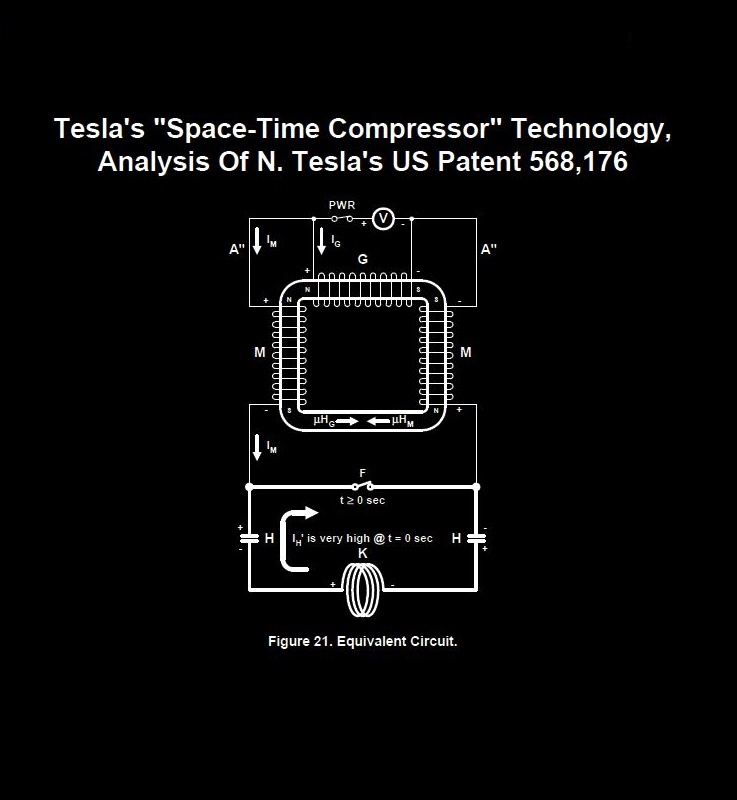
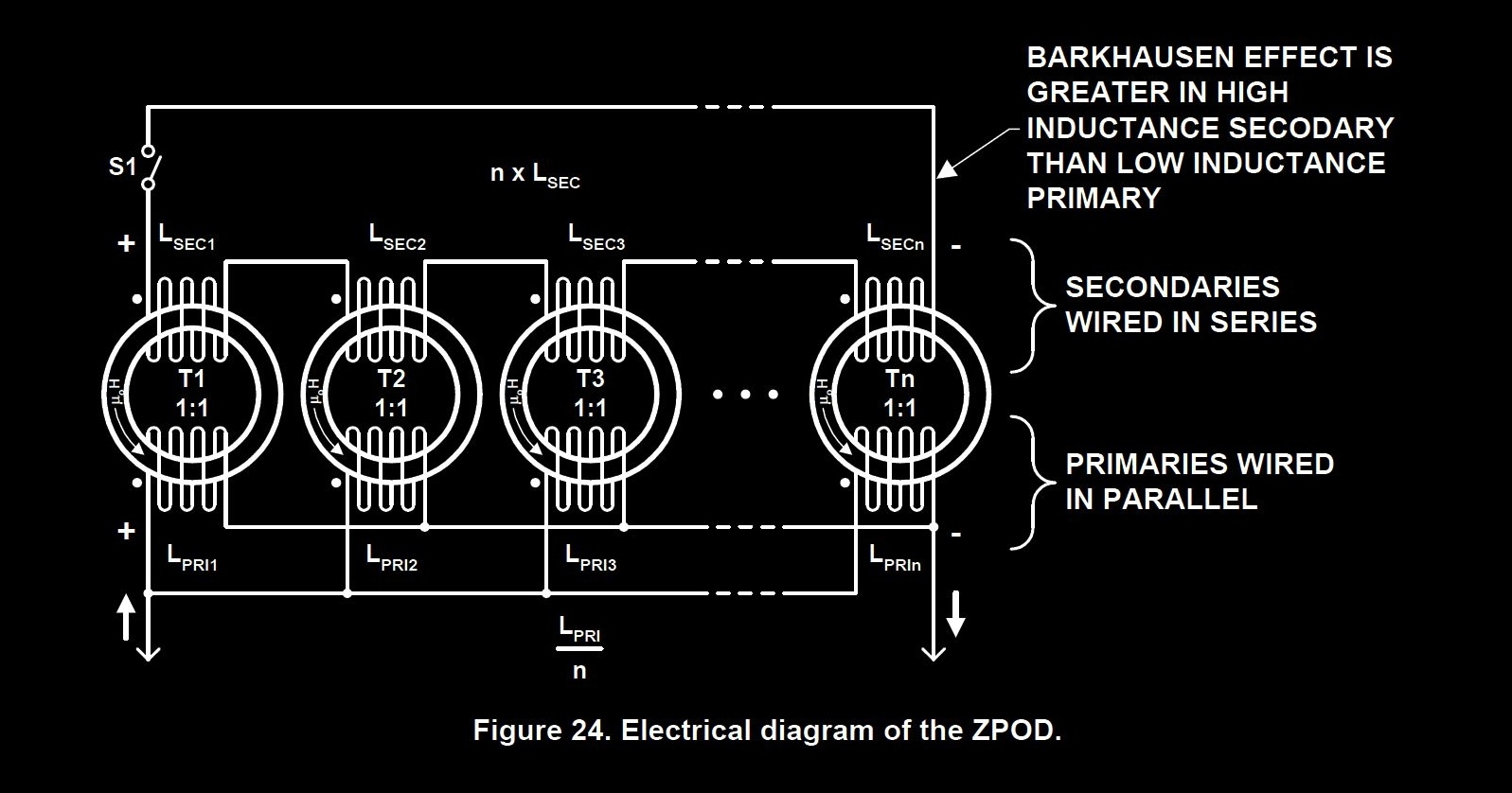
Batteries that draw energy from atomic transformations based on beta decay and fuel cells would also become redundant. The point is that electricity itself is subject to certain physical phenomena, such as resonance amplification, induction, and many other determinants, via appropriate electronic components. These solutions are often very simple yet effective. Energy contained in three-dimensional space, in which matter is one of its manifestations, is full of possibilities, and clinging to only one or a few technologies and utilizing its benefits significantly limits human capabilities. One of Tesla's flagship electrical engineering devices, the so-called Tesla Coil, operates on the basis of high-frequency current. The input current can range from a few to a dozen volts, while the output current is on the order of 100 kV. The resulting voltages can be on the order of millions of volts, and the spark can be up to several dozen meters long. Such coils operate at high currents, but there are solutions based on similar electrical phenomena that don't generate such high voltages and are more controllable. However, I haven't encountered any attempts to use the Tesla coil to power anything (what's the reason?), and no one seems to know how to adapt it for power purposes. Perhaps the reason lies elsewhere. In any case, the coil's inventor himself would certainly have been able to solve the problem. There are reports that during his stay at Bentley's plant in the US, Tesla developed a power supply for electric propulsion with characteristics that cannot be compared to any currently used solution. A car, powered by Tesla's device based on unknown electrical properties, drove for nine days, as if by some magical force and drawing energy from no batteries. Tesla himself, when later questioned about the energy that powered the car and faced with suspicions of black magic, in a rage, removed his device from the car and left. There are several such accounts of strange events involving Tesla, both written and verbal. It's surprising that certain, numerous Tesla solutions, which are abundant in the United States Patent Office, remain unused. Perhaps well-known controversies, contradictory to current knowledge, such as the Faraday disk, which Tesla claimed could become a free-energy device after reversing its polarity and making several other changes, exerted such a strong influence on the decisions of scientists and others that certain devices, due to Tesla's own attitude toward them, were discredited as suitable for general use. Other devices, such as turbines and, on the other hand, space-time compressors, are either used for demonstration purposes or are the subject of investigation by various laboratories. I've come across work, for example, being conducted at Intalek (I don't know the name of the company, but there are some materials online about the work done by their laboratory) on gravitational effects, gravimetric mass fluctuation, and the effect of jump magnetization in magnetic cores, which supposedly have some connection to Tesla's space-time compressor. Work on the effect of jump magnetization in magnetic cores leads to the construction of devices that generate free energy, while another thread is linking the phenomenon of mass fluctuation with the theory of relativity and gravitational waves. In electrical devices, basically any change such as polarization-depolarization in capacitors or a change in the inductance of a coil in electrical circuits leads, according to these studies, to the generation of low-power gravitational energy in the form of a gravitational wave. This interesting approach leads to several conclusions, namely to a simple development of the theory of relativity and its enrichment with new practical possibilities, which actually look promising in transport and energy, and above all, shed new light on the physics related to this theory.
Electronics can be a fascinating and rewarding pursuit. It's a field of technology that allows for the infusion of intelligence through appropriate software to control mechanical devices and robots. Electronics involves programming skills and manual dexterity. Combined with robotics and precision mechanics, it provides a precursor to the construction of devices with new capabilities, including unconventional forms of propulsion, which I've previously described. Solid-state physics is a fundamental field of knowledge and technology that finds application in semiconductor electronics, which in turn leads to all sorts of other structures useful in projects involving broadly defined autonomous and manned transportation technologies, as well as specialized software for these purposes. Building complex electronic circuits, which can be designed using various computer programs available on the market, often requires significant financial outlays, and the construction stage itself requires considerable attention, as at certain stages of the design process, errors can lead to fatal consequences. Many people involved in electronics and robotics have different concepts for their designs, but very often they are characterized by a specific technological level, typically not exceeded under standard conditions, appropriate to specific technological methods currently in use. This is not surprising, but it does cause the evolution phase to take too long. Something completely new in this system will struggle with the lack of precedent and may be rejected by the design community until the validity of specific assumptions is proven by practical methods and results. Even then, the prototype phase is too often the only and final stage, ending attempts at implementing truly pioneering, high-end designs. Another problem is the general public's approach to technology, which blocks the independent thinking of individuals rich in unconventional ideas and favors standard technologies over those that could effectively replace them in a better and more efficient way. This is the so-called civilizational drift, which is psychologically based, and the resistance of the human factor caused by the inappropriate allocation of specific means to achieving goals, determined by the characteristics of the existing technological foundations. Some solutions and approaches based on scientifically controversial theories may be stigmatized from the outset because they are treated with distrust from the outset, with little regard for their potential, fundamental, and substantive value. Various solutions currently existing only in the phase of ineffective experiments will not soon impact the technological reality we encounter in everyday life. In my opinion, as a technological civilization, we will not quickly achieve much more than our attachment to the theory of relativity, quantum physics, etc., allows if solutions not based on these foundations are ignored and negatively classified by science. This is just one example, and it likely falls short of the general truth. However, it seems to me that this truth is being lost somewhere in the civilizational cycle, with negative consequences for the global community. The civilization we are creating too often leads to negative consequences, and a large portion of the world's population still has to live in conditions that often fail to guarantee even the biological minimum. This demonstrates the lack of effectiveness of science and technology, as many important, key topics are still not subject to any scientific research...
Electronics and computer science alone, without a compelling vision, are a technological dead end. They cannot be considered a standalone discipline; it's best when they are presented with something concrete and more powerful, with the right impact on reality. Robotics doesn't end with industrial robots, or even humanoid robots that mimic humans. It's time to address the fundamental problems of technology, which, recently neglected, still lie fallow. I'm referring to transportation technology because, contrary to popular belief, this is the most neglected field, and these shortcomings concern counterweights for conventional motors, while electric propulsion is a minor solution. Enough of games, mathematics, and calculations claiming something can't work because theory seemingly rules it out, and wasting time on conformist research. It's time for concrete, tangible, and real exploration of true technological possibilities. Currently, the development of computer science and electronics leads, one might say, to lifestyle diseases, unfavorable functional changes, and altered natural human responses to their environment. All of this is reflected in civilization's capabilities, limited by perception, which have been severely limited by the excessive growth of electronics and software, neglecting the fundamental core associated with the pursuit of freedom and domination over nature. Until this core is broken, humanity will not gain key capabilities, and on Earth, it will remain a prisoner of its own perception, limited by planetary conditions, and a laborer of technology entangled in ineffective software...
9 September 2020
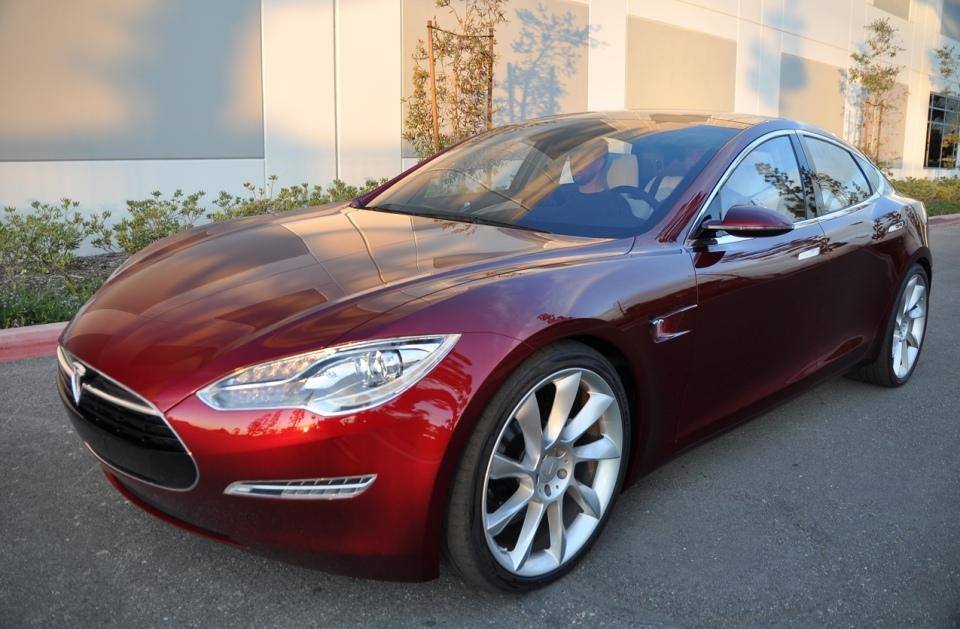
Hybrid drive has been known for at least several decades, and has been used in recent years in hybrid vehicles, and during World War II, it was used in submarines, among other applications. A hybrid drive combines two types of engines: electric and internal combustion. The electric motor often also acts as a generator, charging the batteries, which are also used as an additional power source in these types of vehicles to extend the vehicle's range using only the electric motor. In this type of drive, the electric motor typically operates in low gear and at low vehicle speeds. This means the vehicle burns no fuel during city driving, or significantly less, and thus reduces carbon dioxide emissions due to frequent stops and starts. Like electric vehicles, hybrids can be equipped with an inertia retarder, which can improve the vehicle's energy balance by recovering some of the inertial energy while driving. Additionally, hybrid and electric cars can be equipped with a function to recover some of the electric energy during braking. In this case, the electric motor, as mentioned, acts as a generator. Hybrid cars typically have a longer range than electric cars because they use two energy sources: fuel or electricity. However, the combustion engine often serves only to recharge the battery pack and does not directly propel the vehicle. In these types of vehicles, the combustion engine plays a secondary role, and the energy used for propulsion comes from the battery, which powers the electric motors (e.g., the Opel Ampera). In electric vehicles offered by the California-based company Tesla Motors, which exclusively manufactures extended-range electric cars, cooling the lithium-ion battery packs proved to be a significant problem, as they become quite hot during operation. This problem was solved by using separate electronic sensors for each cell, which disconnect individual cells when their temperature reaches a dangerous level. This ensures that the battery pack remains at a temperature that allows the electric motors to properly collect energy. Electric cars don't use any other forms of energy besides electricity. This means they have a shorter range than hybrid cars and don't emit any exhaust gases, unlike conventional combustion engine vehicles, which undoubtedly puts them higher in the hierarchy of technological advancements. In reality, however, electric propulsion is nothing new, as such technological solutions predate the idea of ??combustion engine propulsion. However, the rapid development of fossil fuel extraction and their low prices discredited such attempts at inception. What we are witnessing today clearly demonstrates that better doesn't always trump good, and certainly not in the automotive industry. On the one hand, we have the pressure of cleanliness standards required by higher authorities, and on the other, the pressure of profit in all areas of human transportation. This type of struggle can, and does, lead to even greater stratification in many technological areas. In modern industry, where we have nuclear energy on one side and dirty combustion technology on the other, it's strange that for over 100 years, there hasn't been a decisive crackdown on the economic nonsense that defines fossil fuel trends in global markets. Perhaps if it were otherwise, the lowest nutrient in the human civilizational ecosystem wouldn't be the average person, and technology would finally begin to support life rather than create further economic barriers.
Tesla - fully electric car.