5 May 2021
Time as a physical phenomenon is related to speed and is relative, which means it flows slower for an object in motion than for one at rest. In fact, however, there are no bodies - objects at rest in the universe. This means that all matter in the universe is in motion, and every point in space is moving away from other points. According to current theory, before the universe existed, neither space nor time existed; space only came into being at the time of the "big bang" and expands along with it. Outside the universe in its current form, identical physical laws with the same vacuum parameters do not exist; in inter-dimensional space and between parallel universes, it makes no sense to talk about three-dimensional space or time. Time as we know it exists only in our universe. If there are other spacetime parameters that allow physical laws to function, parallel universes may exist, but it must be stated with certainty that transitioning, for example, from our current universe to a parallel universe would require technology beyond any current scientific understanding. Moreover, due to the "law of symmetry of phenomena," every phenomenon can have its opposite. The existence of matter is opposed by the existence of antimatter, and therefore it can be assumed that entire antimatter universes may exist, being like a mirror image of their opposites. The existence of gravity can be opposed by hypothetical antigravity, which may be sourced from so-called "dark matter," etc. However, time, formally responsible for the composition of phenomena, constitutes the "fourth dimension" of three-dimensional space. So, does the opposite of the phenomenon of time exist? In planetary conditions, e.g., on Earth, the passage of time depends on many components of speed in realities defined by the nearby cosmos. Eliminating even one of these components in current technological conditions is practically impossible. The angular momentum of all matter in motion is recorded at various stages and applies to every atom in a given part of the cosmos. Kinetic energy, and especially its effect on the weight of matter, is not yet subject to human control. Some forces in planetary situations can, however, be an interesting counterpoint to other forces and can reveal various interesting solutions based on them. One of them is the law of conservation of angular momentum. Conclusion - one can only add a component of momentum; it is never possible to cause its absorption. However, some scientists postulate that there should be local phenomena that can challenge the continuity perceived as the sequence of events for our temporal continuum. There may also be certain issues that define the concept of time not as a constant but allow for the existence of other dimensions and timelines with frequencies of certain time energy carriers (hypothetical tachyons) different from our universe.
5 May 2021
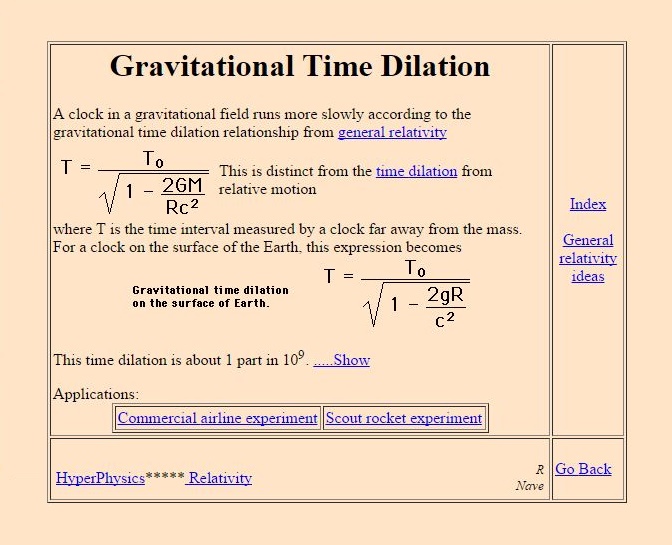
In the conditions of life on Earth, the parameters of reality, for which research tools have not yet been developed, are irrelevant. This fact can lead to a departure from fundamental scientific foundations and their treatment as simply science fiction. However, while exploring the fringes of science may not necessarily yield any solid results, it can produce specific practical and measurable results?in short, it can define new directions for the development of civilization. Currently, civilization is passing through a critical juncture where the increasing complexity of technology promises fantastic possibilities. However, its skeleton is not yet solidified. I recently read that some time ago, Nikola Tesla said that it would take many generations before humanity discovered the universal energy from which matter and other phenomena related to it, including time, arose and began to utilize it. Several generations have passed, and although various solutions exist, more or less accepted, Tesla's vision has yet to be realized. Throughout his life, Tesla attempted to make universal energy (free energy) available to society and generate electricity from it. He achieved only limited success. However, despite this, his solutions, for example in electrical engineering, constitute, one might say, the operating principles of today's civilization (thanks to Tesla, we have alternating current in electrical outlets and utilize inventions he invented, such as the fluorescent lamp and the alternating current generator). Few people have heard that he also invented, for example, the space-time compressor and a host of other inventions that are not used in technology at all. I don't know how he perceived the phenomenon of time and its passage, but since he was capable of inventing such devices, it can be assumed that he was familiar with it from the perspective of the design possibilities of specific devices based on such concepts. He also attempted to invent a local force field, but detailed information on this topic has been lost and is unavailable. Gravitational forces and space-time dilation influence the passage of time. However, in reality, the most significant technological problem is not the actual possibility determined by calculations, but only the human imagination and the level of highly advanced technology that Earth's civilization will approach in some time.
Given the planetary circumstances in which all people live, within a shared dimension of consciousness defined by limitations, it's possible to see the same thing from the same or different perspectives?everyone sees the world differently. What's happening in current technology isn't always supported by a truly concrete idea?it's an evolution and reworking of what someone else has already "messed up," and nothing significant comes of it. Electronics and software must compensate for technological shortcomings, which are noticeable at every turn. For an observer who doesn't participate in the daily "noise" of the political and economic scene, it doesn't matter whether one option wins or another, provided they have the ability to perceive reality correctly and undistorted. It could be said that much is happening in current technology, but very often with negative consequences for society. Implementing technology comes at a price, and from an economic perspective, the balance of benefits and losses surprisingly often equals zero. If these were technologies that supported the lives of every person, without impacting their wallets or draining their pockets, we could call them a success. However, many technological solutions around the world only increase the number of people under financial pressure and consequently weaken society's potential, not strengthen it. This clearly demonstrates that for certain decision-making elites, economics is more important than the fate of the average person. Corporations deliberately delay technological progress, building intermediate solutions instead of immediately implementing optimal solutions. They do this solely to increase their profits, ignoring the rest?this is a common practice and won't change anytime soon. However, in our times, technology bypasses the most important topics. It's a fact that matters related to controlling time and gravity are a bone in the throat of modern science. Such issues are fundamental and, at the same time, the most intellectually demanding part of theoretical physics, and it's difficult to expect quick practical results. Our scientists can only observe these phenomena through a telescope in the distant universe.