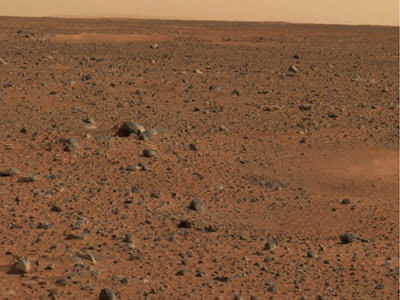
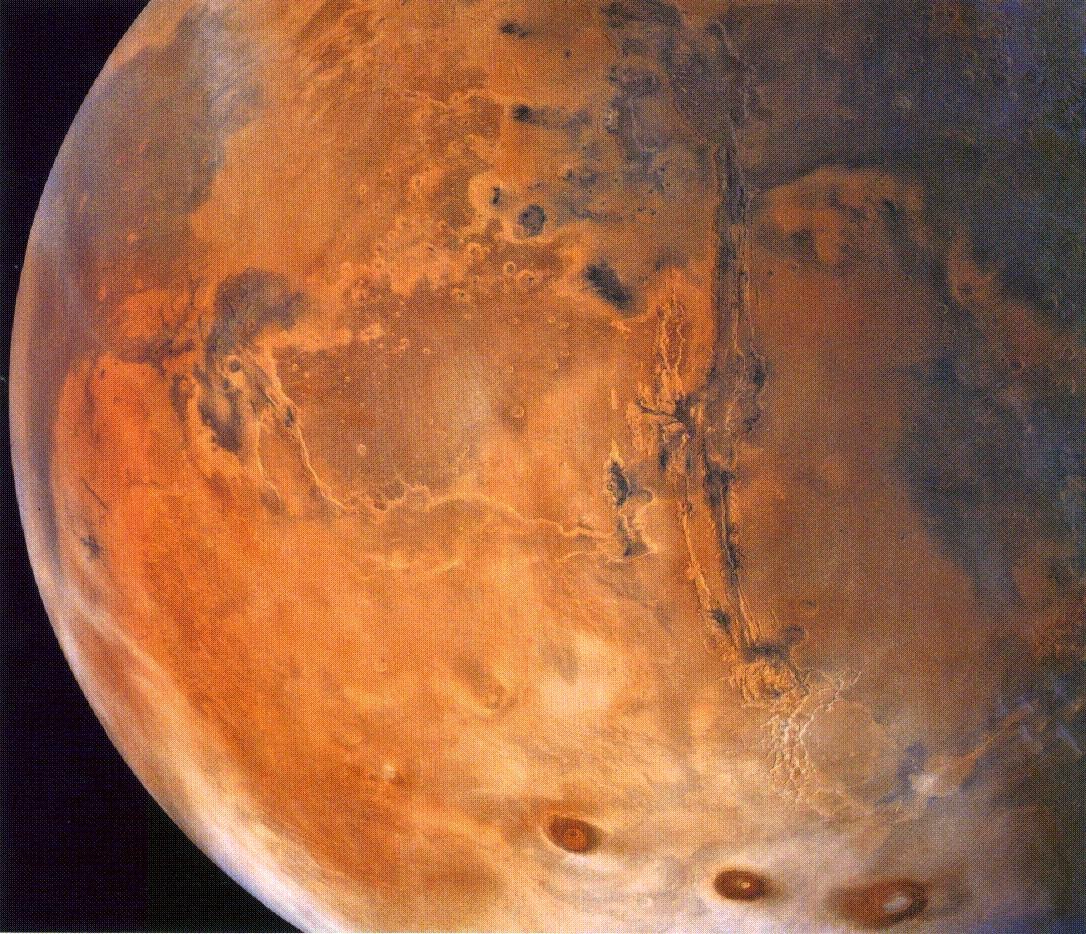
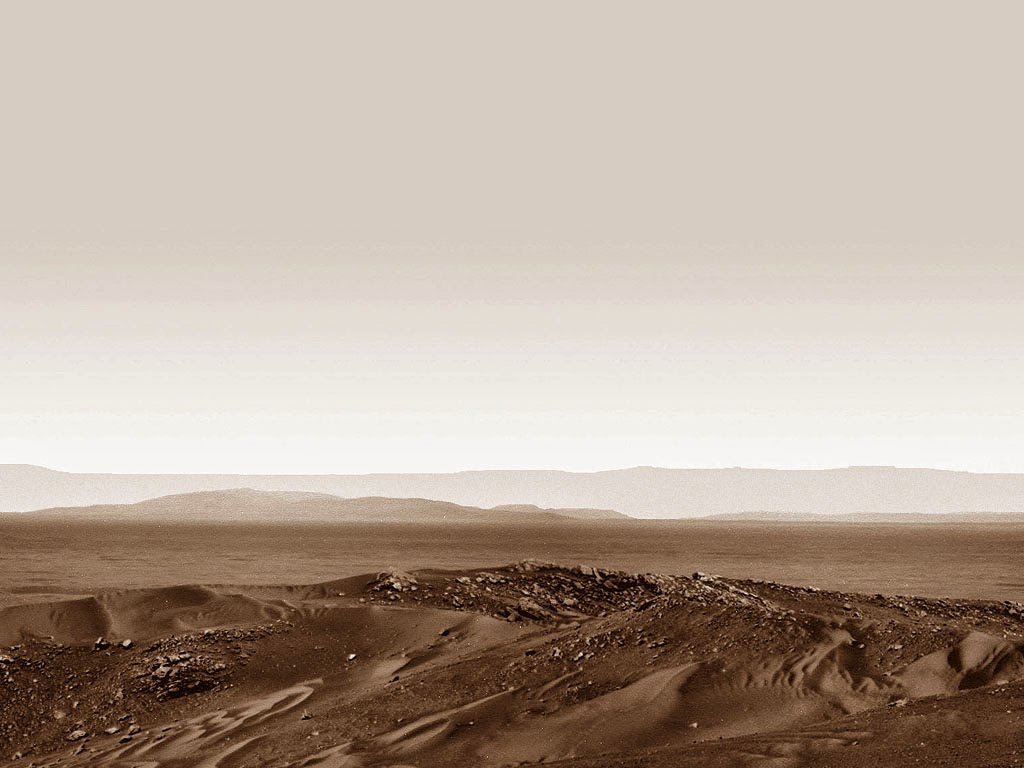
Considering the common matter in space, which constitutes known living organisms, most organisms on our planet are composed of 75% water (water is oxygen and hydrogen in an atomic ratio of 1:2), the remainder being carbon (carbon, atomic number 6), nitrogen (atomic number 14), phosphorus, sulfur, and other elements. All components of the human body originate from nuclear transformations during the development and death of stars. The origin of the universe we live in is unknown, and the future of the cosmos is also unknown, although various cosmological theories exist. The origin of humans as a species on Earth is also not fully understood. Although earlier evolutionary links are known, at key moments science on this topic cannot answer a number of crucial questions. There are beliefs and philosophical trends, as well as specific and general scientific knowledge. All of them may present a fragmented and superficial view of reality, departing from absolute knowledge and the truth of a more general dimension, because, as history teaches us, every truth is relative and verifiable through some larger, broader system. The next technological leap for our civilization, which is slowly approaching manned exploration of its own star system, should likely be the colonization of the "red planet." The fourth planet in terms of distance from our star, Mars, possesses planetary conditions that allow for relatively rapid colonization and exploitation of raw materials and minerals. Current research on rocket propulsion technologies, as well as work on plasma propulsion in engines such as the VASIMR, and, unfortunately, the abandonment of work on nuclear propulsion?e.g., the Nerva system and other nuclear and ion propulsion systems?would reduce space flight times to a few weeks compared to propulsion based on chemical thrusters, where travel typically takes several months. Technical capabilities driven by technological and industrial progress are currently increasing at an ever-increasing rate, judging by the computing power of computers and the fact that it could begin to increase exponentially, even incompatible with Moore's Law, potentially leading to a singularity. This will happen when human-created machines become more intelligent than humans and begin to build machines more intelligent than themselves. These machines then build further machines hundreds of times more intelligent than their designers, and so on. The laws of physics could then be bypassed and bent to technological needs by intelligent researchers, who could become these machines. Humans' place in such a situation may be debatable, as they would no longer have control over their machines, and the actual decision-making on Earth would then be machines, not humans. Some fear such a situation, including those who perceive a threat, such as Steven Hawking and many other widely respected authorities. However, paradoxically, new possibilities could open up, such as intergalactic and interdimensional travel, and time travel. Such a situation could likely only arise as a result of a complex chain of events, and many unfavorable factors would have to converge for this to happen (for some artificial intelligence system to take control of the world's most important functional components). It seems that such a threat would have to be related to a significant global slackness of attention. Settlement on Mars will likely be initiated by volunteers eager for adventure, as ordinary people prefer the privacy of their homes to undertaking such risky activities that involve boarding a rocket, exposing themselves to radiation during flight, and then landing on inhospitable land. This settlement may be similar to that in North America during the first expeditions into the continent associated with the conquest of the Americas in the 17th and 18th centuries. There are no open bodies of water on Mars; the planet is arid due to low temperatures, but it does contain frozen water that, if treated, could be suitable for human consumption by the first colonizers. The planet's atmosphere is dominated by carbon dioxide, which, when used in the Sabatier reaction with hydrogen, could become a source of methane, suitable for propelling rockets launched from the planet's surface. Atmospheric pressure at ground level is a hundred times lower than on Earth, so any perforation in pressure suits or habitable shells threatens depressurization, which could endanger human life in the habitats. A second threat is increased radiation from nuclear transformations within the Sun and hard cosmic radiation. The planet's surface is covered in barren desert and rocks, with no visible signs of life as we know it. The planet has no volcanically active areas. It likely has a thick crust and is a single land monolith (no tectonic plates). Although there are likely traces of flowing water in the form of riverbeds and canyons, probes sent to the planet have not detected significant amounts of liquid water, meaning it either evaporated earlier or seeped into crevasses and is present beneath the planet's surface as water ice. Another concentration of water in the form of ice is quite large ice caps mixed with solidified carbon dioxide (dry ice). Living conditions on the planet's surface can be described as quite harsh. Without technology to provide oxygen, heat, food, and electricity for life support, and without rapid cooperation between colonization teams, a failure could pose a serious threat to the colonizers' lives. Even in the equatorial regions, temperatures remain below zero celsius degrees for much of the year; in other regions, they are low enough to maintain carbon dioxide in a solid form. From the perspective of gradual adaptation to colonization purposes, the most difficult task would be to create the initial infrastructure; later, development of the planet could proceed much more rapidly. However, such basic issues as faster transport from Earth to Mars are of great importance, because the time window in which the two planets are close to each other does not last forever, it occurs every two years, and the needs of the colonizers, at least in the first phase, would be very much related to the supply of equipment from Earth. Therefore, it would be necessary to first develop the drives used for communication purposes when the planets are moving away from each other or are at maximum distance (on opposite sides of the Sun), such as VASIMR, so that if help is needed, the colonists could be provided immediately.