How far is our civilization from a warp drive, and is this type of drive merely science fiction or something more? To avoid conflicting with the limits set by relativity and gravity, some have previously proposed a number of ideas that could bypass relativity in a way that is consistent with it or exploit scientific gaps that it could not explain. Only a small number of these ideas meet these requirements. Space is a medium that can be deformed by gravity, which is derived from mass. A gravitational wave itself cannot travel faster than the speed of light. Such waves are nothing more than ripples resulting from a distortion of the geometry of space itself. They carry gravitational energy, but we currently cannot alter the geometry of space using strong gravitational fields or effectively modify the gravitational field in any other way, whether of terrestrial or extraterrestrial origin. Current knowledge of gravitational waves is based on waves arriving from outside the solar system. Only recently was it confirmed that such waves exist, using ground-based instruments. For WARP propulsion, we would need to master the ability to deform the geometry of space. For a WARP-powered vehicle to function, it would have to collapse in front of the vehicle and expand behind it. This would have to be accomplished by deforming space itself. Space has no mass or electric charge, and therefore can contract and expand faster than light. However, effectively mastering this type of technology is likely still a long way off. Currently, we can generate small deformations of space in a system of two counter-rotating masses; NASA, among others, is conducting such work. However, our knowledge of the relationship between space and gravity is still limited. Perhaps there is an entire realm of knowledge about space about which we know absolutely nothing. Phenomena occurring in space, such as various fields, may have a broader representation and are hidden from the eyes of scientists, but are still waiting to be discovered, because the characteristics of the current reality in contact with the standard nature with which we are in contact do not allow for their direct detection in terrestrial conditions.
Many years have passed since man first flew into space, but the methodology of spaceflight has remained almost unchanged since then. People always associate spaceflight with rockets, parachute-assisted reentry capsules, and aerodynamic landings. However, to venture into true outer space?a space beyond Earth's orbit or the Moon's proximity to Earth?would require a clear departure from the physics we know, which allowed for the first steps toward space. Using its current form, deep space exploration is impossible. For technology based on this physics, the immediate vicinity of Earth, i.e., the solar system, is a boundary beyond which any manned mission is absurd. With a human lifespan of 80 to 100 years, it's impossible to even leave the Sun's gravitational pull. Therefore, using chemically propelled rockets for space travel is absurd. To date, however, modern physics has failed to develop any concrete solutions to the theory of space flight, beyond minor speculations based on minor modifications and extensions of the theory of relativity, and the entire technology is based on relationships stemming from Newtonian physics. Even as a civilization, we have been unable to access almost any of the solar system's resources beyond solar energy. To navigate the solar system conventionally, we would first need to create the necessary infrastructure to refuel rockets. It would be better to abandon the concept of rocket propulsion entirely and start thinking about something else. It would be better to allocate the billions sunk into the construction of more efficient rocket systems to implement somewhat bolder and more forward-looking plans. Such plans, taken seriously by decision-makers in the space industry, are sorely lacking. In my humble opinion, all modifications to rocket propulsion, even the most technologically advanced ones and technologies involving the separation of the main propulsion medium from the vehicle, are futureless. Instead, we should strive to develop a complete propulsion system in which the propulsion medium never leaves the vehicle. In my opinion, this would combine the use of physical properties of materials and the fields they generate. However, building a spacecraft requires the use of many components and the deployment of non-standard knowledge. The goal is to develop a field-generating technology that is versatile, for example, one that allows the vehicle to move through space, but also provides radiological protection and protection against collisions with encountered matter. Generating such a field requires in-depth knowledge of gravitational and electromagnetic fields. Why gravitational? Because the gravitational field is the most useful and adequate solution for generating propulsion, as it affects all matter in the universe. An electromagnetic field can be used for radiological protection of a vehicle; for example, it can interfere with and disable high-energy gamma radiation. Controlling the vehicle's inertia would also enable it to achieve extremely high speeds without significant energy input. This could solve the problem of the exponentially increasing energy required to accelerate the ship as it approaches the speed of light, a problem derived from the mathematical relativistic analysis proposed by Albert Einstein. Time dilation is also a problem. It is in the crew's vital interest to be beyond the influence of the relativistic slowing of time as it approaches the speed of light. However, let's consider the causes of this relativistic slowing of time. We know that calculations show that as we approach the maximum velocity, i.e., the speed of light in conventional space, there is an exponential increase in the energy requirement for vehicle propulsion. The supplied kinetic energy is then equivalent to mass, meaning that mass reaches infinite value, rendering propulsion impossible due to the increasing inertia of the mass itself. The existence of mass implies a curvature of spacetime, which we experience as gravity. In strong gravity, the passage of time slows down, as revealed by the theory of relativity?the entire vehicle transforms into a black hole because the ship's matter degenerates due to the compression of geometric dimensions in the direction of flight into a plane with the thickness of a mathematical point, zero thickness. However, if the mechanism for converting the energy supplied to the vehicle were separated from the mechanism for increasing mass itself, which we could achieve by changing the physical properties of matter so that it would have no inertia, especially in the direction of flight, couldn't we simultaneously control time dilation, increasing gravity, and so on? But how can this be achieved? This can be achieved by counteracting angular momentum modification or centrifugal force alone. The crew cabin, or if possible, the entire ship, should have a zero gravity gradient as it approaches the critical moment, where the centrifugal force or generated momentum would counteract the crushing forces resulting from permanent acceleration. In this case, the same factor determining the gravitational gradient (mutually exclusive resultant forces) should be responsible for the linear propulsion of such a vehicle. I don't know if such assumptions could be technologically translated into reality, but one can always try. I once developed a conceptual model for this type of propulsion, which involved guiding masses along different trajectories depending on the direction of their passage. For example, the mass with the higher angular velocity was to be on the side facing the direction of flight, and the centrifugal force acting on it would be at least twice as great as that acting on the mass located at the rear of the vehicle, as it would pass very close to a common center of rotation?if in this case one can even speak of a common point or center of rotation. These two masses, depending on the direction of the propulsion, would operate under different parameters than in a symmetrical system. This system could work provided my intuitive assumptions are correct. Other ship components are no longer as important as the crew compartments, but consideration should be given to how to protect them from relativistic effects, as acceleration could create enormous stress that could destroy the entire vehicle and cause loss of control.
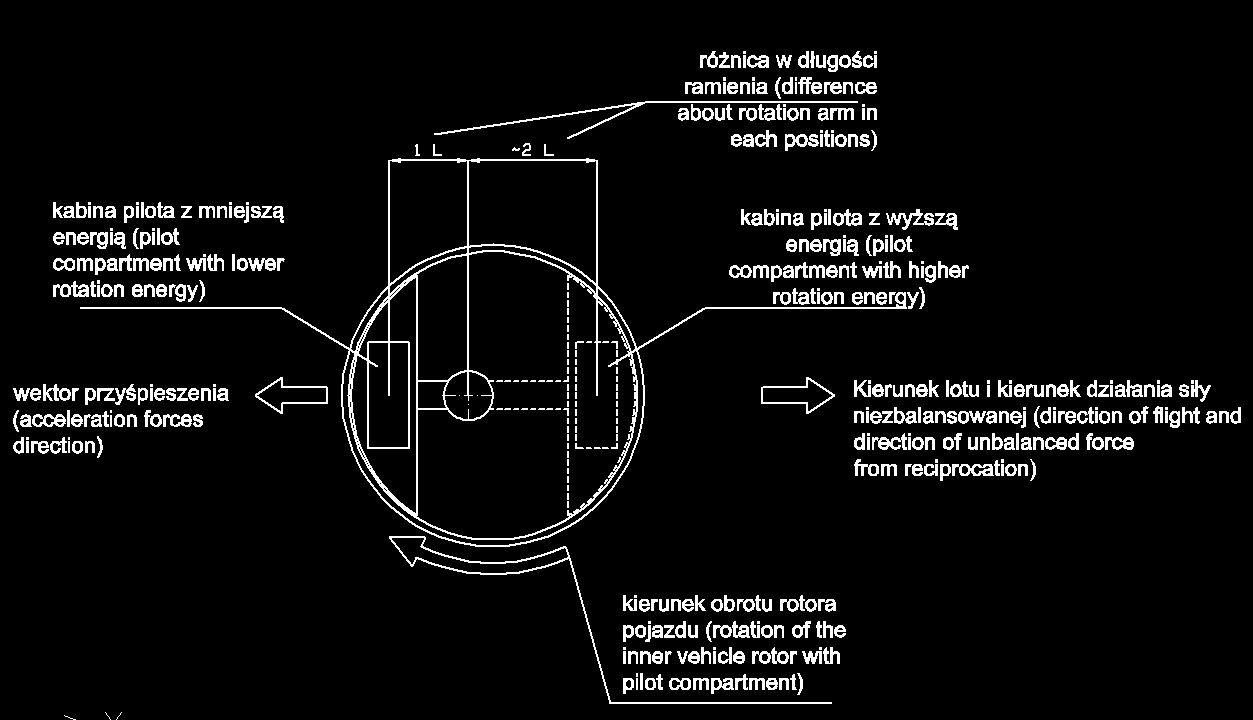
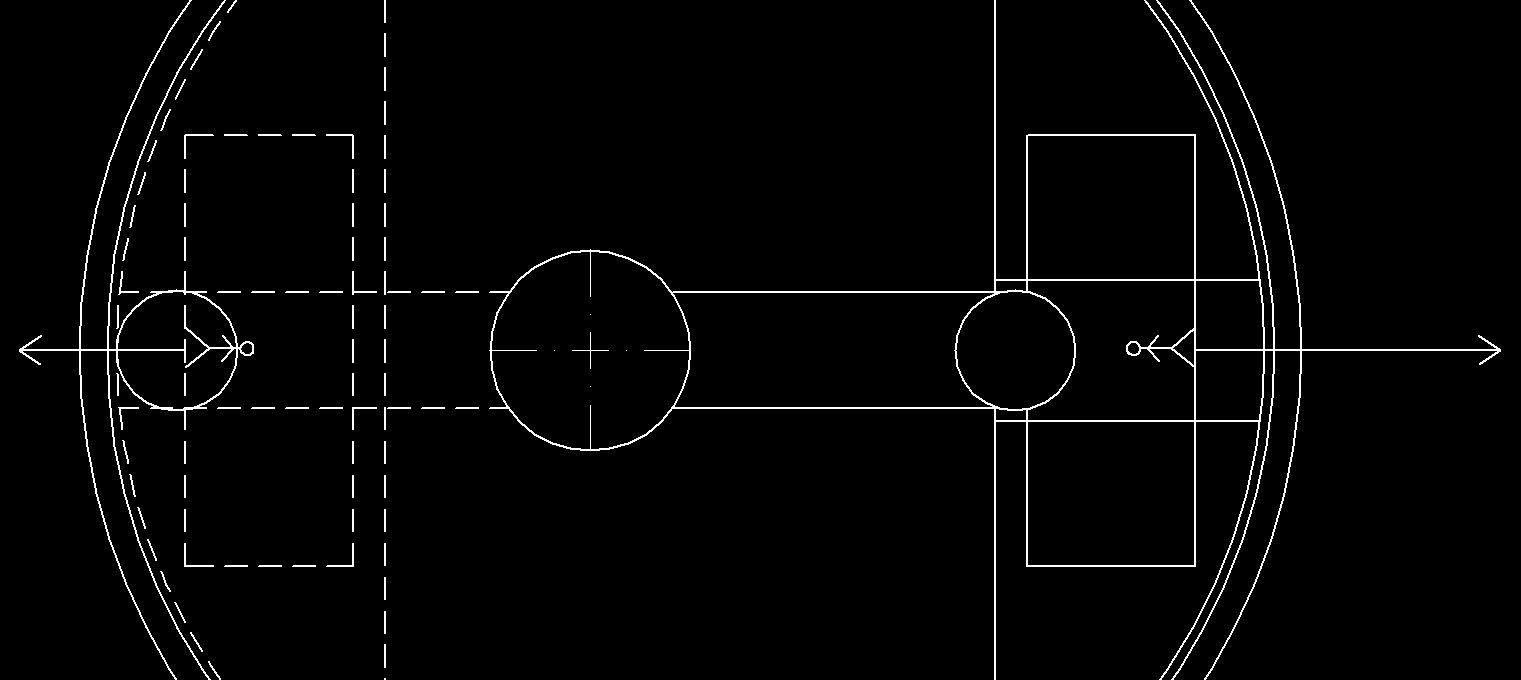
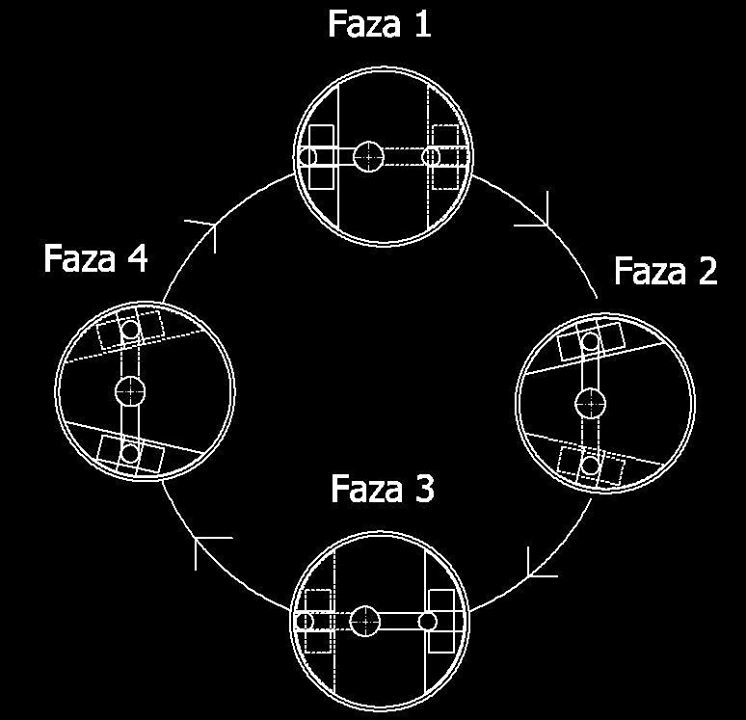
Space travel has long been a topic that has inspired countless people. Almost every generation is eager to explore this type of space travel, even the Solar System. However, the lack of appropriate technology reduces all dreams to mere daydreams. I spent many days pondering how to accelerate technological progress and make the dreams of many people more realistic. However, while a lack of material resources has so far hindered some work on appropriate technologies, even for me, by considering these matters, I now possess at least a few theoretically interesting technological solutions that could enable space transportation on a much larger scale than is currently possible with current rocket and jet propulsion systems. When trying to solve fundamental problems in space communication, nothing is seemingly simple, but simple solutions are best in this case, and overcomplicating such matters can be detrimental to the overall project, as the more structural elements, the higher the vehicle's failure rate. While working on the propulsion system, I devoted a significant amount of time to propulsion using unbalanced centrifugal forces, which could look like the diagram below.
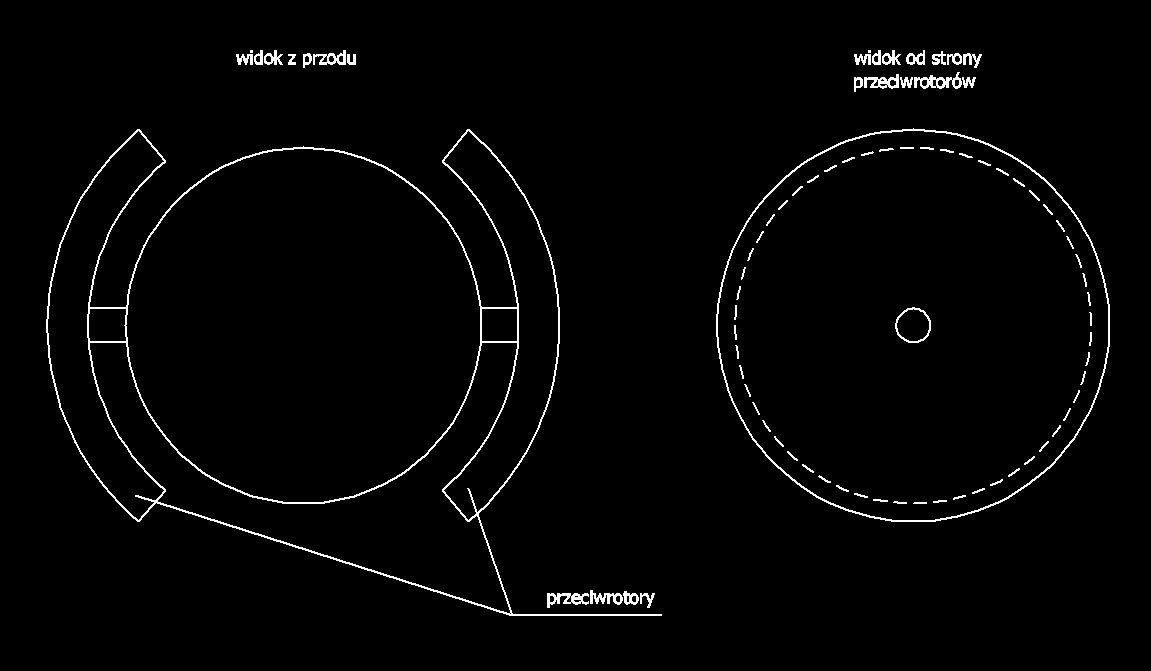
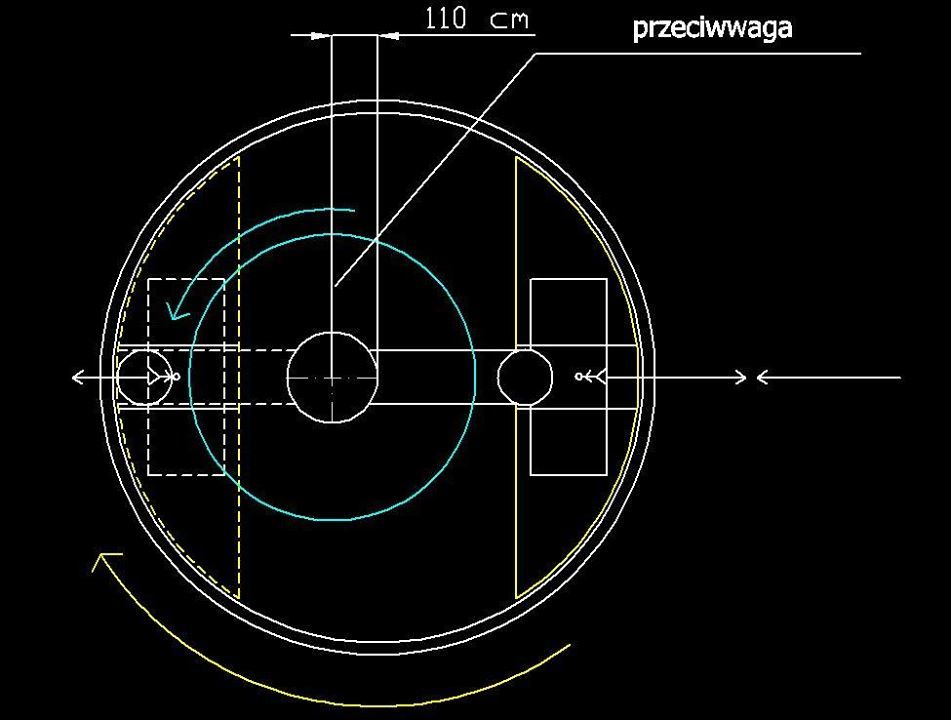
This type of propulsion would theoretically counteract the crushing effects of acceleration g-forces, enabling very high speeds. Importantly, the same force that propels the craft is also responsible for controlling gravity on board. The vehicle's operating principle is based on the difference in the distance between the cabin and the occupants on either side of the inner rotor axis, resulting in a resulting force that cancels out the g-force during vehicle acceleration. This is achieved using a unique design where the arms can retract into openings of equal length on both sides of the occupant compartment. This solution allows for variable arm lengths, and therefore the force acting on passengers should be greater in the direction of flight and less in the opposite direction. In this case, the energy demand is provided by electric motors, which supplement the missing potential energy at the expense of energy from an external power source such as a nuclear reactor or radioisotope generator systems, so that the rotation speed remains constant despite the increase in distance from the center of rotation (in practice, in this solution, as the distance from the center of rotation increases, the rotation speed of the mass on the side of the more distant part of the rotor also automatically increases. This is due to the fact that when the arm increases while maintaining the same speed, the centrifugal force decreases. To avoid this, the rotating mass must be given the appropriate speed again, at the expense of the electricity that will power the device, to compensate for this phenomenon, because we cannot change the mass of the entire rotor, and trying to control the rotation speed, i.e., slowing down and accelerating, would be useless, which would lead to rapid wear of the structural elements). The difference in the length of the rotation arms should be approximately 2:1 (one arm twice as long as the other). That's not all, however. To ensure proper balance, it's necessary to use a counter-rotor, a mass that, by rotating in the opposite direction, causes its own inertia to compensate for the free torque that would otherwise be non-zero. The entire system should be constructed using durable materials such as steel or titanium. There are still numerous issues to be resolved, which I won't elaborate on for now, but I'll certainly mention them in future posts.
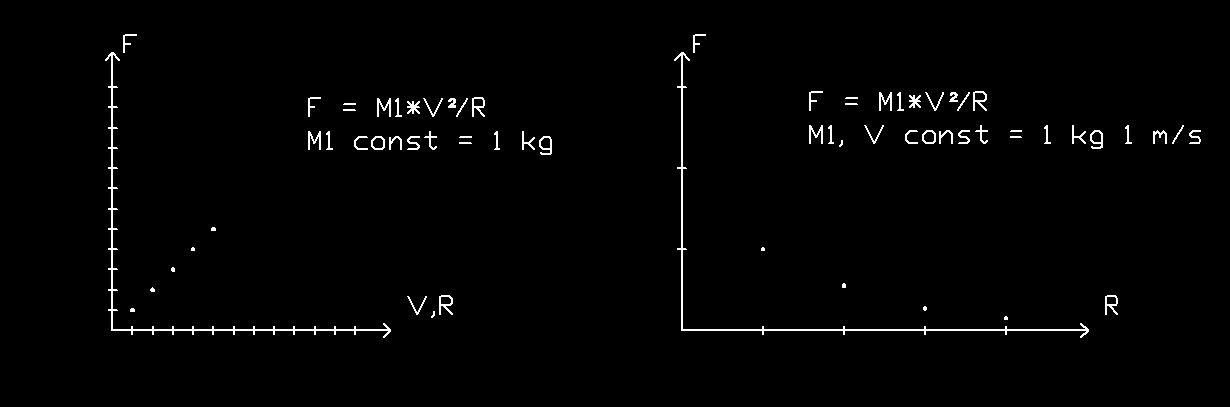
The graphs show that increasing the rotational speed and simultaneously increasing the arm, while supplying energy to maintain the new speed from the electric motor, results in twice the centrifugal force. The front part of the rotor should rotate twice as fast as the opposite part, and this is indeed the case. The rotor with lower energy requires twice the speed of the rotor with higher energy (a greater distance from the center of rotation) to generate the same force, as it is closer to the center of rotation of the entire rotor. As it enters a position of higher kinetic energy, it requires twice the energy because its center of mass then moves twice as fast. Here, energy must be supplied from appropriate motors. By only increasing the arm while maintaining constant mass and speed, the resulting force decreases with increasing rotational speed, as shown on the right.
The presented method of propulsion for hypothetical vehicles in vacuum conditions (i.e., conditions found in space) and for g-force control requires refinement of details and, so far, is only an idea of ??a certain technical principle, which does not yet justify the development of any serious technical solutions using it. The whole thing requires laboratory confirmation and appropriate physical testing. I have a small set of appropriate formulas for material and mechanical calculations, but correct calculations would be too time-consuming to perform manually, so it would likely be necessary to seek out tools such as software for simulating the behavior of mechanical elements, such as in this case, and 3D animation software. However, it is possible that such technological solutions will in some way influence the general public in the future to develop certain technological solutions that differ from the commonly preferred technology, thus somewhat changing the technological monolith in these fields that we have been dealing with recently, and which many people consider undisputed and the best when it comes to transport in complete vacuum conditions.
In the future, it will become universally possible for every person to have access to space in the same way they currently travel around Earth by car, train, or atmospheric aircraft. Are we prepared for this? The answer depends largely on our imagination. Spaceflight is currently an expensive and dangerous form of travel, equally removed from the ordinary and monotonous lives we lead on Earth, whether in this country or another. An ordinary person, going about their daily lives, rarely raises their head to the sky. They are consumed by financial, family, social, and political concerns, because they should act according to expectations and fulfill their responsibilities. However, for many different people, a certain spirit of deviance from everything we understand as the norm has sown inspiration, curiosity, a desire to explore the unknown, and a passion. Whether we call them dreamers, scientists, or visionaries of various kinds, many of them are not satisfied with idle staring at the sky, and these are not just the people of NASA or ESA. Many of these people, observing the stars, are trying to answer the question "what lies beyond billions of kilometers of void?" These constructors of problems insurmountable for conservatives propagating Einstein's theories are now often treated with a pinch of salt as folklore, always taught from school that the theory of relativity excludes any broader practice. So what is this theory, and can it stop them from realizing the dreams they pursue? Probably not. Humans are largely driven by curiosity, the desire for knowledge that motivates them to make discoveries. This is understandable, because the movement associated with discovery is a feature and basis of life. One could say that life constantly forces people to make an effort anyway, so it is not worth shrinking from difficulties. Other people do not understand how anyone can bother with problems that seem so distant from the point of view of everyday matters. However, even now, in the privacy of laboratories and experimental halls, a struggle is underway with design and technical problems that are intended to show where the technical possibilities available really end. man, the limits of technological possibilities available to humans are being moved there. However, what we truly desire is safety and reliability, supported by low operating costs. As people of technology, we have become accustomed to comfortable apartments, safe cars, and other amenities. We want to continually improve our standard of living. Humans are tourists by nature; they want to see more, hear more, experience more, and experience unknown places. They want to travel comfortably and safely. When we, as humans, decide that there is nothing left on Earth that we haven't seen or explored, we will turn to the sky and the stars?what's more, this process begins today... Then, as humans, we will unite our forces to "turn" the laws of nature and physics on their head. We will recognize that it's time to break the bonds of nature, which have become an obstacle and limitation for us. The consequence of this is the exploration of space near the stars, where extrasolar planets orbit. Some might say, "Whoever wrote this has no regard for reality," others will say it's pure fantasy, perhaps still others will consider it a pipe dream, etc. However, textbooks clearly state that the fastest known speed is that of the electromagnetic field. For example, visible light, a light pulse sent from the nearest star towards Earth, would take about four and a half years to reach the eye of an observer on the surface of our planet (a distance of about 40 trillion kilometers, or 9.5 trillion km/year). Similarly, a spacecraft capable of reaching the speed of light (which is considered impossible by modern science due to relativistic effects), the pilot of such a craft would have to fly for at least four and a half Earth years before reaching its destination, the nearest star (4.22 years to the nearest star, Proxima Centauri). As for more distant objects, both stars and planets, the journey would take too long for the average human lifetime. It would seem that such journeys are already a thing of the past, but it turns out that this may not be the case. Perhaps travel at speeds faster than the speed of light is possible after all. Perhaps we should realize that our understanding of the world has so far been based solely on the study of natural laws, which are inscribed in the surrounding reality. We discover them, but we have not grasped the truth about their nature and do not know their essence and depth, as is the case with the phenomena of gravity or inertia. This is due to many reasons. One is that we, as humans, have simply not yet developed the appropriate tools and research methods to understand even some of these principles, and above all, their nature. A similar obstacle is that, in practice, we are subject to many illusions resulting from the characteristics of our perception and construction. Yet, nature, contrary to our senses and perceptions, has left behind elements of natural laws and mechanisms seemingly imperceptible to a cursory observation, integral to many natural processes, enabling us to bend natural laws to our will. Anyone who closely follows advances in technology and science and observes its achievements knows how much energy it takes to launch, for example, a telecommunications satellite into orbit. Powerful rocket engines are used for this purpose, burning tons of fuel per second. A rocket used to lift a payload to a sufficient altitude above the atmosphere for orbit must be of appropriate size and tanks to accommodate the necessary fuel. After delivering the payload into orbit, the depleted rocket stages fall into the ocean or remain in orbit, then burn up from friction, falling into the atmosphere at an altitude of several dozen kilometers, or land empty on the ground, as in the case of SpaceX's Falcon 9 rockets, using rocket thrust. Further journeys, such as those of unmanned probes, require planetary gravity to gain sufficient velocity; they must fly in close proximity to planets to utilize the "gravity launcher" effect. In reality, after launch, they are deprived of their main propulsion and move from planet to planet by inertia. Is this all that current technology is capable of? It's easy to understand that rocket propulsion, which has been around since the days of the Old Kingdom of China, relies on a remarkably simple principle of action and reaction. Gases and energy, most often generated by a chemical reaction (e.g., oxidation), are ejected in one direction, creating pressure in the rocket nozzle that pushes the entire rocket in the opposite direction to the gas outlet. In summary, this process involves a constant loss of mass, the amount of which must, of course, be limited in the rocket's tanks. Many people are currently working to change this situation, recognizing the problem. It is now common knowledge that for human-made vehicles to propel themselves in space, they must generate either a force unrelated to the vehicle's environment (as is the case with rockets), or utilize methods to draw on some source of energy and propulsion present in space, preferably everywhere in space, regardless of its location, or utilize energy available through the exploitation of phenomena within the spacecraft. Currently, we stand on the threshold of the possibility of utilizing rocket technology. It has its limitations, both economic and technological. Further development will entail enormous increases in costs; beyond this lies only financial and technical absurdity. Those who recognize this are pondering this problem, while others, who seem unaffected by the problem, remain silent. However, this has consequences in the form of a lack of prospects for civilization. The hundreds of billions of dollars that have been spent on subsequent investments in rocket technology could have been allocated, for example, to feeding starving Africa or irrigation systems for deserts. This is a question about humanity, its interests, and its fate. The history we create, whether we like it or not, is composed of accidents, and some of them have far-reaching consequences for us. Some people refuse to see the world and refuse to accept a world created by such opposing forces. Many people are rebelling against such constructed processes of international integration; they see that these processes are destroying the interests of both society and the individual. Economic processes are furthermore linked to the flow of money, the flow of money is linked to raw materials, and the whole culminates in nothing less than inefficient technology on this basis, the space, energy, and general transportation industries arose in highly developed countries. Above all, the forms in which we obtain energy, whether electrical or otherwise, are crucial. These are based on chemical reactions, which produce material products that are often difficult to dispose of. As we've already seen, our rocket propulsion operates on a similar principle. This is an open-ended problem, but many innovations modify old, established methods without bringing any fundamental changes to life. And here, as is often the case, the problem of energy and the problem of travel in general, both on Earth and in space, are closely intertwined?and indeed, it's hard to miss this connection. Many of us expect change; many people subconsciously perceive the unreliability of the technology we have created, which is essentially rolling by inertia, and most likely in the wrong direction. However, the global lobby for chemical propulsors based on "wasted" energy is still too strong. Much supports the thesis that the future of transportation lies in propulsion systems that don't use rocket fuel. Work on them is already a fact (mainly conducted by people in the private sector), but it lacks political and financial support. In some cases, they are most often abandoned due to various material and technical difficulties, while in others, they most often end up in a pile of technical documentation, because it's difficult to create something completely from scratch that lacks any technical or psychological support. Perhaps this fact also explains why it's so difficult for many people with a keen interest in such matters to get their proposals across. On the other hand, there's much evidence to suggest that the days of loners quietly changing history in garages and home workshops are also fading away, as the likelihood of success is greater when large organizations with sufficient technical resources and intellectual potential are involved. Recent space research indicates that planets and planetary systems are far more widespread in the universe than stars. Most main sequence stars have planets or planetary systems. There are over a hundred billion stars in our galaxy, indicating that there are countless solar-type stars with lives long enough to form planets and their moons. If a means of exploring them could be constructed, it would take hundreds of years. First, for a situation to arise that would enable us, as humans, to undertake such space exploration, our mentality would have to change significantly; the leap we would have to make would be enormous. The harmony and beauty of space will likely remain a mystery to us for a long time to come, at least as long as technology based on the combustion and splitting of atoms, which humans have proclaimed as their great triumph, but which has now faded, as it is known that this technology will likely not take us to the stars or even allow us to colonize the solar system. The energy required to approach the speed of light far exceeds that of atoms. So let's consider the alternative. We already know that rocket propulsion is currently a relic and a legacy of the Cold War, artificially sustained by people playing with firecrackers, and no cosmetic changes will change this situation. We're talking about accelerating ions, plasma, etc. The bottom line is that as long as the achieved velocity cannot ultimately exceed the velocity of exhaust gases, we will be crawling within the solar system, without the possibility of mutual communication, etc. This truth, widely considered the canon of space flight, will not change quickly unless enough people are found to combine the efforts of those already working on specific solutions, whether in the concept phase or in concrete prototypes.
As the closest celestial body to Earth, the Moon possesses many promising characteristics that make it a prime candidate for human efforts to colonize space. The Moon possesses numerous natural resources capable of supporting the development and expansion of civilization.For example, there are large deposits of helium-3?an isotope of helium that could prove to be the fuel of the future. This isotope contains more energy than any fuel previously used in nuclear reactors and can be reacted with deuterium to produce enormous amounts of heat. Lunar rocks could be used to produce oxygen for inhabitants to breathe, and water ice accumulated at the poles could be used to produce hydrogen and oxygen for rocket propulsion. Rocket launches from the Moon would be easier because the gravitational acceleration on its surface is six times smaller than on Earth's. The Moon likely contains deposits of many heavier elements and other substances that could be useful on Earth. The Moon lacks an atmosphere, so the possibility of generating electricity using solar panels seems particularly desirable. A flight from Earth to the Moon takes several days at current technological levels, but with appropriate propulsion techniques, it will take about several hours or even minutes (using nuclear or other similar propulsion systems). If cities and mines are established on the Moon?which is likely only a matter of time?humans will have an alternative to life solely on Earth, leading to the development of new technologies for settlement on our closest neighbor. This phenomenon will significantly strengthen human civilization economically, with trade in raw materials thriving, and so on. The Moon will also likely serve as a refueling station for flights to Mars. The Moon has only a negligible magnetic field, which will not protect settlers from the solar wind or direct bombardment by rock fragments. Shelters built for colonists will need to be robust. All necessities for life will be obtained locally, as transport from Earth is currently difficult (which will change when a better and cheaper spacecraft transportation and propulsion system is implemented). Perhaps in the future, spacecraft used for lunar and beyond flights will no longer be powered by rocket engines, but will instead be propelled by magnetic forces, such as the Lorentz force, inertial thrusters, or utilize artificially generated gravitational interactions. The peaceful use of raw materials from the Moon will depend on many social, political, and economic factors. International cooperation and the acceleration of work on the first self-sufficient bases on the Moon are crucial. The excessively high cost of launching spacecraft using launch vehicles is undoubtedly a serious, if not the most serious, problem. Therefore, it seems that the fundamental issue is the need to thoroughly consider the possibility of developing a cheaper, reusable propulsion system with parameters many times exceeding the capabilities of today's rockets and rocket planes. The presence of the required raw materials on the Moon's surface is encouraging; the existence of these substances has been confirmed by probes orbiting our satellite. The development of lunar infrastructure will likely take decades, if not centuries. However, considering the benefits, which could truly become a driving force for the global economy and provide significant living space for pioneers eager for a taste of adventure and many other visionaries in a new generation of open-minded minds, this seems like the right direction for years to come, as well as the fulfillment of the dreams of millions. The Moon, with its potential, is already relatively well-known to humans. At the same time, it is practically the only object immediately accessible to human exploitation. The technology enabling flights to the moon has been known for forty years thanks to American missions. Many countries, such as China and the United States, are currently planning a human return to the moon, along with the establishment of a true lunar base and initial development plans, similar to those in the case of Japanese projects. Both these countries are currently conducting robotic missions, and India and many other countries are eager to join in. Interest in the moon will likely translate into tangible results in the coming decades, which we will all witness. When will it be possible for wealthier or middle-income people to travel to the silver globe? - time will tell, but initially we will have to wait until robotic missions prepare the space for the first real permanent lunar base.
Space is an inhospitable place for humans and any organisms that adhere to the rules of the planet's surface. To survive there, we, as humans, have been forced to develop certain survival methods using technologies that now enable us to function safely in the lethal environment of open vacuum. Space vehicles and stations have long provided opportunities for human scientific research, as well as the exchange of necessary consumables for spaceflight and the operation of all other human installations in orbit. One of the most important elements of such vehicles and stations is ensuring a constant supply of electricity, oxygen, and water, as well as providing radiation shielding and thermal insulation for the crew.
When it comes to electricity, the traditional and most common form of generating electricity in space is solar cells, which take advantage of the high solar radiation in space, much greater than that found on Earth's surface. These cells, also known as photovoltaic cells, utilize the photoelectric effect to generate energy. Another source is Seebeck-effect-based electric thermogenerators, which produce electricity for extended periods (up to several years). This method generates direct current by utilizing the slow half-life decay of a fissile material (most often plutonium, but isotopes of other elements are also used), which transfers heat to one end of a thermocouple composed of two metals in contact. This power supply was successfully used in missions far from the Sun on American unmanned probes such as Pioneer and Cassini, and on the manned Apollo 12-17. Oxygen is typically provided by water electrolysis using generators powered by solar cells. A technical challenge is the issue of adequate radiation protection at stations intended to accommodate humans for extended periods, as they are exposed to both solar radiation and intense cosmic radiation from deep space. Survival in space also requires clean water and sufficient food. Ready-made freeze-dried food and ready-made vitamin kits are used for this purpose. Thermal comfort should be ensured by air conditioning and thermal insulation within the space station and spacecraft enclosure. Carbon dioxide absorbers and filters address the issue of carbon dioxide disposal from the crew's lungs. The outer shell must also withstand impacts from debris left by human activity in orbit and from small pieces of space debris in space. It's also worth mentioning that the psychological adaptation of crews to the conditions of space has yet to be resolved. This is a complex issue, and addressing it properly could prove to be one of the most important challenges during long-duration manned flights and long stays on space stations. Preventing crew illnesses caused by weightlessness and isolating them from natural cycles is crucial, as it is possible to generate artificial gravity on space stations and vehicles. This depends on the scale of the missions undertaken, but it is also crucial for the crew's well-being and health upon return to Earth. However, to date, human space stations and vehicles have been unable to provide this fundamental element for humans, and although it is known how to generate artificial gravity (using centrifugal force), it should still be considered science fiction. This will be possible in the near future. Returning to radiation shields, all shields are passive, filtering and attenuating corpuscular, gamma, and X-ray radiation. Corpuscular radiation consists of alpha particles, neutrons originating from nuclear transformations in stars, and other particles with non-zero rest mass. It should be noted, however, that not all manufactured shields are 100% effective. During periods of particularly intense solar radiation activity, a crew outside the Earth's magnetosphere (e.g., on a mission to the Moon or Mars) can absorb a life-threatening dose of radiation within 15 minutes. Shields made of dense, heavy materials such as lead are very heavy, making them difficult to launch into orbit. Therefore, they have not been used in space stations and spacecraft for longer missions, as they have been in the past.
Nuclear batteries utilizing beta decay involving tritium or other radiation-emitting isotopes are also used to power space stations. This technology is still relatively advanced, and work is currently underway to increase the power of this type of battery. Electronic systems used in space are sensitive to radiation, and they are responsible for the proper functioning of all devices on ships and stations such as the ISS. Currently, the design of space stations does not allow for many essential functions found in nature. In summary, these include: the lack of gravity on board, which results in bone decalcification and decreased muscle strength in humans outside of the planet's gravity; the lack of magnetic field shielding and the resulting constant exposure to intense cosmic radiation; and the deprivation of day and night cycles and seasonal changes, which are associated with nervous system disorders in the crew.
For over fifty years, there have been no significant changes in the technology of propulsion used in spaceflight. Rockets?that is, propulsion based on chemical reactions?are still used. As we know, the energy obtained in chemical reactions is a negligible fraction of the energy obtained through nuclear transformation processes. In the explosion of an atomic bomb, a few grams of fissile material are converted into energy; the explosion of a hydrogen bomb provides a slightly better conversion factor. In chemical transformations, even in the most exothermic reactions, a negligible fraction of the reactant mass is converted into energy. In the process of matter-antimatter fusion, the mass-to-energy ratio is one hundred percent; the entire mass of the reactants is converted into energy. The annihilation of proton-antiproton pairs, or even electron-antielectron pairs, is an example of such a combination. The released energy in the form of high-energy gamma quanta, i.e., electromagnetic radiation, can become the energy to power and propel spacecraft ? meaning we're dealing with an ideal fuel here ? provided we harness its power properly.
Currently used rocket propulsion, in terms of its speed and dynamics, can be considered a technology ? and it's safe to say, already obsolete. Yet, as can be seen, the challenges posed by space and its vast distances, measured in thousands and hundreds of thousands of light-years, are not limited to orbit or the vicinity of our planet. The possibility of using antimatter as a high-energy fuel opens up new possibilities. However, the problem lies in translating the concentrated energy into a propulsion mechanism. Current considerations point to a direct method, in which the annihilation reaction propels the spacecraft via a magnetic mirror. Another concept is to build an antimatter reactor to power the propulsion mechanism, which in this case could be of various types. One example would be the use of an antimatter reactor, which would be capable of generating enormous electrical voltages and exploiting the Brownian effect, or electric charges around the ship moving in the Earth's or galaxy's magnetic field. Ion propulsion, or VASIMR propulsion, is a new version of rocket propulsion. They are too weak to provide any tangible results for the human race. Currently, they provide very little thrust and do not allow for launch from Earth's surface they only function after being launched into space by standard launch vehicles.
Space sails are worth mentioning ? they are only capable of operating in space, with no possibility of landing on or taking off from a planet. Furthermore, they require a very large surface area to collect the solar wind. This surface (the canopy) is also susceptible to damage by particles of matter in its path. Photon propulsion is the "holy grail" of scientists and the currently unrealistic vision of approaching the speed of light, utilizing the angular momentum of the photon. However, to realize this vision, an unprecedentedly powerful radiation source is needed to compensate for the photon's lack of mass; we will have to wait a while for a photon rocket. In many corners of the world, work is underway to harness the power of gravity and its interdependencies. Scientists have so far struggled to grasp the essence of gravitational interactions, especially at the quantum level. Currently, examples of human spacecraft being built on Earth continue to reflect the widespread political aversion to other solutions, a reality we encounter in everyday life. Most people still consider rocket propulsion the only form and means of human exploration of space, despite being aware of its limitations.
Our civilization needs a different type of technology based on the magnetic properties of matter and space, or the properties of inertia and gravity. A propulsion system utilizing such technology would be capable of generating a propulsive force useful in a vacuum, relying not on rocket thrust but on the interaction of forces within the vehicle's skin. Spacecraft equipped with engines based on these principles should be capable of launching from the surface of Earth and other planets, without the separation of empty fuel tanks, etc. They would be propelled by high-energy field interactions, capable of escaping gravity, changing the phase of the gravitational field, and other techniques currently unfeasible.
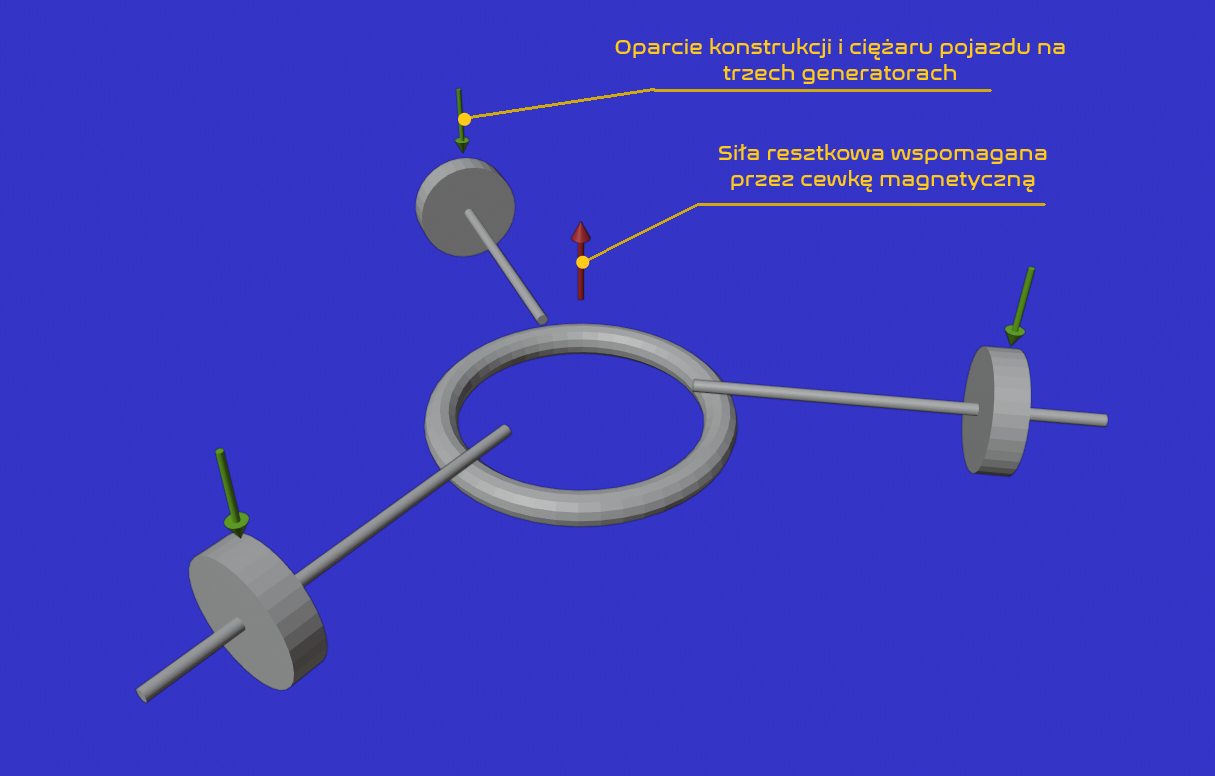
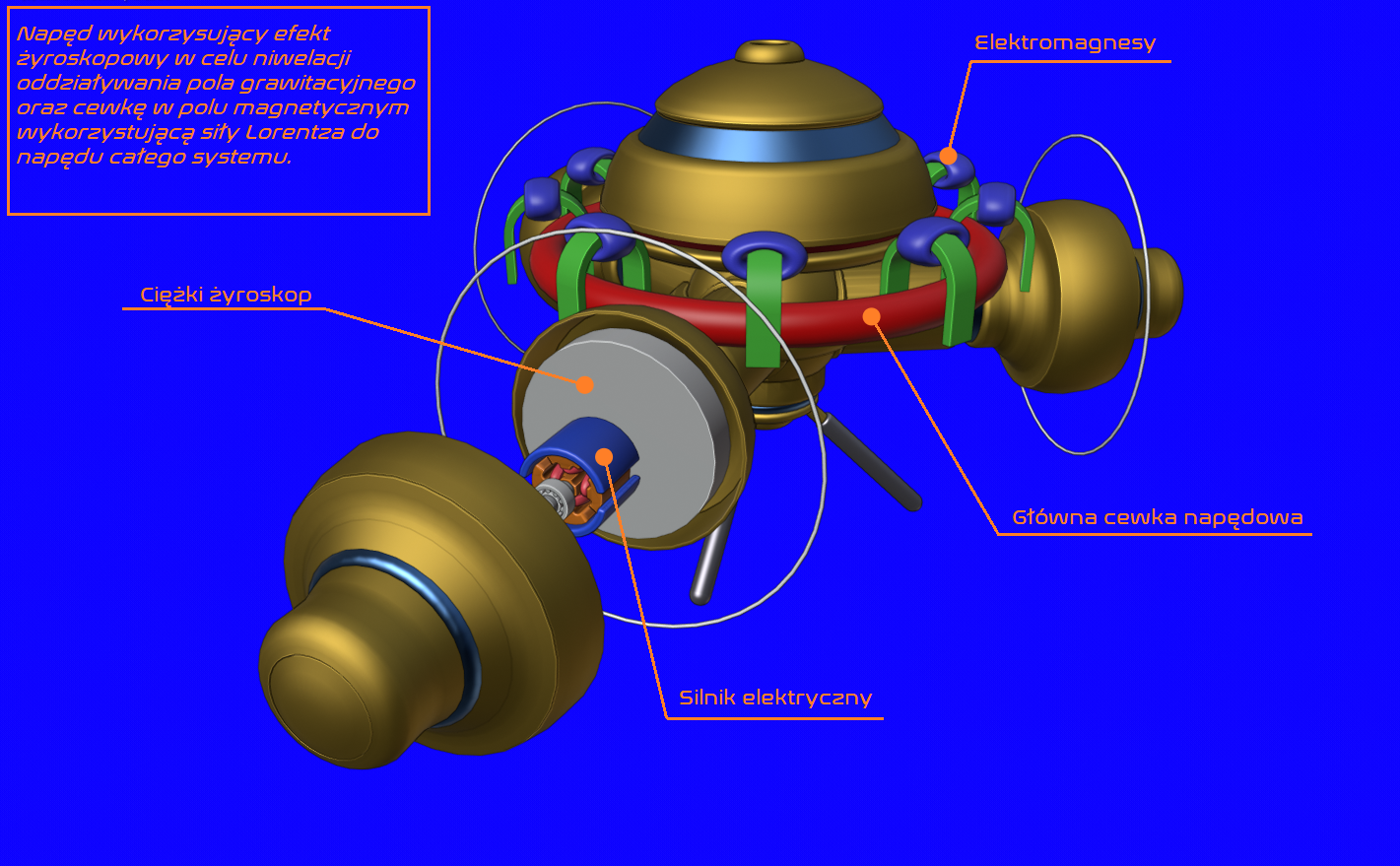
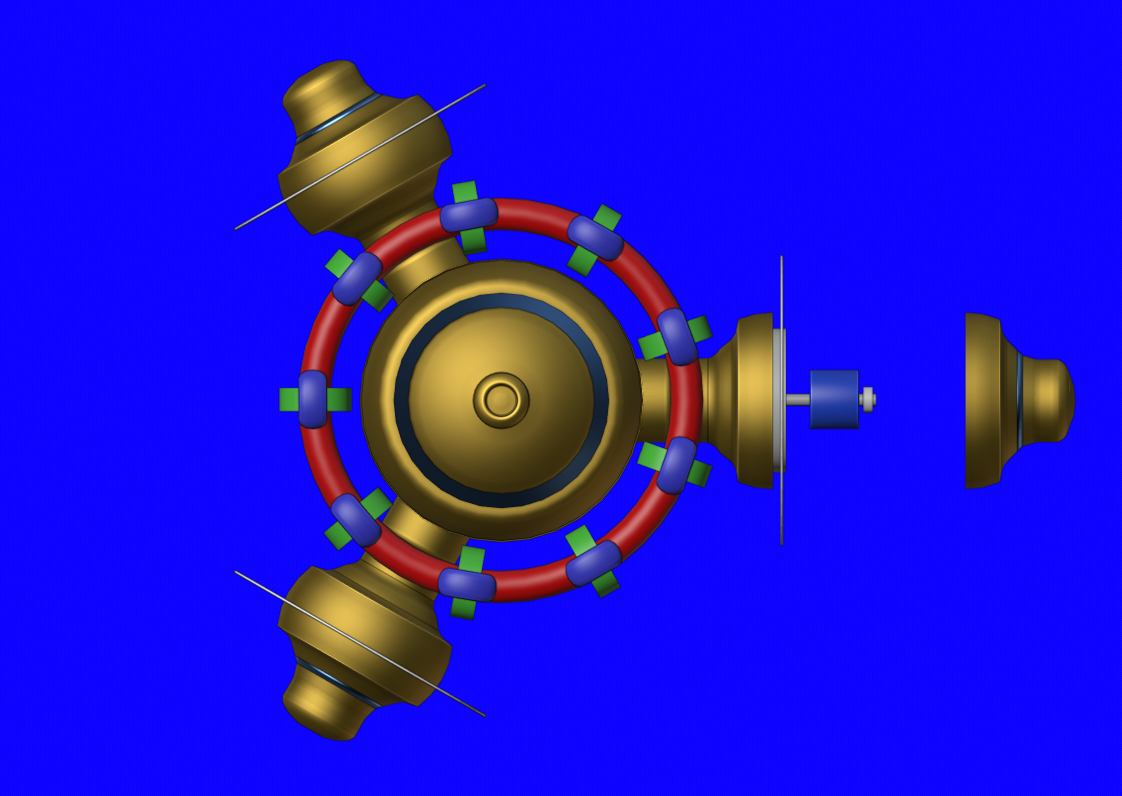
This seems like pure fiction, but not long ago, there were those for whom human flight to the Moon or a heart transplant seemed like fiction. All civilizational achievements have their weight and contribute to a whole, which should not be limited to remaining on our home planet but should involve expanding towards colonization of adjacent space, where, for now, we seem to be the only inhabitants of this star system and the nearby space beyond the heliopause. At least this is a version of events free from conspiracy theories and theories of alien presence among the human race. One of the completely new ideas that could improve the overall situation regarding propulsion worldwide is the magnetic-gravity propulsion, in which I slightly modified my previous idea, where the main principle of propulsion was the generation of unbalanced centrifugal forces. Now I have adapted this rather old idea into a system using three gyroscopes powered by high-speed electric motors. When a gyroscope operates in a gravitational field, specific pro-gravitational effects occur, characterized by the gyroscope being out of phase with the gravitational field, which would otherwise exert a physical influence on it. This phenomenon is called the gyroscopic effect and is used to neutralize the gravitational field's influence on the entire system. The system becomes closer to a weightless state, but remains motionless. Therefore, the proposal to use additional generators of the proper driving force is necessary. The Lorentz force is the force exerted on a current-carrying conductor by a magnetic field of a specific intensity penetrating a defined volume of the current-carrying conductor. This force is free and can be used as a propulsion method in a vacuum. However, until now, attempts to implement this type of Lorentz force approach have involved using a very large magnetic field vector, which resulted in the generation of high currents. This is because the gravitational field had too great an impact on the medium through which the current was passed, and therefore on the entire system. In the case presented here, gravity is neutralized to provide propulsion with relatively low current and magnetic field strengths via heavy gyroscopes. This solution allows the remaining weight to be neutralized by the Lorentz force alone, and once it reaches the appropriate value, the system can be lifted off the launch pad. The system is equipped with three gyroscopic generators to achieve three-dimensional rigidity. At the top is the crew compartment and a navigation and life support system for several people. The diagram I've prepared is simplified and doesn't detail the entire vehicle's structure, but that's not my intention. Instead, I wanted to illustrate the propulsion capabilities of this type of vehicle. The issue of electrical power is controversial; it can be assumed that the system will be powered by a nuclear reactor or a battery of radioisotope thermogenerators.
Our civilization needs a different technology to gain access to the resources of other planets in the solar system. With current technological advancements and methods, a broader plan for exploiting the solar system cannot be effectively and consistently implemented. Current technology is unsuitable for the comprehensive colonization of other planets, such as Mars or Venus, because the costs are too high. However, a different technology capable of meeting these demands would require the development of entirely different technological and scientific realities, divorced from the canons we already know. The positive side is that we already possess some of the necessary technology; we have mastered nuclear technology sufficiently to now take the next step. The problem of suitable propulsion can be solved efficiently and quickly, but we must turn to a completely different direction than jet and rocket propulsion, as even with hydrogen nuclear propulsion technology, it is too inefficient and not very safe for humans. Technology based on solid-state mechanics and the inertial and gravitational effects obtained in this way seems to be an important direction at present, and this is perhaps what we should focus on now.
Many people in the modern world are asking themselves one question: when will humans possess the technology to reach the closest planetary systems beyond our solar system? This question is inherently simple, yet the answer isn't necessarily straightforward or straightforward. Ever since humans acquired the ability to strike fire and settled permanently, abandoning the nomadic life, ever since they learned blacksmithing and farming, raising domestic animals, carpentry, and other skills that allowed them to sustain themselves and their families in the sometimes very unfavorable environment of the harsh natural environment on Earth's continents, they have become increasingly skilled in the difficult art of survival on this planet. In their struggle to subdue nature, they have had to learn much, sometimes receiving lessons from fate that they will never forget. In the current situation of humanity on Earth, where we already have quite advanced technology capable of both destroying the planet and protecting it from certain natural processes capable of destroying it, as well as from ourselves, are there challenges and goals that we have not yet achieved, and which are currently inspiring a considerable number of scientists and researchers, and presenting engineers with the need to develop final solutions that will make human travel to the stars possible?
The original goal that humans set for themselves, consisting solely in the desire to survive within the planet, has further consequences corresponding to current technological advancements, which are related to scientific and technical progress. These consequences are expanding beyond the planet along with humanity's acquired knowledge. Currently, threats originating not only from within the planet are becoming important, but also those that could originate from space, a fact of which we are becoming increasingly aware. Exploring space brings new possibilities, and this is achieved through activities such as astronomical observations from the planet's surface and beyond, and space travel via rocket and ion propulsion. We have entered a time of intense competition between nations and private entities in the exploration of the Earth's vicinity and the nearby regions of the solar system. We have sent probes beyond the solar system, currently traveling through interstellar space to stars like Vega. The technology, developed through the repeatedly unsuccessful use of rocket propulsion, is now celebrating its second new iteration, in which reusable rockets play a crucial role. The scale of space, however, is enormous, and its total dimensions are unknown until now. Its radius is estimated at 13-15 billion light-years, referred to as the known universe. This gives a distance multiplied by the speed of light equal to an average of approximately 132,451,200,000,000,000,000,000 (one hundred thirty-two quadrillion, four hundred fifty-one trillion, two hundred quadrillion kilometers) the radius of the visible universe expressed in kilometers. We have become accustomed to Earth's scale, where distances are small, even insignificant, compared to space. We have based our technology on electromagnetic waves, through which we observe deep space and implement our own planetary communications. However, within the solar system itself, communication using radio waves becomes significantly difficult due to the distances and the rotation of cosmic bodies. If we were to venture outside the solar system, travel at even 99 percent of the speed of light becomes unattractive. Using nuclear or thermonuclear propulsion and crew hibernation, some achievements in space exploration (of our galaxy) could be achieved, but it's still not what one might dream of. The closest to the solar system is the binary star system Alpha and Beta in the constellation Centaurus, invisible from the northern hemisphere. The distance to these stars is approximately 42,573,600,000,000.42 trillion.573.66 billion. km, which light travels in about 4.5 years; a round trip at the speed of light would take about 9 Earth years. We currently lack the capacity to build spacecraft capable of reaching even 1 percent of the speed of light, i.e., approximately 3,000 km/s. Currently, speeds are measured in kilometers per hour, a scale 3,600 times smaller than the speed of light. This speaks volumes about current technology. As we can already see, the speeds achieved with conventional rocket propulsion are a tiny fraction of 1 percent of the speed of light. We know of no better propulsion systems besides rocket propulsion capable of accelerating vehicles to significantly higher speeds. There are speculations and considerations regarding certain solutions, but these are insufficient to develop a true technology capable of providing interstellar communication. There are concepts for using electromagnetic propulsion, using laser radiation, and solar sails. However, this is yet another example of separating the main propulsion from the vehicle, which could result in the vehicle becoming unusable after the propulsion medium is eliminated and separated from the vehicle, rendering it inoperable and unable to maneuver or continue its journey. The future holds for concepts where the propulsion medium does not leave the vehicle, eliminating emissions, transmissions, or external impacts on the vehicle, as is the case with rocket propulsion. Such drives are feasible, but decades of research and development are needed, and above all, human psychology needs to be adapted to their use. Current industry could implement them; sufficient technological advancement exists to achieve such goals. However, the problem is the lack of substantive discussion on these drives within engineering and scientific circles. We have at our disposal advanced electronics, CNC metalworking, which is now at a high level, we have a fairly good mastery of metallurgy and the creation of metal alloys, and we have experience in developing advanced mechanical and vehicle mechanics all of this entitles us to implement certain plans, which we should begin implementing now to immediately begin comprehensive exploration of the solar system. The technology we possess should not be embodied in rocket propulsion; we need to go further, much further, to utilize mechanical forces of a gravitational nature, such as inertial forces, to construct space propulsion systems and space vehicles based on them. Inertia itself is a phenomenon that has been little explored in its nature, but intuitively, one can conclude that this could be the right and, above all, the fastest path for our civilization to break free from the prison of our planet's gravity. Another approach involves harnessing magnetic forces, magnetic fields, and matter within magnetic fields. These could include magnetic propulsion systems that utilize magnetic fields, magnetic potential, and the magnetic properties of magnetic materials for propulsion, as well as the external geomagnetic field and other magnetic fields present in interstellar space. Yet another approach involves new types of electromagnetic propulsion, utilizing electrical phenomena such as electric, electrostatic, and magnetic or electromagnetic fields. These types of propulsion systems are not far from being realized by humanity, and sooner or later, they will be realized, just like propulsion systems based on the inertia of matter. The properties of matter can be modified, depending on the application of certain fields, magnetic and electrical permeability. The potential for expanding current technology is vast; those who recognize this only know how much more can be achieved in this field. Limiting transportation technology to one based on the phenomenon of action and reaction is a misunderstanding and a fabrication. Those who see more clearly see more who have overcome the polarization of perception, the polarization that leads us to think only in terms of limitations. Seeking opportunities within limitations leads to failure, and it's not always possible to achieve anything concrete by navigating and maneuvering between the knowledge established by earlier researchers. Rather, their contributions should be treated as the beginning of knowledge. They don't have the final say, because there will never be a final say in science, and technology utilizing their achievements will continue to develop, even if it begins to transcend these achievements. Throughout history, we've had various scientific and technological disputes. Some claimed this or that was impossible, that it wouldn't work, fly, or drive. As it turned out, it does, flies, and drives as nature intended, despite opponents believing they were right. In some ways, the fate of the world is strange, and there are no rules about who will succeed and who will lose in the field of technology or science. Randomness also plays a role in all this. However, when it comes to interstellar travel, there's no guesswork or assumptions; simply, the technology itself either works or we don't go anywhere and remain on Earth. I hope that science hasn't said its last word, and that there will be those within it who will break the hegemony of certain rules and go beyond them, because without them, we won't get anywhere. Only those who have something to say can change something, those who have a certain technological background, because it's difficult to expect someone off the street to change everything; there are no coincidences here. Mastering the appropriate technologies, however, requires the effort of many people. Building the propulsion itself is one thing, and implementing it for widespread use is quite another. This requires charisma and strength of character, which not everyone can afford. Over the years, a certain technological blueprint has been built, which will now be difficult for even the most cunning and intelligent individual or institution to overcome. Although pioneers of certain solutions existed, they have vanished into the mists of history, rebounding from the monolith they faced. The goal of humanity reaching the stars will not be achieved by shattering technological bones and separating from the troughs of several lobbying institutions and individuals who stand behind businesses run for over one hundred and fifty years. Until now, we have been building technology by peeling an egg from its shell with an axe, and it's no surprise that the situation looks the way it does. What we have is nuclear energy, rocket technology, and massive computerization. All of these technologies are just a glimpse of the technology we'll have in the future when we begin to implement drives based on the interaction of fields and, as I mentioned earlier, the inertia of matter. What we have now is technological stagnation; it's hard to expect that if more people learn the craft of baking bread, the bread will be better. Unless someone completely changes the baking process, introducing a new flavor to our cuisine?
For years, no significant breakthrough in scientific and technological canon has been achieved. All attempts to eliminate lucrative space businesses have failed. No one has broken legal, scientific, or technological regulations by developing something radically different that could replace rocket propulsion. Space travel enthusiasts, on paper, search far and high, even though the answer is within reach. However, we need to change our approach and not adapt all our mental speculations to the laws of modern physics, because that's precisely what we want to escape and transcend by developing such solutions. Let's move from experiment to theory, and let's not be prejudiced from the outset that something won't work because we'll never take any action. Another issue is that some people believe that once they calculate something, it's always true, but there are things that modern mathematics, and therefore physics, cannot describe, so equations come out contradictory or identical, or some discrepancy arises among many computationalists, and the data they calculate is inconsistent with observation. Those who ignore mathematics, perceived in this way, will achieve an effective and simple breakthrough. The question of interpreting the results is key here.
Space is open to all; there is only the unresolved issue of technology, of breaking the technological barrier, of finally overcoming gravity. If humans had the appropriate technology, their situation on Earth would improve dramatically. For now, as a civilization, we are divided between various technological topics and goals, and the division of capital is reflected in this. However, in my opinion, the most important thing right now is to save civilization from overpopulation, infectious diseases, and excessive industrialization, which is associated with environmental pollution. This can only be achieved by increasing the living space for humans, and we will probably achieve this more quickly not by settling the oceans, for humans are not fish, nor by burrowing underground or floating in the atmosphere, but by completely abandoning the planet, colonizing Mars and Venus, and building residential infrastructure in the vacuum of space itself, as this is the most abundant space in space in terms of quantity and surface area. Human intervention in the technological foundations that have already been achieved should not be based on minor advances, especially in extraplanetary transport technology, but on the experience gained in solid-state physics, enabling the development of more advanced vacuum-based techniques than currently exists. From my own experience, I could point to certain points in technological thinking that should be undertaken to achieve radical changes that would enable humans to free themselves from the bonds of gravity. These include, first, a redefinition of mechanics, i.e., entering a new quality of solid-state mechanics and rotation, recognizing the new potential it offers. Recognizing the potential of magnetic materials, electromagnets, and permanent magnets in building space propulsion systems. Recognizing and redefining the approach to phenomena such as inertial force and centrifugal force, acceleration and deceleration, and the related reactions of solids. Attempts to harness planetary gravity to power simple devices, converting gravitational energy into magnetic and electric energy, and vice versa. Harnessing the potential of strong electric fields and their high-frequency polarization changes in the context of magnetic fields.

 However, textbooks clearly state that the fastest known speed is that of the electromagnetic field. For example, visible light, a light pulse sent from the nearest star towards Earth, would take about four and a half years to reach the eye of an observer on the surface of our planet (a distance of about 40 trillion kilometers, or 9.5 trillion km/year). Similarly, a spacecraft capable of reaching the speed of light (which is considered impossible by modern science due to relativistic effects), the pilot of such a craft would have to fly for at least four and a half Earth years before reaching its destination, the nearest star (4.22 years to the nearest star, Proxima Centauri). As for more distant objects, both stars and planets, the journey would take too long for the average human lifetime. It would seem that such journeys are already a thing of the past, but it turns out that this may not be the case. Perhaps travel at speeds faster than the speed of light is possible after all. Perhaps we should realize that our understanding of the world has so far been based solely on the study of natural laws, which are inscribed in the surrounding reality. We discover them, but we have not grasped the truth about their nature and do not know their essence and depth, as is the case with the phenomena of gravity or inertia. This is due to many reasons. One is that we, as humans, have simply not yet developed the appropriate tools and research methods to understand even some of these principles, and above all, their nature. A similar obstacle is that, in practice, we are subject to many illusions resulting from the characteristics of our perception and construction. Yet, nature, contrary to our senses and perceptions, has left behind elements of natural laws and mechanisms seemingly imperceptible to a cursory observation, integral to many natural processes, enabling us to bend natural laws to our will. Anyone who closely follows advances in technology and science and observes its achievements knows how much energy it takes to launch, for example, a telecommunications satellite into orbit. Powerful rocket engines are used for this purpose, burning tons of fuel per second. A rocket used to lift a payload to a sufficient altitude above the atmosphere for orbit must be of appropriate size and tanks to accommodate the necessary fuel. After delivering the payload into orbit, the depleted rocket stages fall into the ocean or remain in orbit, then burn up from friction, falling into the atmosphere at an altitude of several dozen kilometers, or land empty on the ground, as in the case of SpaceX's Falcon 9 rockets, using rocket thrust. Further journeys, such as those of unmanned probes, require planetary gravity to gain sufficient velocity; they must fly in close proximity to planets to utilize the "gravity launcher" effect. In reality, after launch, they are deprived of their main propulsion and move from planet to planet by inertia. Is this all that current technology is capable of? It's easy to understand that rocket propulsion, which has been around since the days of the Old Kingdom of China, relies on a remarkably simple principle of action and reaction. Gases and energy, most often generated by a chemical reaction (e.g., oxidation), are ejected in one direction, creating pressure in the rocket nozzle that pushes the entire rocket in the opposite direction to the gas outlet. In summary, this process involves a constant loss of mass, the amount of which must, of course, be limited in the rocket's tanks. Many people are currently working to change this situation, recognizing the problem. It is now common knowledge that for human-made vehicles to propel themselves in space, they must generate either a force unrelated to the vehicle's environment (as is the case with rockets), or utilize methods to draw on some source of energy and propulsion present in space, preferably everywhere in space, regardless of its location, or utilize energy available through the exploitation of phenomena within the spacecraft. Currently, we stand on the threshold of the possibility of utilizing rocket technology. It has its limitations, both economic and technological. Further development will entail enormous increases in costs; beyond this lies only financial and technical absurdity. Those who recognize this are pondering this problem, while others, who seem unaffected by the problem, remain silent. However, this has consequences in the form of a lack of prospects for civilization. The hundreds of billions of dollars that have been spent on subsequent investments in rocket technology could have been allocated, for example, to feeding starving Africa or irrigation systems for deserts. This is a question about humanity, its interests, and its fate. The history we create, whether we like it or not, is composed of accidents, and some of them have far-reaching consequences for us. Some people refuse to see the world and refuse to accept a world created by such opposing forces. Many people are rebelling against such constructed processes of international integration; they see that these processes are destroying the interests of both society and the individual. Economic processes are furthermore linked to the flow of money, the flow of money is linked to raw materials, and the whole culminates in nothing less than inefficient technology on this basis, the space, energy, and general transportation industries arose in highly developed countries. Above all, the forms in which we obtain energy, whether electrical or otherwise, are crucial. These are based on chemical reactions, which produce material products that are often difficult to dispose of. As we've already seen, our rocket propulsion operates on a similar principle. This is an open-ended problem, but many innovations modify old, established methods without bringing any fundamental changes to life. And here, as is often the case, the problem of energy and the problem of travel in general, both on Earth and in space, are closely intertwined?and indeed, it's hard to miss this connection. Many of us expect change; many people subconsciously perceive the unreliability of the technology we have created, which is essentially rolling by inertia, and most likely in the wrong direction. However, the global lobby for chemical propulsors based on "wasted" energy is still too strong. Much supports the thesis that the future of transportation lies in propulsion systems that don't use rocket fuel. Work on them is already a fact (mainly conducted by people in the private sector), but it lacks political and financial support. In some cases, they are most often abandoned due to various material and technical difficulties, while in others, they most often end up in a pile of technical documentation, because it's difficult to create something completely from scratch that lacks any technical or psychological support. Perhaps this fact also explains why it's so difficult for many people with a keen interest in such matters to get their proposals across. On the other hand, there's much evidence to suggest that the days of loners quietly changing history in garages and home workshops are also fading away, as the likelihood of success is greater when large organizations with sufficient technical resources and intellectual potential are involved. Recent space research indicates that planets and planetary systems are far more widespread in the universe than stars. Most main sequence stars have planets or planetary systems. There are over a hundred billion stars in our galaxy, indicating that there are countless solar-type stars with lives long enough to form planets and their moons. If a means of exploring them could be constructed, it would take hundreds of years. First, for a situation to arise that would enable us, as humans, to undertake such space exploration, our mentality would have to change significantly; the leap we would have to make would be enormous. The harmony and beauty of space will likely remain a mystery to us for a long time to come, at least as long as technology based on the combustion and splitting of atoms, which humans have proclaimed as their great triumph, but which has now faded, as it is known that this technology will likely not take us to the stars or even allow us to colonize the solar system. The energy required to approach the speed of light far exceeds that of atoms. So let's consider the alternative. We already know that rocket propulsion is currently a relic and a legacy of the Cold War, artificially sustained by people playing with firecrackers, and no cosmetic changes will change this situation. We're talking about accelerating ions, plasma, etc. The bottom line is that as long as the achieved velocity cannot ultimately exceed the velocity of exhaust gases, we will be crawling within the solar system, without the possibility of mutual communication, etc. This truth, widely considered the canon of space flight, will not change quickly unless enough people are found to combine the efforts of those already working on specific solutions, whether in the concept phase or in concrete prototypes.
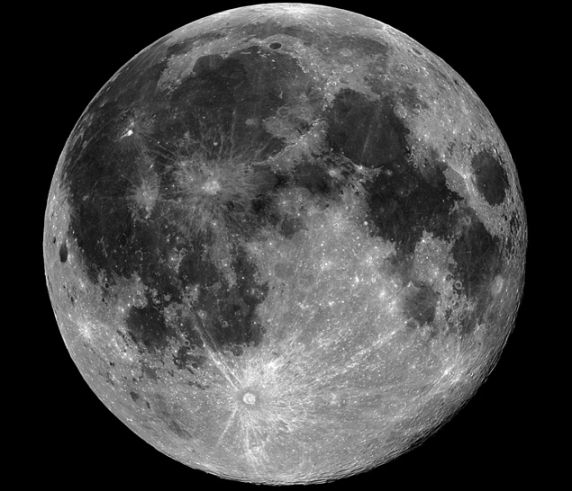 For example, there are large deposits of helium-3?an isotope of helium that could prove to be the fuel of the future. This isotope contains more energy than any fuel previously used in nuclear reactors and can be reacted with deuterium to produce enormous amounts of heat. Lunar rocks could be used to produce oxygen for inhabitants to breathe, and water ice accumulated at the poles could be used to produce hydrogen and oxygen for rocket propulsion. Rocket launches from the Moon would be easier because the gravitational acceleration on its surface is six times smaller than on Earth's. The Moon likely contains deposits of many heavier elements and other substances that could be useful on Earth. The Moon lacks an atmosphere, so the possibility of generating electricity using solar panels seems particularly desirable. A flight from Earth to the Moon takes several days at current technological levels, but with appropriate propulsion techniques, it will take about several hours or even minutes (using nuclear or other similar propulsion systems). If cities and mines are established on the Moon?which is likely only a matter of time?humans will have an alternative to life solely on Earth, leading to the development of new technologies for settlement on our closest neighbor. This phenomenon will significantly strengthen human civilization economically, with trade in raw materials thriving, and so on. The Moon will also likely serve as a refueling station for flights to Mars. The Moon has only a negligible magnetic field, which will not protect settlers from the solar wind or direct bombardment by rock fragments. Shelters built for colonists will need to be robust. All necessities for life will be obtained locally, as transport from Earth is currently difficult (which will change when a better and cheaper spacecraft transportation and propulsion system is implemented). Perhaps in the future, spacecraft used for lunar and beyond flights will no longer be powered by rocket engines, but will instead be propelled by magnetic forces, such as the Lorentz force, inertial thrusters, or utilize artificially generated gravitational interactions. The peaceful use of raw materials from the Moon will depend on many social, political, and economic factors. International cooperation and the acceleration of work on the first self-sufficient bases on the Moon are crucial. The excessively high cost of launching spacecraft using launch vehicles is undoubtedly a serious, if not the most serious, problem. Therefore, it seems that the fundamental issue is the need to thoroughly consider the possibility of developing a cheaper, reusable propulsion system with parameters many times exceeding the capabilities of today's rockets and rocket planes. The presence of the required raw materials on the Moon's surface is encouraging; the existence of these substances has been confirmed by probes orbiting our satellite. The development of lunar infrastructure will likely take decades, if not centuries. However, considering the benefits, which could truly become a driving force for the global economy and provide significant living space for pioneers eager for a taste of adventure and many other visionaries in a new generation of open-minded minds, this seems like the right direction for years to come, as well as the fulfillment of the dreams of millions. The Moon, with its potential, is already relatively well-known to humans. At the same time, it is practically the only object immediately accessible to human exploitation. The technology enabling flights to the moon has been known for forty years thanks to American missions. Many countries, such as China and the United States, are currently planning a human return to the moon, along with the establishment of a true lunar base and initial development plans, similar to those in the case of Japanese projects. Both these countries are currently conducting robotic missions, and India and many other countries are eager to join in. Interest in the moon will likely translate into tangible results in the coming decades, which we will all witness. When will it be possible for wealthier or middle-income people to travel to the silver globe? - time will tell, but initially we will have to wait until robotic missions prepare the space for the first real permanent lunar base.
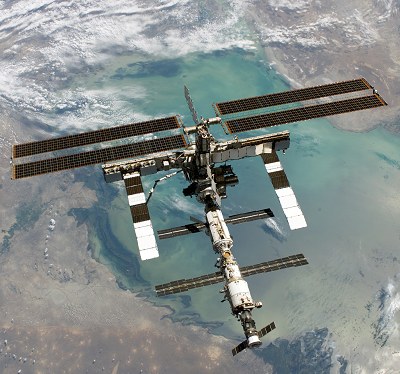 When it comes to electricity, the traditional and most common form of generating electricity in space is solar cells, which take advantage of the high solar radiation in space, much greater than that found on Earth's surface. These cells, also known as photovoltaic cells, utilize the photoelectric effect to generate energy. Another source is Seebeck-effect-based electric thermogenerators, which produce electricity for extended periods (up to several years). This method generates direct current by utilizing the slow half-life decay of a fissile material (most often plutonium, but isotopes of other elements are also used), which transfers heat to one end of a thermocouple composed of two metals in contact. This power supply was successfully used in missions far from the Sun on American unmanned probes such as Pioneer and Cassini, and on the manned Apollo 12-17. Oxygen is typically provided by water electrolysis using generators powered by solar cells. A technical challenge is the issue of adequate radiation protection at stations intended to accommodate humans for extended periods, as they are exposed to both solar radiation and intense cosmic radiation from deep space. Survival in space also requires clean water and sufficient food. Ready-made freeze-dried food and ready-made vitamin kits are used for this purpose. Thermal comfort should be ensured by air conditioning and thermal insulation within the space station and spacecraft enclosure. Carbon dioxide absorbers and filters address the issue of carbon dioxide disposal from the crew's lungs. The outer shell must also withstand impacts from debris left by human activity in orbit and from small pieces of space debris in space. It's also worth mentioning that the psychological adaptation of crews to the conditions of space has yet to be resolved. This is a complex issue, and addressing it properly could prove to be one of the most important challenges during long-duration manned flights and long stays on space stations. Preventing crew illnesses caused by weightlessness and isolating them from natural cycles is crucial, as it is possible to generate artificial gravity on space stations and vehicles. This depends on the scale of the missions undertaken, but it is also crucial for the crew's well-being and health upon return to Earth. However, to date, human space stations and vehicles have been unable to provide this fundamental element for humans, and although it is known how to generate artificial gravity (using centrifugal force), it should still be considered science fiction. This will be possible in the near future. Returning to radiation shields, all shields are passive, filtering and attenuating corpuscular, gamma, and X-ray radiation. Corpuscular radiation consists of alpha particles, neutrons originating from nuclear transformations in stars, and other particles with non-zero rest mass. It should be noted, however, that not all manufactured shields are 100% effective. During periods of particularly intense solar radiation activity, a crew outside the Earth's magnetosphere (e.g., on a mission to the Moon or Mars) can absorb a life-threatening dose of radiation within 15 minutes. Shields made of dense, heavy materials such as lead are very heavy, making them difficult to launch into orbit. Therefore, they have not been used in space stations and spacecraft for longer missions, as they have been in the past.
Nuclear batteries utilizing beta decay involving tritium or other radiation-emitting isotopes are also used to power space stations. This technology is still relatively advanced, and work is currently underway to increase the power of this type of battery. Electronic systems used in space are sensitive to radiation, and they are responsible for the proper functioning of all devices on ships and stations such as the ISS. Currently, the design of space stations does not allow for many essential functions found in nature. In summary, these include: the lack of gravity on board, which results in bone decalcification and decreased muscle strength in humans outside of the planet's gravity; the lack of magnetic field shielding and the resulting constant exposure to intense cosmic radiation; and the deprivation of day and night cycles and seasonal changes, which are associated with nervous system disorders in the crew.
When it comes to electricity, the traditional and most common form of generating electricity in space is solar cells, which take advantage of the high solar radiation in space, much greater than that found on Earth's surface. These cells, also known as photovoltaic cells, utilize the photoelectric effect to generate energy. Another source is Seebeck-effect-based electric thermogenerators, which produce electricity for extended periods (up to several years). This method generates direct current by utilizing the slow half-life decay of a fissile material (most often plutonium, but isotopes of other elements are also used), which transfers heat to one end of a thermocouple composed of two metals in contact. This power supply was successfully used in missions far from the Sun on American unmanned probes such as Pioneer and Cassini, and on the manned Apollo 12-17. Oxygen is typically provided by water electrolysis using generators powered by solar cells. A technical challenge is the issue of adequate radiation protection at stations intended to accommodate humans for extended periods, as they are exposed to both solar radiation and intense cosmic radiation from deep space. Survival in space also requires clean water and sufficient food. Ready-made freeze-dried food and ready-made vitamin kits are used for this purpose. Thermal comfort should be ensured by air conditioning and thermal insulation within the space station and spacecraft enclosure. Carbon dioxide absorbers and filters address the issue of carbon dioxide disposal from the crew's lungs. The outer shell must also withstand impacts from debris left by human activity in orbit and from small pieces of space debris in space. It's also worth mentioning that the psychological adaptation of crews to the conditions of space has yet to be resolved. This is a complex issue, and addressing it properly could prove to be one of the most important challenges during long-duration manned flights and long stays on space stations. Preventing crew illnesses caused by weightlessness and isolating them from natural cycles is crucial, as it is possible to generate artificial gravity on space stations and vehicles. This depends on the scale of the missions undertaken, but it is also crucial for the crew's well-being and health upon return to Earth. However, to date, human space stations and vehicles have been unable to provide this fundamental element for humans, and although it is known how to generate artificial gravity (using centrifugal force), it should still be considered science fiction. This will be possible in the near future. Returning to radiation shields, all shields are passive, filtering and attenuating corpuscular, gamma, and X-ray radiation. Corpuscular radiation consists of alpha particles, neutrons originating from nuclear transformations in stars, and other particles with non-zero rest mass. It should be noted, however, that not all manufactured shields are 100% effective. During periods of particularly intense solar radiation activity, a crew outside the Earth's magnetosphere (e.g., on a mission to the Moon or Mars) can absorb a life-threatening dose of radiation within 15 minutes. Shields made of dense, heavy materials such as lead are very heavy, making them difficult to launch into orbit. Therefore, they have not been used in space stations and spacecraft for longer missions, as they have been in the past.
Nuclear batteries utilizing beta decay involving tritium or other radiation-emitting isotopes are also used to power space stations. This technology is still relatively advanced, and work is currently underway to increase the power of this type of battery. Electronic systems used in space are sensitive to radiation, and they are responsible for the proper functioning of all devices on ships and stations such as the ISS. Currently, the design of space stations does not allow for many essential functions found in nature. In summary, these include: the lack of gravity on board, which results in bone decalcification and decreased muscle strength in humans outside of the planet's gravity; the lack of magnetic field shielding and the resulting constant exposure to intense cosmic radiation; and the deprivation of day and night cycles and seasonal changes, which are associated with nervous system disorders in the crew.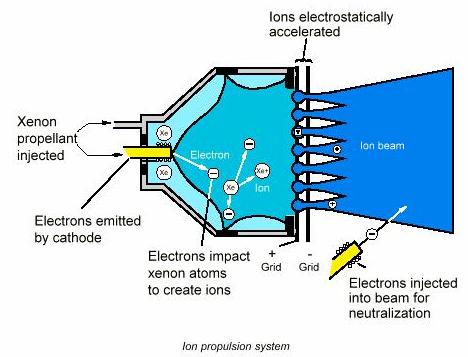 Ion propulsion, or VASIMR propulsion, is a new version of rocket propulsion. They are too weak to provide any tangible results for the human race. Currently, they provide very little thrust and do not allow for launch from Earth's surface they only function after being launched into space by standard launch vehicles.
Space sails are worth mentioning ? they are only capable of operating in space, with no possibility of landing on or taking off from a planet. Furthermore, they require a very large surface area to collect the solar wind. This surface (the canopy) is also susceptible to damage by particles of matter in its path. Photon propulsion is the "holy grail" of scientists and the currently unrealistic vision of approaching the speed of light, utilizing the angular momentum of the photon. However, to realize this vision, an unprecedentedly powerful radiation source is needed to compensate for the photon's lack of mass; we will have to wait a while for a photon rocket. In many corners of the world, work is underway to harness the power of gravity and its interdependencies. Scientists have so far struggled to grasp the essence of gravitational interactions, especially at the quantum level. Currently, examples of human spacecraft being built on Earth continue to reflect the widespread political aversion to other solutions, a reality we encounter in everyday life. Most people still consider rocket propulsion the only form and means of human exploration of space, despite being aware of its limitations.
Our civilization needs a different type of technology based on the magnetic properties of matter and space, or the properties of inertia and gravity. A propulsion system utilizing such technology would be capable of generating a propulsive force useful in a vacuum, relying not on rocket thrust but on the interaction of forces within the vehicle's skin. Spacecraft equipped with engines based on these principles should be capable of launching from the surface of Earth and other planets, without the separation of empty fuel tanks, etc. They would be propelled by high-energy field interactions, capable of escaping gravity, changing the phase of the gravitational field, and other techniques currently unfeasible.
This seems like pure fiction, but not long ago, there were those for whom human flight to the Moon or a heart transplant seemed like fiction. All civilizational achievements have their weight and contribute to a whole, which should not be limited to remaining on our home planet but should involve expanding towards colonization of adjacent space, where, for now, we seem to be the only inhabitants of this star system and the nearby space beyond the heliopause. At least this is a version of events free from conspiracy theories and theories of alien presence among the human race. One of the completely new ideas that could improve the overall situation regarding propulsion worldwide is the magnetic-gravity propulsion, in which I slightly modified my previous idea, where the main principle of propulsion was the generation of unbalanced centrifugal forces. Now I have adapted this rather old idea into a system using three gyroscopes powered by high-speed electric motors. When a gyroscope operates in a gravitational field, specific pro-gravitational effects occur, characterized by the gyroscope being out of phase with the gravitational field, which would otherwise exert a physical influence on it. This phenomenon is called the gyroscopic effect and is used to neutralize the gravitational field's influence on the entire system. The system becomes closer to a weightless state, but remains motionless. Therefore, the proposal to use additional generators of the proper driving force is necessary. The Lorentz force is the force exerted on a current-carrying conductor by a magnetic field of a specific intensity penetrating a defined volume of the current-carrying conductor. This force is free and can be used as a propulsion method in a vacuum. However, until now, attempts to implement this type of Lorentz force approach have involved using a very large magnetic field vector, which resulted in the generation of high currents. This is because the gravitational field had too great an impact on the medium through which the current was passed, and therefore on the entire system. In the case presented here, gravity is neutralized to provide propulsion with relatively low current and magnetic field strengths via heavy gyroscopes. This solution allows the remaining weight to be neutralized by the Lorentz force alone, and once it reaches the appropriate value, the system can be lifted off the launch pad. The system is equipped with three gyroscopic generators to achieve three-dimensional rigidity. At the top is the crew compartment and a navigation and life support system for several people. The diagram I've prepared is simplified and doesn't detail the entire vehicle's structure, but that's not my intention. Instead, I wanted to illustrate the propulsion capabilities of this type of vehicle. The issue of electrical power is controversial; it can be assumed that the system will be powered by a nuclear reactor or a battery of radioisotope thermogenerators.
Ion propulsion, or VASIMR propulsion, is a new version of rocket propulsion. They are too weak to provide any tangible results for the human race. Currently, they provide very little thrust and do not allow for launch from Earth's surface they only function after being launched into space by standard launch vehicles.
Space sails are worth mentioning ? they are only capable of operating in space, with no possibility of landing on or taking off from a planet. Furthermore, they require a very large surface area to collect the solar wind. This surface (the canopy) is also susceptible to damage by particles of matter in its path. Photon propulsion is the "holy grail" of scientists and the currently unrealistic vision of approaching the speed of light, utilizing the angular momentum of the photon. However, to realize this vision, an unprecedentedly powerful radiation source is needed to compensate for the photon's lack of mass; we will have to wait a while for a photon rocket. In many corners of the world, work is underway to harness the power of gravity and its interdependencies. Scientists have so far struggled to grasp the essence of gravitational interactions, especially at the quantum level. Currently, examples of human spacecraft being built on Earth continue to reflect the widespread political aversion to other solutions, a reality we encounter in everyday life. Most people still consider rocket propulsion the only form and means of human exploration of space, despite being aware of its limitations.
Our civilization needs a different type of technology based on the magnetic properties of matter and space, or the properties of inertia and gravity. A propulsion system utilizing such technology would be capable of generating a propulsive force useful in a vacuum, relying not on rocket thrust but on the interaction of forces within the vehicle's skin. Spacecraft equipped with engines based on these principles should be capable of launching from the surface of Earth and other planets, without the separation of empty fuel tanks, etc. They would be propelled by high-energy field interactions, capable of escaping gravity, changing the phase of the gravitational field, and other techniques currently unfeasible.
This seems like pure fiction, but not long ago, there were those for whom human flight to the Moon or a heart transplant seemed like fiction. All civilizational achievements have their weight and contribute to a whole, which should not be limited to remaining on our home planet but should involve expanding towards colonization of adjacent space, where, for now, we seem to be the only inhabitants of this star system and the nearby space beyond the heliopause. At least this is a version of events free from conspiracy theories and theories of alien presence among the human race. One of the completely new ideas that could improve the overall situation regarding propulsion worldwide is the magnetic-gravity propulsion, in which I slightly modified my previous idea, where the main principle of propulsion was the generation of unbalanced centrifugal forces. Now I have adapted this rather old idea into a system using three gyroscopes powered by high-speed electric motors. When a gyroscope operates in a gravitational field, specific pro-gravitational effects occur, characterized by the gyroscope being out of phase with the gravitational field, which would otherwise exert a physical influence on it. This phenomenon is called the gyroscopic effect and is used to neutralize the gravitational field's influence on the entire system. The system becomes closer to a weightless state, but remains motionless. Therefore, the proposal to use additional generators of the proper driving force is necessary. The Lorentz force is the force exerted on a current-carrying conductor by a magnetic field of a specific intensity penetrating a defined volume of the current-carrying conductor. This force is free and can be used as a propulsion method in a vacuum. However, until now, attempts to implement this type of Lorentz force approach have involved using a very large magnetic field vector, which resulted in the generation of high currents. This is because the gravitational field had too great an impact on the medium through which the current was passed, and therefore on the entire system. In the case presented here, gravity is neutralized to provide propulsion with relatively low current and magnetic field strengths via heavy gyroscopes. This solution allows the remaining weight to be neutralized by the Lorentz force alone, and once it reaches the appropriate value, the system can be lifted off the launch pad. The system is equipped with three gyroscopic generators to achieve three-dimensional rigidity. At the top is the crew compartment and a navigation and life support system for several people. The diagram I've prepared is simplified and doesn't detail the entire vehicle's structure, but that's not my intention. Instead, I wanted to illustrate the propulsion capabilities of this type of vehicle. The issue of electrical power is controversial; it can be assumed that the system will be powered by a nuclear reactor or a battery of radioisotope thermogenerators.