9 September 2020
Our times are very interesting; much is happening in the world and in the global scientific community. In our times, in addition to the struggle and violence of various dimensions inherent in interpersonal relationships, regional wars and conflicts, new technologies are emerging, displacing less advanced technical methods. Various passions and interests also exist, which have a far greater impact on science and technology than, for example, military research. Another example of the evolution of technical devices, tangibly visible, is the evolution of electronic devices ? cell phones, televisions, and PCs, which are currently becoming increasingly sophisticated, slowly evolving into a different quality. And it all began with "rubber boots," computers like the ZX Spectrum and Atari 65XE, with a memory capacity of just 65 KB and eight-bit processors, connected to a CRT television.

What we have today is hard to miss, as 3D and 4K TVs are everywhere, and the CRT TV has been consigned to a museum of technology. The giants that manufactured old home computers like the Atari XL or XE, or even the 1040 ST or 520 ST, are now a thing of the past, although we've recently seen mentions of their revival in the form of new gaming consoles. Companies like Intel and AMD have long since taken matters into their own hands, and they now dictate the terms of the industry. Soon, we'll be at the brink of the end of the technological process of reducing processor speeds.

Graphene and gallium nitride, along with the power of quantum computers, will soon enter the picture. In memory technology, we're dealing with SSD technology and the gradual expansion of standard magnetic memory, which already allows for the storage of vast amounts of data. I remember how recently we marveled at the 650-700 MB capacity of a CD. Today, the capacity of Blu-ray discs (BRA) has increased a hundred-fold compared to CD-Rs thanks solely to the use of blue laser light and multi-layer recording, and mass storage will soon reach 20 TB of data on a single HDD. After the murderous days of World War II, there was only one antibiotic ? penicillin, invented, or rather accidentally discovered, by Alexander Fleming. Today, medicine has expanded to include thousands of antibiotics and millions of other medications, which have improved the living standards of millions of people and extended the lifespan of the average citizen of the planet by an average of 10 years in some countries compared to two centuries ago. The pharmaceutical industry currently generates enormous sums of money and hope. Coronary heart disease, cancer, and diabetes continue to pose significant challenges. Help for many people through chemistry and pharmacology is not always available, as a person's financial situation has a significant impact on their well-being and condition, and poverty has never been lacking in the world, and continues to do so today. The possibilities for developing new medicines are endless; the element carbon itself has as many possible molecular combinations as all the other combinations of molecules composed of other elements. This is because carbon can combine with four (as in diamond or methane), three (in ethylene), or two (as in acetylene) atoms of itself or other elements. Furthermore, it can form vast numbers of isomers defined by the same molecular formula, and the more complex the molecule, the more possible isomers. Furthermore, it can form compounds that are mirror images of itself, including molecules that are clockwise or counterclockwise to light. The amount of knowledge derived from understanding the chemistry of carbon compounds is overwhelming, and as long as science continues, there will be room for new solutions to this problem. Carbon is also a fundamental building block of living organisms on Earth. It is part of the structure of nucleotides that make up DNA, the code that carries genetic information in Earth's environment, and perhaps also on other planets in our galaxy. Recently, carbon compounds have been detected in space?basic building blocks that can further evolve into other compounds leading to the origin of life. All carbon compounds found on Earth are likely common in the universe, but detailed data is lacking due to the limited capabilities of current research tools. However, throughout the universe, there is likely an enormously diverse living environment, consisting of animals, humans, and plants, planets mostly covered with humid forests and desert planets. However, until appropriate telescopes are available, we will not know this conclusively. In our Milky Way galaxy alone, the number of intelligent civilizations, both primitive and highly technological, likely number in the tens of thousands. It can be assumed that within the next 20 to 40 years, the presence of organic life or signs of alien intelligence in the universe will be confirmed through direct astronomical observations on nearby planets in main sequence star systems at distances ranging from a dozen to several hundred light-years from the solar system. Currently, work is underway on ground-based telescopes that will capture the first images of the atmospheres and disks of planets beyond the solar system.
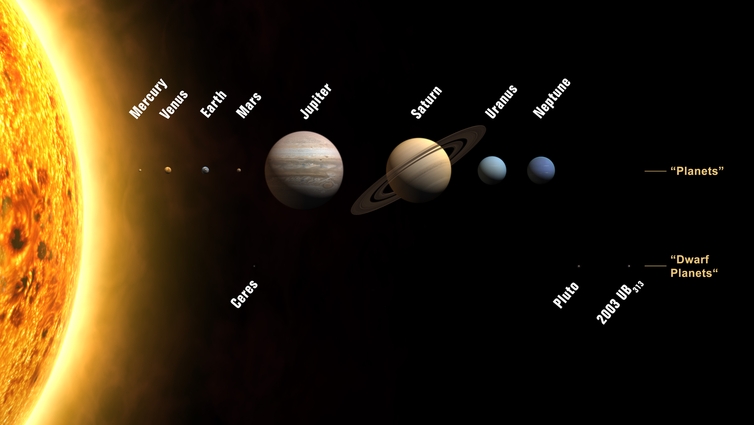
Such possibilities will become reality if astronomy continues to develop as rapidly as it has. For this purpose, a mirror with a radius of approximately 9-15 meters, placed at the libration point or, where observational opportunities are better, in nearby space, would be sufficient to obtain the necessary data. The cost of launching such a space telescope or an interferometer coupled to it would range from $2 to $4 billion. It would require a telescope composed of many components assembled in space by astronauts sent on a special mission, so the cost would have to rise to the level sufficient to launch at least one or two manned missions. Our reality would be completely different if it weren't for the fact that we currently lack the ability to develop or understand the technology enabling travel within our galaxy; currently, our knowledge depends on planetary conditions. Our knowledge of the cosmos is therefore minimal and mainly concerns larger objects visible from Earth. As for useful knowledge, such as knowledge about extrasolar planets and their conditions, it is currently fragmented and superficial, concerning only transiting planets or those detected through direct observation. In fact, such a possibility is relatively rare compared to, for example, planets detected through Doppler spectroscopy. As long as this limitation exists, all data about the universe around us will come from astronomical observations using telescopes and other such devices. Generally, we do not understand how interstellar travel could occur. Currently, the concept of this type of travel is determined by the theory of relativity, which defines the limits of modern physics. However, it must be stated that this theory only defines a specific situation and the relationship between time and space, and does not eliminate other possibilities, of which there are quite a few, although it may seem that the matter is closed. Looking beyond the General Theory of Relativity (OGR) would currently require the discovery of new physical relationships, which have always been a technological gateway, and the development of technologies based on them. Another, even greater problem is the lack of serious interest in this topic worldwide ? current work remains marginalized for various reasons, due to a lack of consideration for methods of thinking different from those defined by contemporary physics and technology. All speculations that go beyond or bypass the theory of relativity exist only on paper, as they are not taken seriously, and any form of fanaticism will have a two-way mechanism. One thing is certain we likely have a long way to go before such technological and psychological barriers are overcome; a re-evaluation would also have to occur in the consciousness and mentality of ordinary people. In this case, it is clear that after an initial fascination with space issues, the world has lost interest in space exploration technologies. One can speculate on the reasons for this, but a rapid change in the attitudes towards space among the majority of society is not expected. One can only generally state that as long as such important world problems as hunger, infectious diseases, and the lack of prospects for a better life for hundreds of millions of people on Earth due to the lack of access to education and the satisfaction of their basic biological and living needs persist, these people will not be inclined to think about anything more than new shoes or the desire to eat their fill. Almost all wealthy countries that can afford space programs are economically prosperous, with no hunger, and adequate social and medical care. Poor countries often face shortages in this regard, both in terms of qualified medical personnel and medications. Although this situation is improving every year, this problem will long remain a key criterion for choosing global policies for adequate international administration. Even in wealthy countries, people are often unable to develop the values ??of consciousness that would enable greater engagement in space exploration. The problem lies in the lack of diversification of thinking and technologies, and others are simply uninterested in such unnecessary content. And it's still true that in this age of consumerism, which most Earthlings consider the only sensible way to spend their time on the planet and the only philosophical current, almost no one cares about such matters?which can be interpreted as a relatively unambitious position that requires little intellectual or physical effort, so the world drifts, and with it those who are "sentenced for life" in the planetary penitentiary that remains Earth. In my case, interest in space exploration doesn't necessarily go hand in hand with stability and economic prosperity, because while I have no shortage of decent housing, and hunger isn't my problem, I am forced to face economic problems that may seem overwhelming for now, and in fact, I don't know when I'll finally overcome them so that I can finally find the means to meet these kinds of inspirations. However, such opportunities do exist Poland is developing quite rapidly economically and in terms of infrastructure (although, truth be told, many of the problems we experience living in this country might be avoided if all economic matters were managed properly, utilizing natural resources, human resources, and the technology that is available, but no one uses it). Well, it could be argued that some people waste money without moderation and without consideration on completely irrelevant matters, without which they could already live comfortably, and have no particular aspirations except for becoming even richer. Others walk around in holey shoes and torn trousers, yet are endowed with the right vision. In fact, they often have the potential to make important changes in this reality, even though they don't have much money. After all, not everything depends on financial means but on attitude and strength of character. People involved in business, politics, or the world's technical infrastructure usually don't introduce positive technology beyond the one that brings them profits, which often causes increasing economic oppression for the poorer segment of society. Politics perpetuates this type of oppression and is nothing more than a materialistic approach to the economy associated with an economic compromise in which the same people associated with this type of system always win. Politicians strive to maintain this compromise, and when they cannot achieve it, dictatorship or top-down control, incompatible with market processes and democracy, inevitably ensues. Compromise maintained at all costs does not lead to progress, and the entire technology upon which it relies defeats the purpose. It is very rare, however, for someone to be both a billionaire and a visionary. The number of people the world's population in 2015 was already nearly 7.5 billion will soon reach 8 billion to 9 billion. This number will continue to grow, and the progress will no longer be linear, but rather geometric. A larger population leads to uncontrolled demographic growth, determined by a larger number of people of reproductive age. Improving living conditions on the planet will lead to more people deciding to start families. A natural consequence of this is a larger workforce, which could further accelerate economic growth, but it also means additional supplies of essential food and drinking water, as well as housing and other basic needs for these people. There are many indications that NASA's SLS (Space Launch System) or SpaceX's program will come to fruition, and as one of the billions of viewers, I will have the opportunity to witness a human landing on Mars. Whether this will lead to a continuation of the program aimed at colonizing the "red planet" is quite possible. Many surprises could unfold under the Earthling banner. Perhaps, among other things, the invention of space propulsion systems that no one has considered in the past or present.

Drives utilizing technologies straight out of science fiction, such as hyperdrive and WARP propulsion, aren't necessarily just science fiction. The near future could see a time when recoilless propulsion, or "reactionless" propulsion?that is, propulsion that doesn't generate a recoil effect, such as a drive that relies on the reflection of photons within a closed propulsion system (e.g., EmDrive), or a drive that relies on an inertial mechanism (e.g., similar to Thornson's or To³czyn's devices), will enter a phase of more realistic solutions and projects. Such drives likely wouldn't enable interstellar travel, but they would enable free movement within the solar system, the free construction of colonies and stations orbiting all the planets in the solar system, and so on. The average distances between planetary systems in our galaxy range from 3 to 10 light-years. Considering that light travels a distance of approximately 300,000 km in 1 second?for a distance of 4.5 light-years to the Alpha Centauri system, we get a distance of approximately 141,523,200 * 300,000 = 42,456,960,000,000 km?this is a huge number, and if we were to travel such distances at speeds slower than "c," the entire expedition would lose all meaning. Therefore, we need to break away from standard thinking and venture into unknown regions beyond the boundaries of science and technology to overcome this barrier. Currently, there are very interesting branches of scientific knowledge, or rather, distinct scientific fields, which, if examined carefully, could have the potential to become real technologies, despite the fact that science cannot explain certain manifestations of energy and their impact on time, matter, and space associated with such technologies. Some manifestations of the operation of certain technical devices, which cannot be explained within the framework of classical physics, only demonstrate how limited our current knowledge of certain relationships is. Only by looking "beneath the surface" of reality, as it were, can we achieve success and introduce methods of thought into standard physics that were previously considered unexplored scientific realms. Einstein attempted for many years to describe all phenomena related to quantum physics using mathematical methods. Another scientist, Werner Heisenberg, was constantly working in the background, using probability theory to describe this physics. He assumed that quantum relationships could not be precisely defined using mathematical methods, as Einstein intended. However, we can determine the probability of certain quantum phenomena. Unfortunately, an aortic aneurysm ended Einstein's work, the creator of the theory of relativity, before any real success, which he might have achieved if he had had a little more time. However, science functions and does not end with quantum theory. Hence, a simple conclusion: in all these dimensions of knowledge where human reason fails, standard mathematics may simply fail to meet the requirements for describing relationships related to new topics. This is no longer about the constituents of reality, such as time and space, because the description of realities beyond our comprehension and habits can encounter real problems, both related to calculations and the simple translation of these data into a space composed of phenomena in our continuum, for which we already have certain expectations. Very often in the past, a given technical solution outpaced scientific descriptions, and as it later turned out, this often resulted in a benefit for civilization, despite the fact that the scientific foundations of the time and the people associated with them ostentatiously and vehemently criticized these solutions. Well, as we know today, these people were wrong and had to give way to those who, in this case, presented obvious and constructive realities and truth. History teaches us, however, that economic and business struggles between various factions lead to technological progress being reduced and bent to civilizational requirements, which often have nothing to do with the progress that should properly exist if interests divided by economic considerations were not at stake. And here, it so happens that the technology that would truly meet these requirements is not related to making money, because it would be free by nature.
9 September 2020
Civilizational and technological progress is the collective result of all human scientific and technical activity on Earth. Times change, but objective truth remains the same and unchanging; the amount of information is constant; science merely assimilates it. There are always hypotheses that will be verified by the actual state of affairs in many fields when confronted with reality, but certain scientific threads are still subject to elimination, while others create the very technology that impacts the immediate possibilities available on Earth. One example, from the early stages of human development, is the mastery of fire and methods for obtaining thermal energy for subsistence purposes, such as cooking meat and staying warm during cold weather, which was available to primitive man. The nature of fire itself was not immediately understood, nor were the basics of chemical reactions, or in this case, combustion, understood. Only later was it realized that combustion products, when added together, are heavier in mass than the individual reactants. At one time, an erroneous theory of phlogiston as the element of fire also existed, and it took science a considerable time to fully understand the nature of fire and the associated heat necessary for human life. This paved the way for the construction of our current combustion-based technological civilization, which emerged through the evolution of basic technologies derived from the characteristics of the natural environment in conjunction with basic perception. Later, nuclear physics and electromagnetism, combining various technologies based on heat, work, and radiation, developed the technology of chemical reactions, including combustion. However, it should be noted that what was initially innovative and effective, now, with the development of a space-based civilization, which we are increasingly witnessing, is no longer sufficient and fails to meet the requirements of providing certain scientific and technical components for civilizational needs, including the enormous energy needs of various types. It also fails to meet the requirements of other types of solutions, primarily in the field of transportation, where the current technological situation is unable to meet current needs or higher technological ambitions. Speaking of the fundamentals of greatest importance for a global approach, it is worth mentioning that jet and rocket propulsion were developed back in the 1940s. However, it is important to remember that eighty years of, let's say, uninterrupted success with these propulsion systems will soon pass. This could be considered a success, but summing up the 20th century in technology, it must be emphasized that, if we take the real demands of space and its vastness as a guide, no significant breakthrough has been made globally regarding propulsion systems for communication in the vacuum of space, which is associated with the very limited actual human activities in space. This fact determines the possibilities for movement within the solar system, which can be described as nothing less than mediocre. Current investments in new technologies are related to ground-based infrastructure, which does not bode well for the future success of these technologies. There still seem to be forces on a global scale that directly or indirectly block fundamental progress in these key areas. One might ask why I have undertaken to discuss propulsion and civilization, given that I have written extensively on this subject before? This is particularly true for space propulsion, as the underdevelopment of this industry remains significant and glaring. The frustrating aspect of this industry is its inefficiency. Despite the industry appearing to be advancing, it is actually regressing. There is a lack of coordination among some activities by certain institutions, and some research has been undertaken too late or not considered at all in their own research goals. Important considerations have also been neglected in solutions developed by those not affiliated with the low-budget sector. Certain effective and innovative solutions presented by inventors in the fields of energy and transportation have been overlooked and relegated to the margins in terms of significant civilizational realities. This has led to a situation and a balance of power that currently places the world on the brink, questioning its future development, as the foundations that guarantee humanity's continued existence are threatened. The desire for profit, consequently driven to suicidal tendencies regarding key life foundations, is not a plan for the future, nor a method for exercising any control over the processes of global progress. All these people, unfortunately chosen and detrimental to the world by a favorable economic power structure, who have been designated to manage the fate of billions of Earthlings through the characteristics of existing technology, limited to a predetermined level, unfortunately constitute a handful destined to determine the direction of the planet's development. These individuals, by steering the world in the wrong direction with their own financial resources, should rather be prevented from further influencing the fundamental aspects of civilizational development. Instead, the planet's destiny should be directed by people possessing independent knowledge and the appropriate mental potential to guide it on a path of real growth, relevant to actual possibilities, and to ensure effective development in fundamental areas that have been deliberately and deliberately neglected until now, only because certain elite circles were prevented from further enriching themselves at the expense of the proper and actual interests of the global international society. Technology dependent on economic determinants does not serve the essential interests of humanity. The network of dependencies between economic entities is overly complex, leading to a situation in which technology transfer is excessively diversified. The beneficiary of the energy supply system and the means of a prosperous life are not the end user, because the enormous sums generated by the trade in energy materials and life-sustaining products are misallocated. This makes the existing disparities in the standard of living on the planet a shortcoming that will remain unresolved until the psychology of the affluent society of the Northern Hemisphere changes. All key technology available on Earth operates based on contradictory and counter-rotating systems and mechanisms, which therefore operate with low efficiency, leading to massive losses in raw material inputs. Such solutions are not technologies that guarantee the world's future. It should rather be assumed that they became necessary by coincidence, only temporarily (due to a certain inertia). However, they have remained in use for too long and should already be replaced. However, it seems that the world, from an economic and technological perspective, cannot overnight halt the global processes and the circulation of its flywheels, which could result in disruption of its foundations. It is true that evolution is needed here, but the problem already appears urgent and urgent, and the attempts to address them are insufficient and cursory, and above all, they seem to have been made too late. What is important and disastrous is that trillions of taxpayer funds have been invested in ground-based infrastructure that can easily be destroyed in minutes by planetary and cosmic processes. No one has calculated or even begun to consider in depth what the global benefits would be if those same funds, or even a portion of them, were allocated to the development of a specific, game-changing, Earth-scale technology for transportation in space and, therefore, on the planet, which would protect the world from the individual and global threat of multi-layered biological degradation, or the possibility of the potential destruction of the entire planet, solely in the process of expanding extraterrestrial settlements. Because these matters should be at the top of the decision-making pile, and all other problems should stem from this one important issue. For now, however, the world remains nothing more than a ghetto for billions of its inhabitants, who live day to day. Realities and living standards have settled on a specific level that eliminates certain ambitions and passions, and which, so far, has been unable to be effectively and decisively changed. It is, however, noticeable that corporations are clearly behind this situation, profiting from the very situation on a global scale, ensured by the stabilization of the balance of power and the technological system. Deceiving the public, serving up low-end technologies, and dismantling the economic foundations, aimed against representatives of other, more advanced technologies?who could be described as heretics of the system, who could change this situation?may seem standard. The science promoted by today's scientists has largely become a reflection of the system in which the dollar and ideological obstruction play the leading role. Scientists conducting scientific activities sponsored by key capital striving for hegemony over the Earth's pressing problems and trying to work on science so that all these problems remain without a significant solution, contribute to the education of new representatives of our species entering the world arena, causing further descent into a system that, it must be clearly stated, unfortunately leads the planet's affairs towards notorious and multidimensional destruction.
| 3. Changes in technology at space of years |
9 September 2020
Planet Earth is billions of years old, and during these years, various events have occurred on its surface, the effects of which are still observable and felt by its inhabitants today. The appearance of humans on its surface led to the development of technology based on harnessing the laws of nature and utilizing knowledge derived from human experience, passed down from generation to generation. This knowledge could be intensified and enriched over time rather than diminished by the extinction of generations. This was achieved through the ability to record information in the form of a script based on phonetic symbols, a skill that has, in modern times, been extended to multimedia communication via computers and other electronic devices equipped with semiconductor memory. The invention of writing was a turning point in ancient times, enabling mathematics, verbal instructions, and algorithms to become widely used in education and the teaching of basic knowledge. Knowledge finally ceased to be subject to verification by human memory and could be stored outside human brains in the form of clay tablets, later ink-on-paper writing, and finally in printed writing, and now in the form of electronic and multimedia documents. Currently, all information available to civilization can be accessed via the internet and web browsers, where all the knowledge acquired by humanity resides. The remaining information is available in written, but not yet digital, form, or in the form of legends, and will be added to the information available online in due time. However, there is still a significant amount of knowledge that is not available in online knowledge resources. Knowledge that was lost along with its possessors in the past. These were people who acquired it in a way that was inaccessible to others, because they possessed specific perceptual abilities and expanded perception, which allowed them to construct technological devices and research instruments, and to record knowledge available to them without any significant equivalent in today's technology and knowledge. This knowledge was crucially overlooked by their contemporaries or deliberately kept secret by the creators of these foundations of knowledge due to the inherent potential of such technology and the potential for the rest of humanity to fail to properly address it, which could expose civilization to a real existential threat. Knowledge itself can be used in various ways, depending on the disposition of its possessor, for good or evil. If intelligence were to be measured solely by an individual's ability to acquire knowledge, a neural network could also be called intelligent and good, although it cannot utilize knowledge in ways later measured in terms of good or evil, only as programmed by the programmer. Over time, it became clear that we are creating artificial technology based on virtual reality, and we will soon become part of this reality, and we will not control it, as this would be too complex a task for the biological brain. Therefore, we will hand over control to processors and computers based on advanced data processing systems. Once the process has been initiated, which happened with the invention of the semiconductor transistor, this process can no longer be stopped; it can only be stopped by some global event that would involve cutting off people from the basics of life support, or by a globally consequential pathogen, such as a virus or bacteria mutated into a form insensitive to any antibiotics. At the beginning of the last century, there was already a pandemic that claimed the lives of a hundred million people, the Spanish flu, a particularly virulent form of influenza, and the next pandemic is happening today, and who knows how many more people it will cut off from a prosperous life, and who will die. Whether our civilization is preparing a different fate for itself, engineering all sorts of complications by producing GMOs and transgenic organisms, is difficult to say, but the risk of human error, resulting in the extinction of entire continents, is increasing. The world's human population has grown to such a degree that there may be no turning back, as factors such as hunger and other biological determinants could significantly accelerate work on these technologies. In the fight against pests and other agents of destruction turned against us, humans will go to great lengths simply to survive and harvest from the rock. It's high time for technology to take humans beyond the planet. These can't be sporadic, televised events, but planned exploitation and exploration of the solar system. Therefore, work on space propulsion must be accelerated. From the time primitive man learned to use the first tools, such as axes, levers, and ropes, to build his houses and cultivate his fields, he became a designer and a planned engineer of his own environment, which, as it later turned out, also includes nearby space. There lies the future, the wealth, and the testing ground where he will hone his technology and board the interstellar and intergalactic vehicles he has designed here on Earth. Our current technological capabilities are already a good start for solar system exploration, and progress will come regardless of the twists and turns it takes. Although the situation today seems uncertain and civilization is heading in the wrong direction, things may yet get back on track. In the past, it often seemed that the end of civilization was near. We have several bloody global wars behind us, and to this day, the world is still plagued by their local variations, where death takes its toll, where civilians die by the thousands, and cities are destroyed and ruined. This is the injustice of the modern world: some live in warm homes equipped with computers, electricity, gas, running water, and sewage, while others suffer famine and war?the squabbles of great powers, where people are no longer considered a significant value. Those who have secured their future through bulging bank accounts in a safe zone far beyond these events are also dependent and susceptible to other dangers. Life in the city and in a highly industrialized world is not free of threats, and what we call prosperity often turns into a debt collector. Over the years, the technology developed by humans has evolved. After several industrial revolutions, where individual stages of human activity have closed and transformed into a new quality, some technologies remain, others have been superseded. Humans are not intelligent enough to break away from their technological habits, and although they have come across solutions that could solve this problem, they have stuck with these methods, as is evident to this day. It could be argued that human intelligence ends when confronted with their own shortsighted self-interest, and thinking in terms of the good of billions ends with the individual. This pattern is the bread and butter of society's control system, without which it could not function properly. Technology currently does not sustain society; instead, it is a tool for controlling individuals over others. Those who cannot program are already becoming completely helpless, while not long ago, those who could not read and write were socially excluded. These changes occurred despite the fact that some inhabitants of this world had only just ceased cannibalism. Thus, technology has made a quantum leap, but not everywhere and not for everyone. Other forms of technology, which do not mask the fundamental need for profit by tech magnates, are not implemented in a way that allows for the propagation of benefits to the general public, because currently, technology is a form of exploitation of those who use it. The centralization of everything for the circulation of funds has nothing to do with utilitarianism regarding society, which is a shame, because society's needs drive the entire technological and financial process. We, as beneficial users of infrastructure, are building solutions that construct this single, reform-resistant pattern. Even though the situation is developing in a certain direction, not necessarily one that immediately aspires to be positive, because we haven't incorporated higher-level thinking processes into our reasoning, we lack the results to think beyond functioning in a space limited to oscillations between the needs of our own bodies and legal and social obligations. We're not talking about those already satisfied with life at their achieved intellectual, existential, and technological levels; they will always take what they're given, even if it's been given thousands of times. It's immediately clear that this isn't a world worth putting down roots in, and more discerning individuals are immediately pushed aside. In a technological world, urbanized and industrialized to the extreme, despite those who assure us of safety, one can lose one's social standing, money, and life stability in an instant, after a small mistake that initially seemed minor but later escalated into a catastrophe. It's just that the world is becoming increasingly complex, and this happens in direct proportion to the introduction of technology. Progress, the economy, and finance are all connected by a common network of connections known as global politics and planning. However, all of this is dependent on raw materials and energy production methods. There is no stability, certainty, or global security. Instead, there is constant economic struggle and daily demands placed on every person to keep the system running. This situation will likely deepen, and even more severe harassment will descend upon the common man. Technology created elsewhere, hailed as the fourth or fifth technological revolution, will make little difference when the well-being of individuals and their sense of self-worth decline in the process. Robotization and automation of industrial production control processes and public and administrative oversight through the introduction of artificial intelligence systems have led to a situation of depersonalization and the elimination of the worker as the basis of industrial production and as a civil servant, necessitated by the need to digitize the lives of the average inhabitant of this planet. It doesn't seem that introducing excessive oversight through IT systems will improve the quality of human mental life. Rather, these technologies will lead to a constant sense of threat among society, a sense of individual vulnerability, and so on. Technologies that influenced life in the past were characterized by simplicity and ease of repairing problems. Today, in a situation where digital systems allow for managing entire, complex companies from the comfort of your home, this is already the norm. A broken computer is replaced in its entirety; nothing is repaired anymore, as it no longer makes economic sense. This could lead to a situation where the number of specialists is limited to IT specialists alone, as the hardware production and design process is currently, or soon will be, untouchable by humans. Robots designed by robots, not humans ? this is the future of technology. Industry and technology have come such a long way to see their creator eliminated. Computers, machines, and robots are the future; biological tissue here falls to a lower level, dictated by its destructibility and low resistance to external factors.