Tripolar magnetic field.
23 March 2021
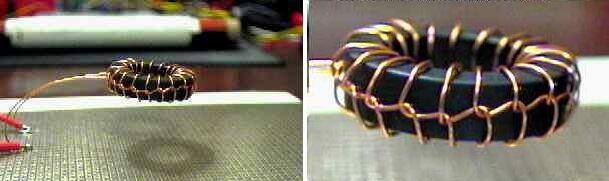
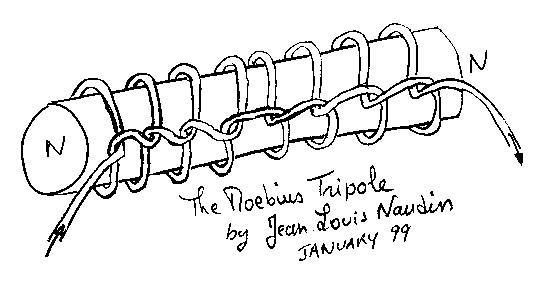
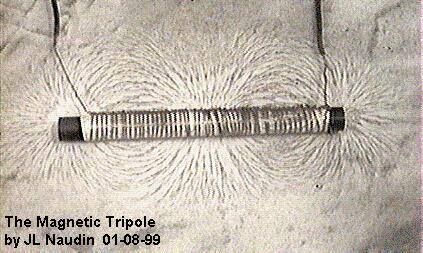
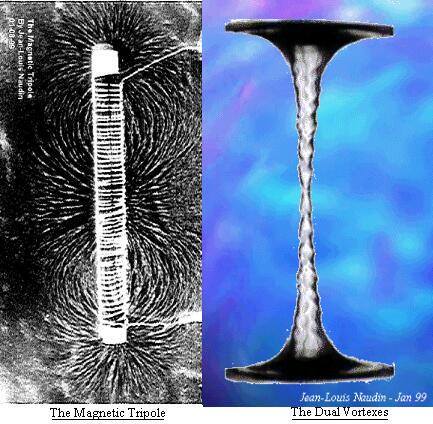
The phenomenon of a magnetic field is usually associated with the flow of current, generally with the movement of electric charge in space. Permanent magnets such as neodymium, samarium-cobalt, or ferrite magnets already possess a predetermined magnetization because their magnetic domains are ordered. However, few people are aware of slightly different phenomena associated with magnetic fields. For example, a magnetic field does not have to have bipolar polarization (NS or SN); it can have a tripolar or monopolar field. Typically, a variable magnetic field induces the flow of electric charge in electrical conductors or causes the heating of various media. This is how induction furnaces operate to melt charge without the use of a heat source. The charge melts because eddy currents are induced within it, which can sometimes be a disadvantage, for example, in transformers. While browsing the internet a while ago, I came across interesting data on tripolar magnetic fields. I decided to analyze the data and share it in this post. It turns out that various inventors possess, in addition to their skills, advanced knowledge that I hadn't realized before. Where did the idea of ??a tripolar magnetic field come from, and how did someone come up with such a simple way to wind a coil around an inductive (ferrite) core? The magnetic field from a coil wound on a cylinder is as follows: The coil is wound as in the example below. Its turns run from the center to the ends of the ferrite core, with polarity N at the ends and S in the middle. Additionally, the wire is interwoven through its own loops so that the wire from one turn overlaps the adjacent turn. This also allows for the wire to be interwoven in two different directions within a single closed magnetic circuit, something that can't be achieved so easily with a conventional coil. The visible winding is characterized by a specific interlacing, maintaining symmetry and division into two winding directions. A few years ago, I specifically bought a rather large induction core (it cost over 40 zloty) to use for experiments. However, I didn't notice the characteristic transition in the center, and the whole thing didn't produce the expected result, which I only realized later. I don't know where the name Moebius comes from, as it doesn't mean anything to me. Whether it was a previous scientist, I don't know. The next photo shows a levitating toroidal induction core with a wound coil. These experiments were performed by J.L. Naudin back in the 1990s, but I don't have any further information about this inventor. From what I understand, he studies the Brownian and Coanda effects and has many similar solutions to his credit. My data indicates that there are no metal elements beneath the core levitating above the table. I'm mentioning this in case anyone suspects it's the Lentz effect. The experimenter himself wasn't sure why the core and coil were levitating, and the parameters of the applied current are unknown. The wire was probably varnished and quite thick. Frankly, I don't know how they'd wind such a specific coil from such thick wire; it certainly required considerable effort. As for my speculations explaining the levitation, I suspect it's more about internal interactions related to the specific magnetic field created by the toroidal core (connected poles), which I believe is the cause of the levitation. The author speculated that it's a more external phenomenon, possibly involving the geomagnetic field. It's possible that this raises much more complex issues related to the phenomenon of space and the space-time continuum. The whole matter piqued my interest, both because the essence of the phenomenon itself is intriguing, as well as its potential applications in transportation technology. If the magnetic force revealed in this case was capable of lifting a heavy inductive core and coil, then this is already a significant force, capable of creating new types of cars or aircraft, and that's just one step away from a significant redefinition of space exploration.