Antimatter technical problems.
Everyone probably knows what antimatter is. It seems that as early as the 1950s, several science fiction writers began writing about it, drawing on the work of scientists such as Paul Adrian M. Dirac. Stanislaw Lem, for example, was one of the first to describe the uses of antimatter in some of his science fiction books. In one of his short stories, "The Invincible," he described a weapon used by the "Defender," based on an antimatter beam an antimatter projectile?that was used against memory-eating crystals, causing amnesia, on the distant planet Regis 3. However, antimatter cannot come into direct contact with matter, primarily to prevent spontaneous annihilation (the elemental charge barrier does not apply in this case), which would result in the release of enormous thermal and high-energy energy beyond any human control. Antimatter can be stored, but only antiprotons and positrons?particles with unbalanced electric charge in special magnetic containers. A safe method for storing it with permanent separation by a magnetic field has recently been developed.
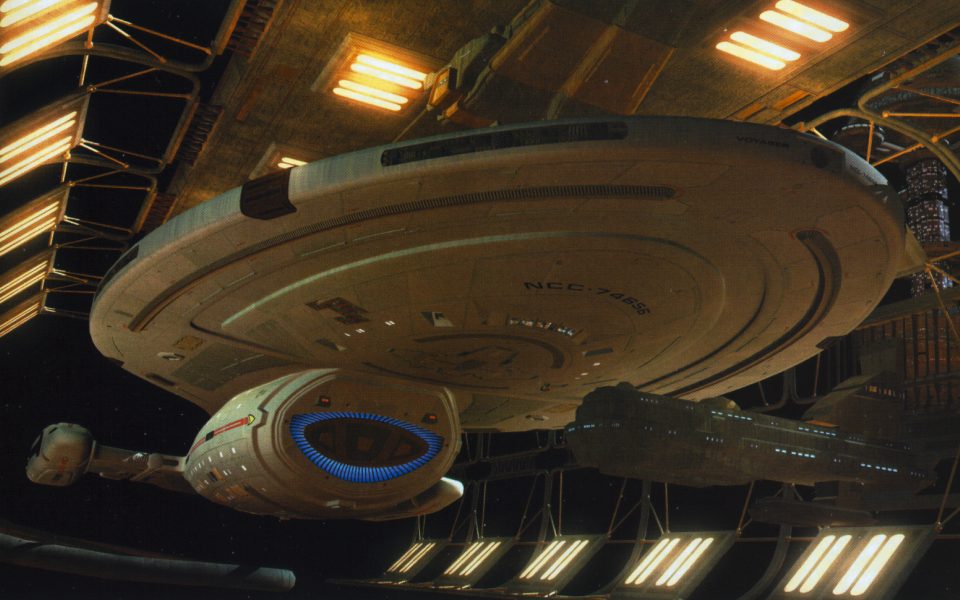
We can still produce minute amounts of antiprotons; antielectrons are a bit easier, as they have a much smaller rest mass than antiprotons, so they don't require high energy to produce them. Antiprotons can be produced, for example, in particle accelerators like the Tevatron (though this accelerator is no longer in use) or the European LHC (Large Hadron Collider), located on the territory of three countries, because it is so extensive. When a beam of particles in an accelerator is accelerated to nearly the speed of light, kinetic energy can be transformed into other exotic particles that are normally hidden from the human eye in nature. This is how various quanta were discovered, including, among the greatest achievements, the Higgs boson, a particle whose existence was predicted many years earlier and whose existence was implied by the "Standard Model." This particle is responsible for the mass gain of other particles in the Standard Model. It's true that new questions in physics are inevitable, but within the current scope of physics, the existence of so many different types of particles has not yet been confirmed. While there are indications that they exist, yet they remain elusive to research, such as hypothetical gravitons or tachyons, they remain a mystery to scientists. We all possess knowledge and a specific perception that influences the results that can be obtained in the laboratory, or even while simply studying for an exam. However, we currently cannot produce anything other than individual antiprotons and positrons. Other particles, such as muons and pions, are so short-lived that studying them is pointless because they disappear almost instantly. These are solid particles, meaning they have long lifetimes, so we also cannot produce antideuterium and other more complex matter particles in the laboratory. However, it must be said that the most interesting things are yet to come. No one knows in what direction modern physics will develop, but we have what we have in science and technology, which translates into objects of common and everyday use. Quantum engines, a-neutron fusion, such as using helium-3, and laptop batteries based on radioactive decay with low radiation, capable of powering electronic devices for decades, may be things we still have to wait for. Someone who enjoys Star Trek movies may dream of antimatter propulsion and flights using warp propulsion, but for now, these are simply "technological fairy tales." This doesn't change the fact that NASA, for example, has been working on warp propulsion for a long time, and apparently, only modest results have been achieved in this field. Efforts to produce antimatter and study its properties have recently taken on a new dimension, as with the potential success of new experiments with antihydrogen conducted by CERN, we may learn how antimatter could interact with matter gravitationally, specifically whether antimatter generates antigravity and antiinertia. The force of Earth's gravity acts on a single antihydrogen atom with such a negligible force that, frankly, I don't know how anything could be studied in this situation.

However, this research, recently initiated at CERN, opens a new chapter in the study of matter symmetry. Our knowledge still concerns only conventional matter and the visible universe composed of it. By learning more about antimatter and its relationship to matter, we will be able to say more about the structure of the cosmos. Consequently, this knowledge may lead to a scientific and technological breakthrough, opening up deep space to exploration using powered vehicles currently only depicted in sci-fi films like Star Trek or the Star Wars series. This will happen in due time. We will learn more about the nature of antimatter and confirm or deny predictions made by physicists as eminent as Paul A.M. Dirac, etc. It is predicted that antihydrogen may have opposite gravitational properties to hydrogen and, for example, may repel conventional matter. Another property could be the opposite inertia, anti-inertia, whereby an attempt to slow down an antimatter body could cause it to accelerate, and when accelerated, it would slow down. No one yet knows how this would work in practice, and with what quantum mechanism, antimatter should repel itself, but it could also hinge on the question of whether space-time, the basis for the functioning of conventional matter, would behave in the case of antimatter in the specific way predicted by science, or in a completely different way, especially in large concentrations of mass (space-time is associated with gravity and the mass that curves it, while in the case of antimatter, the interactions should be reversed), a question that has not been considered before. Until now, we have been dealing with atomic decay, which produced small antimatter particles such as antiprotons and positrons. However, the process of their instantaneous annihilation proceeded in a way that prevented more thorough studies of their interference and interaction with space, and the amount of antimatter produced was very small. Antimatter, and its large quantities, should be handled with extreme caution, of course, until mass production becomes possible, and this does not involve accelerators. One kilogram of antimatter, upon contact with conventional matter, would lead to a cataclysm greater than the explosion of many an atomic or hydrogen bomb. While industrial-scale production of antimatter is currently a fantasy, this could quickly change as appropriate technologies develop. In the past, one could encounter some rather interesting material online and in other media concerning the production of large quantities of positrons by exposing thin gold foils to high-energy laser radiation. It's difficult to determine what process was responsible for the creation of these particles ejected from gold. Perhaps the mechanism has already been identified. It's worth noting, however, that a positron has a rest mass approximately 2,000 times smaller than an antiproton, so it effectively represents the small rest mass possessed by small particles?leptons. Annihilation involving electron-positron pairs can therefore yield correspondingly less energy than the annihilation of proton-antiproton pairs?no more than two high-energy gamma quanta and a neutrino. However, the annihilation of antihydrogen with hydrogen would not, in practical terms, produce significantly more energy than the annihilation of ionized hydrogens, i.e., ionized protons and antiprotons. This is dictated by the fact that hydrogen or antihydrogen can possess only a single electron or positron in a single atomic orbital, and its annihilation in the form bound to a proton would not generate significantly more energy than the separate annihilation of positron-electron pairs, which is obvious. Antimatter also arises spontaneously as a result of fluctuations in space?the vacuum. In space-time there are so-called virtual particles that annihilate on a very small scale before they acquire mass, i.e. before materialization.
Therefore, if these particles could be separated without annihilating their virtual form and gaining mass at the expense of vacuum energy, it might be possible to create a large amount of antimatter derived from zero-point energy. The fundamental question here is whether zero-point energy is the energy directly related to vacuum fluctuations. Space fluctuations are linked to an effect called the Casimir effect, which involves the emergence of a quantum force of interaction, a quantum attraction at very small scales and distances, which has been experimentally confirmed. Modern physics studies all these phenomena, but whether international society will benefit in any meaningful way from this type of research depends not only on scientists but also on those who actually decide the fate and direction of the world's development, that is, the largest holders of capital and the heads of global politics. This handful of people constitute a significant force against the poor rest of the world, who can be described as workers who support the entire system on their shoulders, at the expense of their labor and lives. Of course, compared to the capabilities of the most well-off, they have no means of changing their fate, and changing such a status is rare. For some time now, politics has become closely linked to the latest scientific discoveries. All economic and business processes are fundamentally linked to scientific and technological progress. When this accelerates, another leap in human capabilities occurs, and politicians sometimes have their hands full trying to disrupt it... However, it seems that the whole thing is, in some way, intangible to some people, controlled by forces that genuinely care nothing for the well-being of the common man. There are many examples ? pharmaceutical companies don't want to cure patients who need medication; they will treat them in ways that prevent them from achieving a cure. Instead, the goal is to keep them dependent on these medications for as long as possible, so that the companies can continue to profit from their illnesses. They don't care about treating the causes of the disease, only the symptoms. Even if they have developed appropriate medications, they won't market them. Therefore, progress will inevitably be hampered by such tendencies. A similar attitude can be observed in many other areas of industry and the economy. For example, everyone would like to drive a car that doesn't require refueling, an electric vehicle that could run indefinitely. We could, of course, power all cars with antimatter, but this is only hypothetical. But even without the use of antimatter, such technology is possible; suitable solutions have already been presented, from the brilliant solutions of Nikola Tesla to the magnetic motors presented on YouTube at the time. The problem, however, is that oil companies are not interested in cutting into their fuel sales profits, which would undoubtedly happen if electric or magnetic technologies took away their room to maneuver, as everyone knows. So the machine rolls along like a speeding locomotive, but somewhere along the line, the track ends. Even at the very beginning of the technological developments used by humans, fundamental errors existed, which, even if noticed, were ignored until we reached what we have: a massive pollution of the planet's natural environment. This will sooner or later lead to the extinction of so many species that the ecosystem will be deprived of the essential links that sustain it, food networks will be irreversibly disrupted, and there will be nothing for the perpetrators of these events to eat, unless they learn to produce synthetic food, because the soil will be so contaminated that nothing will grow from it. On the other hand, the introduction of GMOs will wreak such havoc on the human genome that it will lead to degeneration in newborns, and the well-being of urbanized and industrialized humans will reach its lowest point. Energy from the annihilation of antimatter could help address all of these problems, but we'll likely have to deal with the use of thermonuclear energy first, as some of the movements here will likely follow a predictable pattern. However, it's hard to ignore the conclusion that fundamental common sense lies not in rescuing and patching up problems at the moment of threat, but in strategic planning to eliminate them in advance, a skill still lacking in government and scientific circles.